Full Lotus Yoga Pose
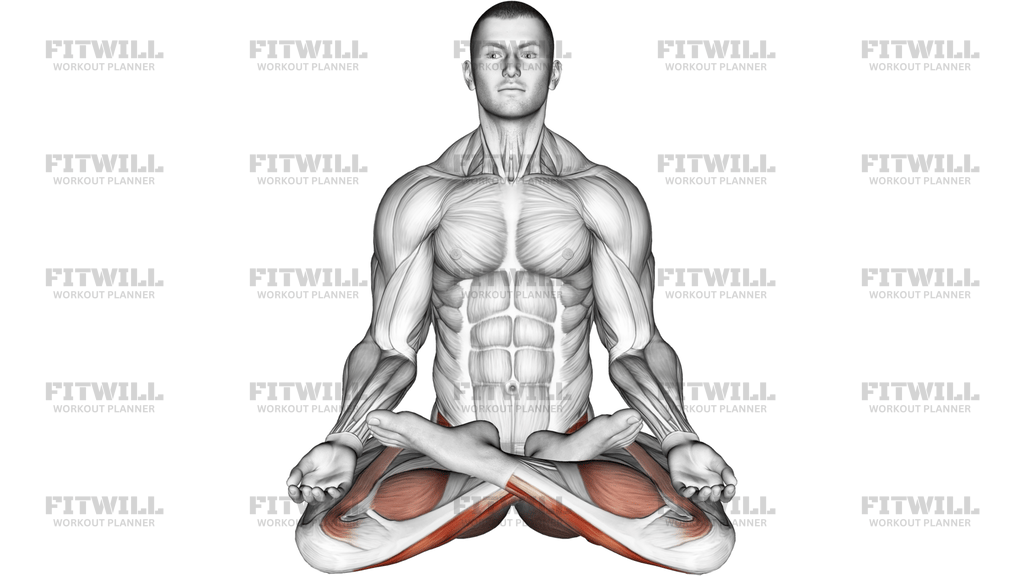
Full Lotus Yoga Pose is a seated hip-opening posture that places each foot high on the opposite thigh and asks the pelvis to stay tall while the lower body settles into external rotation. It is less about generating force and more about finding a calm, balanced position that can be held without the knees or ankles being twisted into shape. When the seat is arranged well, the pose creates a steady stretch through the hips, glutes, and inner thighs while the spine can stay long and relaxed.
The posture is useful for yoga practice, meditation, breathing drills, and cool-down work because it trains you to sit upright without collapsing through the lower back. The main challenge is not effort but alignment: the hips must open enough to let the thighs rotate, otherwise the knees and ankles end up taking stress that belongs in the hip joint. That is why Full Lotus Yoga Pose should feel patient and precise, never forced or cranked into place.
A good setup starts on the floor with enough height under the sit bones to keep the pelvis from tucking under. Each foot should rest as high on the opposite thigh as your hips allow, with the knees dropping only as far as the hip opening permits. If one side feels tight or the pelvis rolls backward, back out and use a simpler cross-legged seat or half lotus instead of chasing the full shape. The goal is a quiet, stacked torso with the chest open and the head balanced over the ribs.
Once you are in the pose, lengthen through the crown of the head, soften the shoulders, and let the hands rest where they keep the trunk steady. Breathe slowly and keep the exhale smooth so the hips can settle without pressure being driven into the knees. The shape should feel organized, not dramatic; if the position creates sharp joint discomfort, the body is telling you the setup needs to be scaled back. For most people, the quality of the hold matters more than how deeply the legs are folded.
Full Lotus Yoga Pose works best as a mobility-and-control drill at the end of a session, during yoga practice, or as part of a focused seated stretch sequence. It rewards consistency, warm tissues, and careful progression more than aggressive stretching. Use props, shorten the hold, or choose a less demanding seat whenever the knees, ankles, or hips stop feeling calm, because the safest version of the pose is the one you can breathe in without bracing against pain.
[ Workout Log & Planner ]
Put your next workout in Fitwill
Keep your plan and training log ready when you are.


Instructions
- Sit on a mat or folded blanket with your legs extended, then bend one knee and guide that foot onto the opposite thigh crease.
- Bring the other ankle across and place that foot high on the opposite thigh so both soles face upward and the knees settle outward.
- Lift through your spine, stack your ribs over your pelvis, and rest your hands on your knees or thighs for balance.
- Press both sitting bones evenly into the floor and keep the feet active instead of letting the ankles go limp.
- Inhale to lengthen the torso, then exhale slowly as you relax the hips without pushing the knees down.
- Hold the pose with the chest open and the shoulders soft while keeping the neck long and the chin level.
- If one knee rides high, one hip shifts back, or the ankles feel pinched, ease out and reset into a simpler seated position.
- To exit, place your hands on the floor, uncross one leg at a time, and extend both legs forward before switching sides or standing.
Tips & Tricks
- Sit on a folded blanket if your pelvis tucks under and your lower back rounds in the pose.
- Keep the knees passive; the rotation should come from the hips, not from pressing the legs down.
- Flex both feet so the ankles stay active and the tops of the feet do not collapse into the thighs.
- If the top foot keeps slipping off, use half lotus instead of forcing the full shape.
- Do not lean back onto straight arms; stay upright so the pose works through the hips and spine.
- Use slow exhales to soften the hip rotators, but never push through sharp knee pain.
- Hold the pose shorter when the ankles feel compressed, then build time only after the position feels steady.
- Alternate the crossed side in later rounds so one hip does not get all the deep work.
Frequently Asked Questions
What muscle does Full Lotus Yoga Pose target most?
It mainly challenges the deep hip external rotators, glutes, inner thighs, and the muscles that keep the torso upright.
Can beginners perform this exercise?
Usually not as a first choice. Beginners are better off starting with easy pose, cross-legged sitting, or half lotus before trying the full position.
Should my knees touch the floor in Full Lotus Yoga Pose?
No. The knees should only lower as far as your hips allow. Forcing them down usually shifts stress into the knees and ankles.
Why does Full Lotus Yoga Pose hurt my knee?
Knee pain usually means the hips are not rotating enough and the joint is being asked to twist instead. Back out immediately and use a simpler seat.
Do I need both feet high on the thighs for Full Lotus Yoga Pose?
For the full pose, yes, but only if both sides settle comfortably. If one side feels forced, use a smaller variation instead.
Can I use a prop for Full Lotus Yoga Pose?
Yes. A folded blanket or cushion under the sit bones often helps the pelvis stay upright and makes the position easier to hold.
How long should I hold Full Lotus Yoga Pose?
Start with 20-60 seconds and build from there only if the knees, ankles, and hips stay calm throughout the hold.
What is the best alternative if full lotus feels too aggressive?
Use half lotus or a simple cross-legged seat. They keep the posture and breathing benefits while reducing joint stress.