Plow Yoga Pose
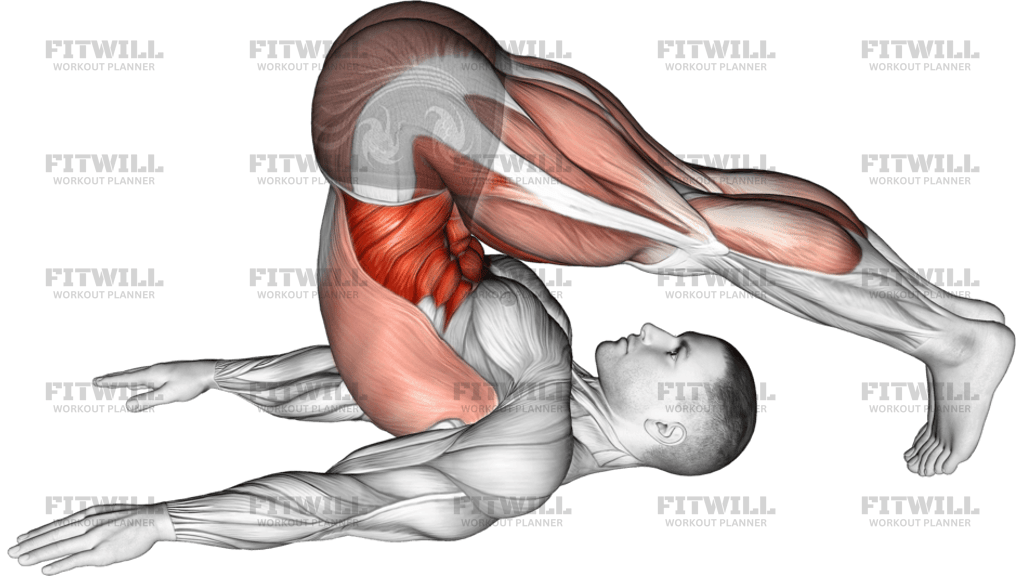
Plow Yoga Pose is an inverted bodyweight yoga position where the legs fold over the torso and the feet travel behind the head while the shoulders and upper back stay grounded. It is used to build control in a deep spinal flexion pattern, challenge abdominal bracing, and open the posterior chain when the body is organized well. The image shows a classic plow shape with the arms resting on the floor, the torso folded tightly, and the load carried through the shoulders rather than the neck.
The pose trains more than flexibility. The rectus abdominis, obliques, and deep core have to keep the pelvis from drifting while the hips, hamstrings, and spinal muscles manage the long lever created by the legs. Because the feet are overhead, small changes in posture matter a lot: if the ribs flare, the pelvis tips, or the neck turns, the position stops being a controlled stretch and becomes a strain. Good plow work is about patience, not forcing a bigger shape.
A useful setup starts by lying flat, pressing the arms into the floor, and lifting the hips only as far as you can keep the shoulders anchored and the chin tucked. From there, the legs continue overhead until you find a stable endpoint that you can breathe in without pressure in the neck. The feet do not need to touch the floor behind the head; the correct range is the one you can hold with smooth breathing and a quiet face.
Plow Yoga Pose fits well in yoga sequences, mobility work, cooldowns, and core-control sessions, especially when the goal is to combine hamstring length with trunk awareness. It is not a speed exercise and it should never be bounced into. Exit as carefully as you entered by supporting the hips if needed, bending the knees, and rolling the spine down one segment at a time. If the neck feels compressed, the breath becomes shallow, or the shoulders start to slide, reduce the range or skip the hold.
[ Workout Log & Planner ]
Put your next workout in Fitwill
Keep your plan and training log ready when you are.


Instructions
- Lie on your back with your arms long by your sides, palms down, and your legs extended together.
- Press your hands and upper arms into the floor, tuck your chin slightly, and brace your midsection before you move.
- Lift your hips off the floor and roll your legs overhead until your weight settles on the shoulders and upper back, not the neck.
- Keep the back of your neck long and avoid turning your head once you are inverted.
- Reach your toes toward the floor behind you only as far as you can keep steady breathing and a controlled pelvis.
- Hold the position with the ribs knit down and the legs active, or bend the knees slightly if the hamstrings are too tight.
- Keep pressing the arms into the floor to help stabilize the shoulders while you maintain the shape.
- To exit, bend the knees if needed, support the hips with your hands, and roll down one vertebra at a time.
- Reset with both feet on the floor and a calm breath before repeating or finishing the set.
Tips & Tricks
- Keep your weight on the shoulders and upper back; if the neck is taking pressure, come out of the pose.
- Do not force the feet to the floor behind you if the lower back starts rounding hard or the breath gets tight.
- A slightly tucked chin protects the cervical spine and helps keep the throat relaxed during the hold.
- Press the palms and triceps into the floor to create a stable base instead of using the hands to yank the body into position.
- If the hamstrings are tight, bend the knees before the pelvis starts tipping or the spine begins to strain.
- Keep the ribs from flaring by exhaling softly and keeping the lower abdomen engaged.
- A folded blanket under the shoulders can make the pose more comfortable if your upper back needs more support.
- Move out of the pose slowly; the descent matters as much as the overhead position.
Frequently Asked Questions
What muscles does Plow Yoga Pose work most?
It emphasizes the abs and deep core, while the obliques, hip flexors, hamstrings, and upper back help stabilize the inverted shape.
Can beginners perform this exercise?
Yes, but beginners should use a smaller range, bend the knees if needed, and stop well before the neck or shoulders feel compressed.
Do my feet need to touch the floor behind my head?
No. The pose is correct even if the feet stay elevated, as long as the spine stays controlled and the breath stays smooth.
What is the biggest form mistake in plow pose?
Letting the neck take the load is the main mistake. The shoulders and upper back should support the pose, not the cervical spine.
How do I make Plow Yoga Pose easier?
Keep the knees bent, shorten the overhead reach, and stay higher on the upper back so you do not force a deep inversion.
Should I hold my breath while I am upside down?
No. Keep a steady breath and use slow exhales to keep the ribs down and the abdominal wall engaged.
What should I do if my neck feels pinched?
Come out immediately and reduce the range next time. If the pinch keeps happening, skip the pose and choose a gentler hamstring or core drill.
When is Plow Yoga Pose usually used in a workout?
It fits best in yoga flows, mobility sessions, cooldowns, or controlled core work where a slow inverted stretch makes sense.