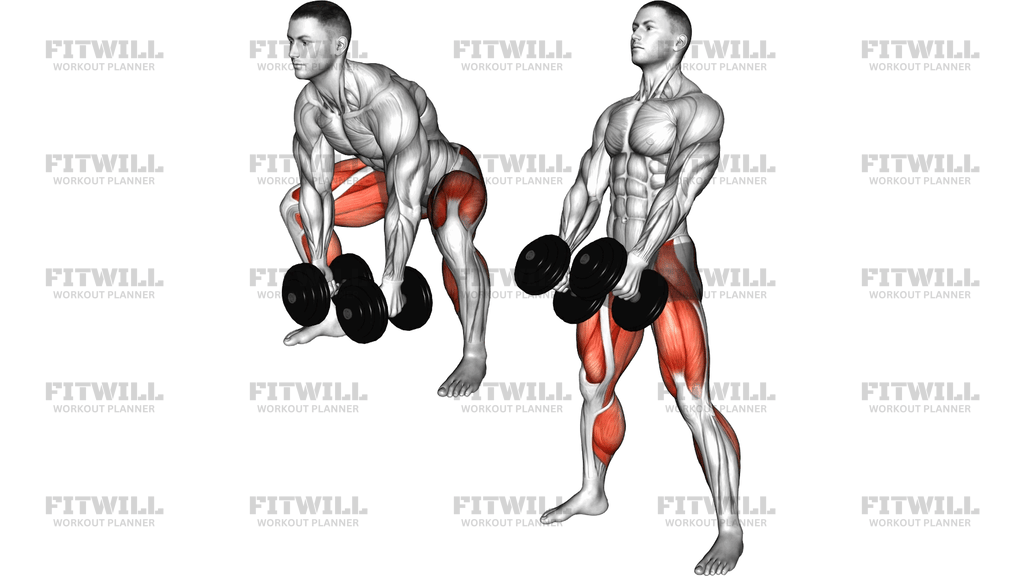
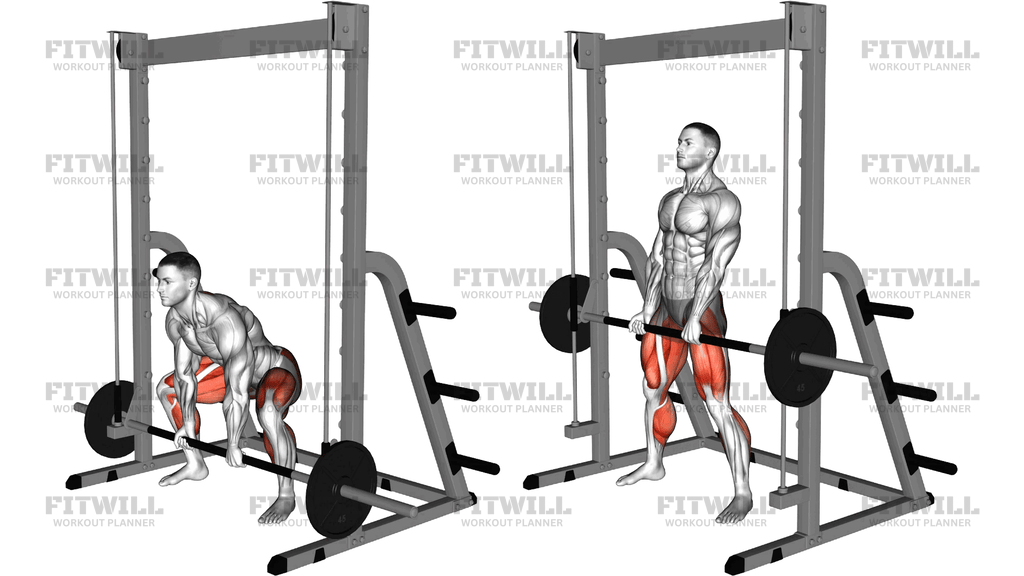
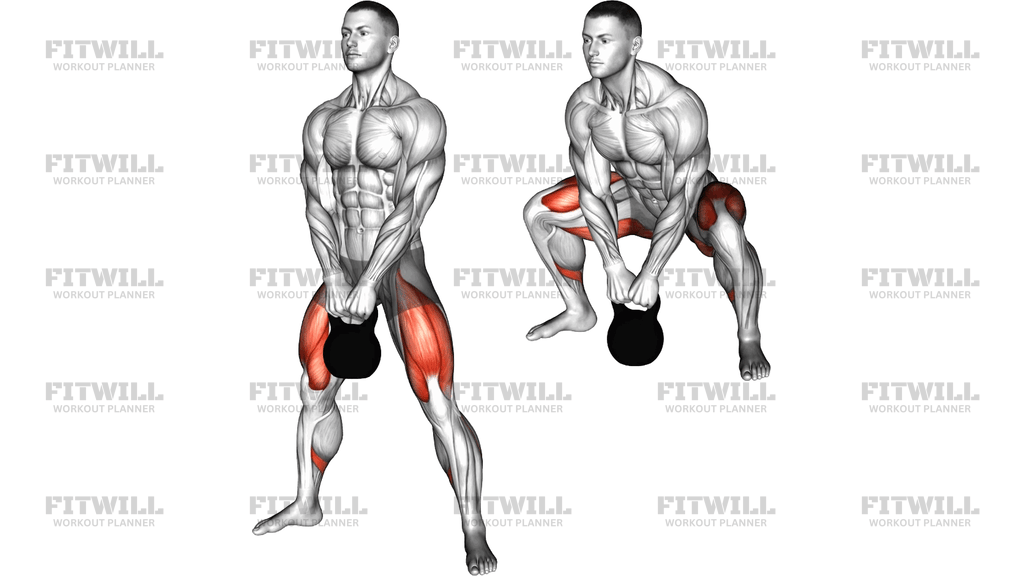
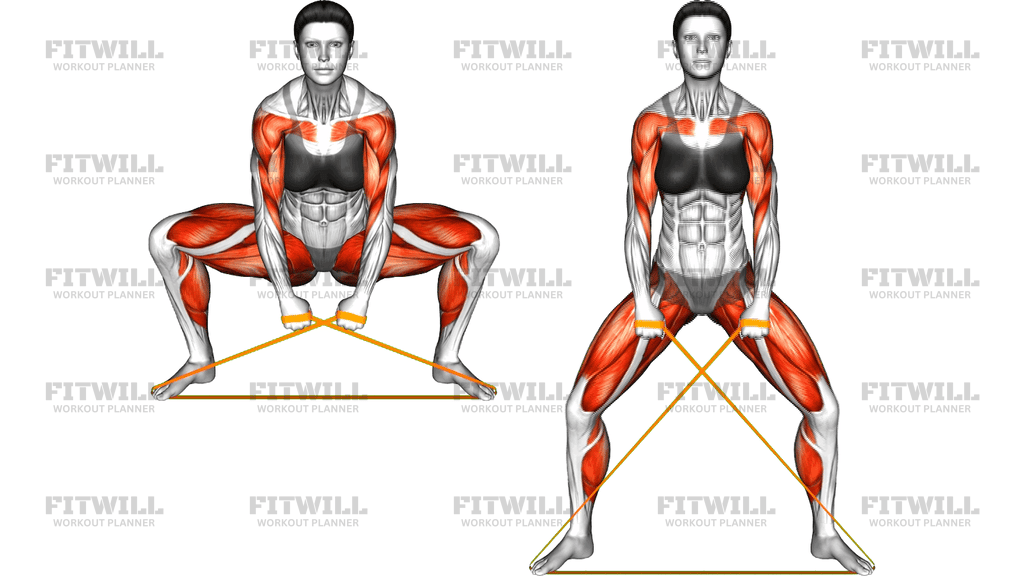
Barbell Olympic Squat
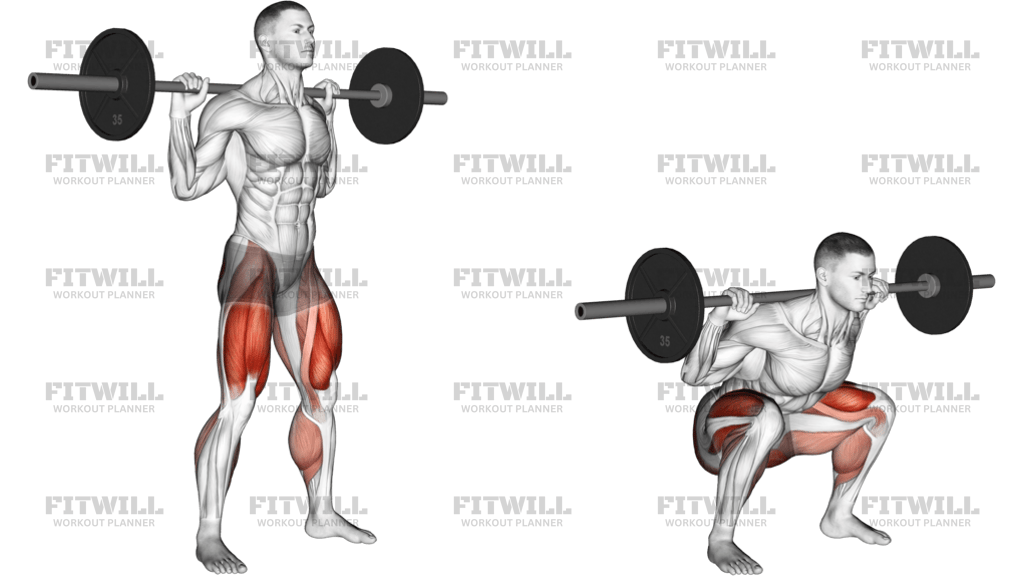
Barbell Olympic Squat is a high-bar back squat that loads the thighs, hips, and trunk at the same time. The bar sits across the upper traps, which lets you stay upright and use a deep knee bend to train the quads hard while the glutes and adductors help drive you out of the bottom. It is a classic strength movement for building leg size, squat strength, and control under a barbell.
The setup matters because a small change in bar position or stance can change how the squat feels. A high-bar position keeps the torso more vertical than a low-bar power squat, so the knees travel forward more and the quads do more of the work. That makes Barbell Olympic Squat especially useful for lifters who want strong front-of-thigh development or need a squat pattern that carries well into Olympic lifting and general athletic training.
A good rep begins before you descend. Brace the trunk, grip the bar tightly, and keep the chest proud as you lower between the feet. The knees should track in line with the toes, the heels should stay grounded, and the bar should travel over the midfoot instead of drifting forward. At the bottom, keep tension through the legs and torso so the ascent starts from the legs rather than a bounce or collapse.
On the way up, drive the floor away and keep the bar path as vertical as possible. If the hips shoot up faster than the chest, the squat usually turns into a good morning and the quads stop contributing as much. Controlled depth, even pressure through the whole foot, and a steady brace make each repetition safer and more productive.
Barbell Olympic Squat works well in lower-body strength sessions, hypertrophy blocks, or any program that wants a balanced squat with a strong quad emphasis. It can be scaled by using lighter loads, box targets, or partial range until mobility and confidence improve. If you feel the movement in your lower back more than your legs, reduce the load and clean up the torso angle before adding weight.
Fitwill
Log Workouts, Track Progress & Build Strength.
Achieve more with Fitwill: explore over 9600 exercises with images and videos, access built-in and custom workouts, perfect for both gym and home sessions, and see real results.
Start your journey. Download today!




Instructions
- Set the barbell on the rack at upper-chest height, duck under it, and rest it across the upper traps with your hands just outside shoulder width.
- Stand up to unrack the bar, take 1-2 small steps back, and set your feet about shoulder width with toes turned slightly out.
- Plant your whole foot, pull the ribs down, and brace your midsection before each rep.
- Take a controlled breath, unlock the hips and knees together, and sit down between your legs.
- Keep the chest lifted and let the knees track over the toes as the bar travels straight over the midfoot.
- Descend until your thighs reach at least parallel or as deep as your mobility allows without losing position.
- Drive up by pushing the floor away, keeping the bar path vertical and the heels down.
- Exhale near the top, fully stand tall, then reset your brace before the next repetition.
- After the set, walk the bar back to the rack and lower it onto the hooks with control.
Tips & Tricks
- Keep the bar high on the traps, not down on the rear delts, so the squat stays upright and quad-dominant.
- Think about spreading the floor with your feet on the way down and up to help the knees track cleanly.
- If your heels lift, reduce depth slightly or use weightlifting shoes so the bar stays over the midfoot.
- Do not let the chest collapse at the bottom; that usually turns the rep into a forward fold instead of a squat.
- Pause the descent for a split second if you keep bouncing out of the hole and losing tightness.
- Use a grip that keeps the upper back tight without cranking the wrists backward too far.
- A small amount of forward torso lean is normal, but the bar should still feel stacked over the middle of the foot.
- If your hips rise faster than your shoulders, lower the load and rebuild the drive from the bottom.
- Stop a set when your knees cave hard or the bar path starts drifting forward.
Frequently Asked Questions
What muscles does Barbell Olympic Squat work most?
It emphasizes the quads, with the glutes, adductors, hamstrings, and trunk all helping stabilize and drive the lift.
How is Barbell Olympic Squat different from a low-bar squat?
The bar sits higher on the traps, so the torso stays more upright and the knees travel forward more. That usually shifts more work to the quads.
How wide should my stance be in Barbell Olympic Squat?
Most lifters do best with a shoulder-width stance and toes turned slightly out. Adjust only enough to let your knees track in line with your toes and your hips reach depth comfortably.
Why do my heels come up during Barbell Olympic Squat?
That usually means your ankles or stance are limiting depth, or the bar is drifting too far forward. Try a slightly wider stance, a small toe-out angle, or weightlifting shoes.
How deep should I go on Barbell Olympic Squat?
Aim for at least parallel if you can keep the bar over midfoot and the heels down. Go deeper only if your pelvis and lower back stay controlled at the bottom.
Is Barbell Olympic Squat safe for beginners?
Yes, if the load is light and the setup is solid. Beginners should focus on bar position, brace, and depth before adding heavier plates.
What is the most common mistake in Barbell Olympic Squat?
Letting the chest drop and the hips shoot up first. That shifts the effort away from the quads and makes the bar path harder to control.
Can I use a box or pins with Barbell Olympic Squat?
Yes, a box or safety pins can help you learn depth and confidence, but keep the touch light. Do not sit back and relax on the box if you want to train the squat pattern.