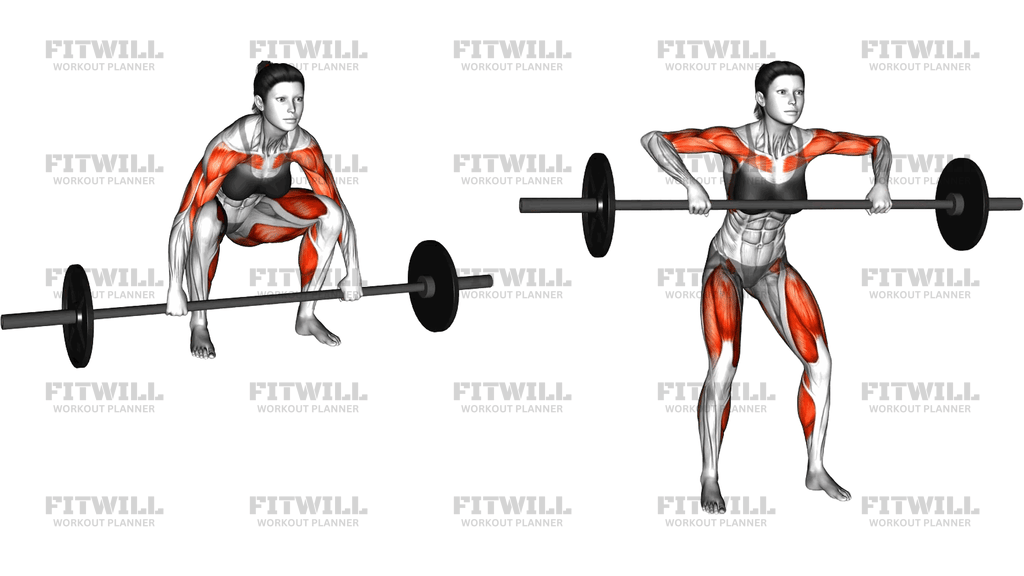
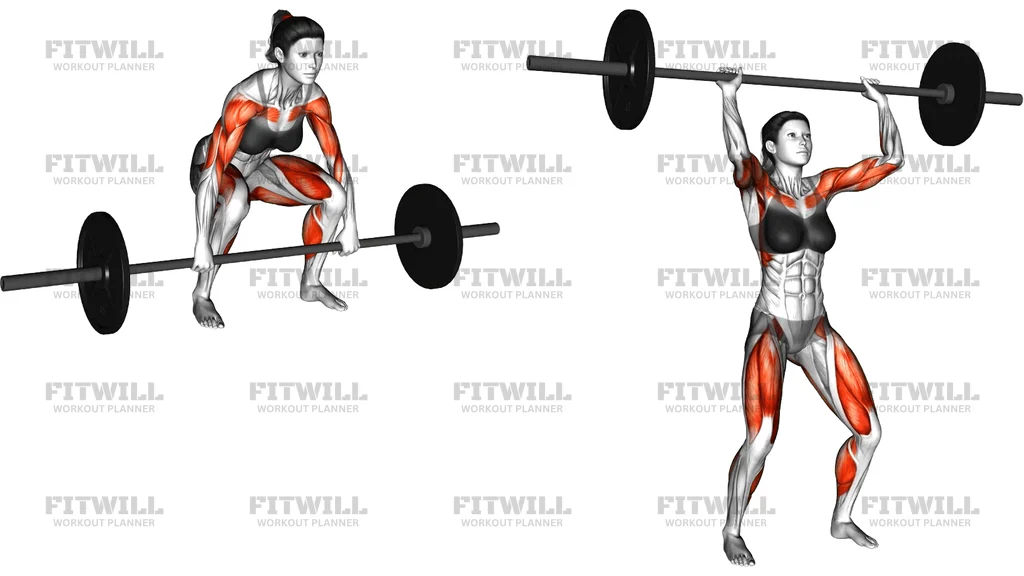
Barbell Romanian Deadlift From Deficit
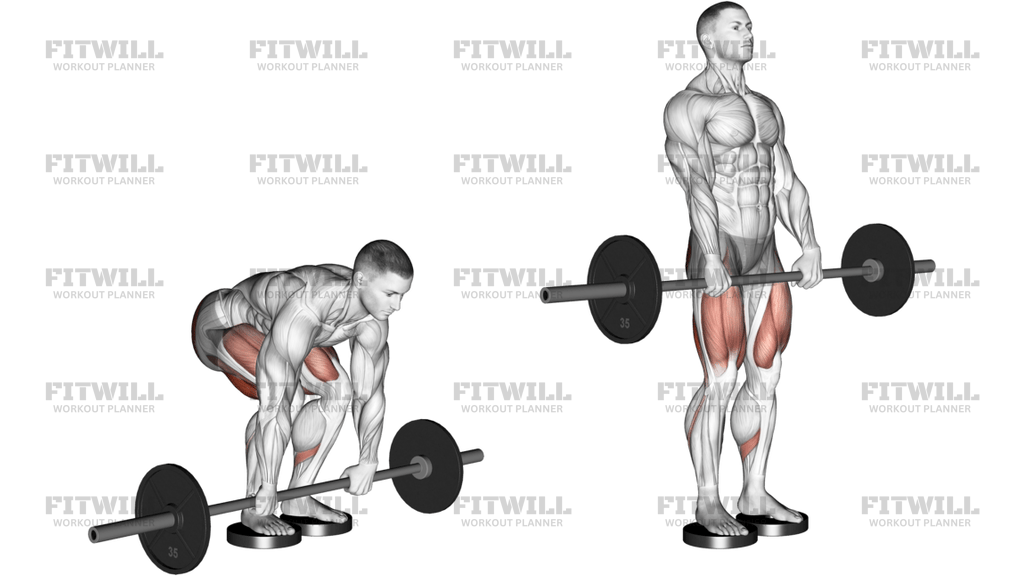
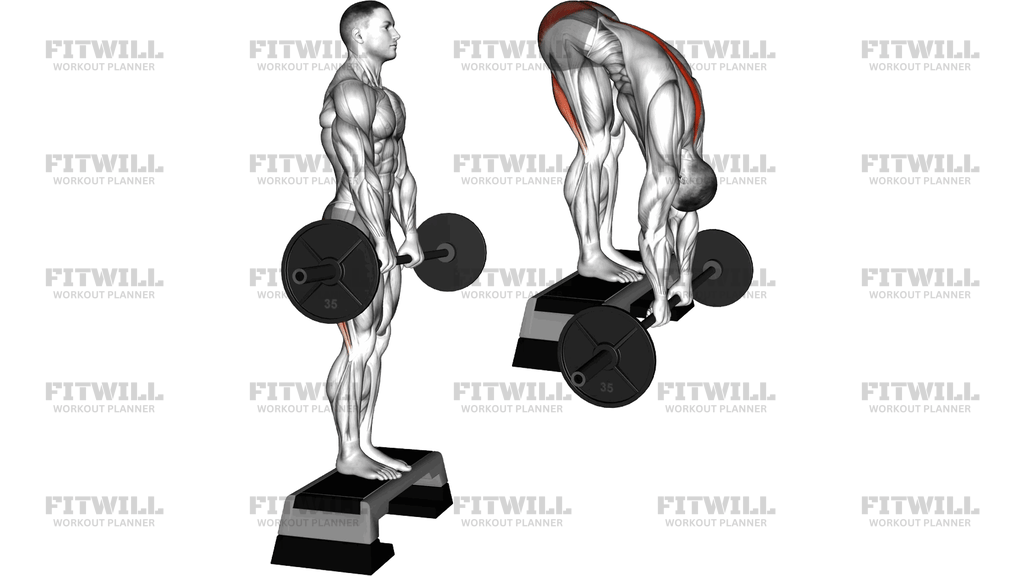
Barbell Romanian Deadlift From Deficit is a hinge variation performed while standing on a small elevated platform or plates so the bar starts lower than a standard Romanian deadlift. That extra range increases the demand on the posterior chain, especially the hamstrings and glutes, while also challenging bracing, grip, and the ability to keep the bar close to the legs.
The deficit changes the exercise in a useful way: you have to own the bottom position instead of simply touching a comfortable mid-shin point. Because the start is deeper, the setup matters more than usual. If the feet are too high, the descent becomes sloppy and the lower back takes over. If the bar drifts away from the body, the lift turns into a back-dominant pull instead of a controlled hip hinge.
Done well, the movement should feel like a long hamstring stretch under tension followed by a strong hip drive back to standing. Keep the shins nearly vertical, unlock the knees only slightly, and push the hips back until the torso reaches its deepest controlled angle. The bar should skim close to the thighs and shins on both the way down and the way up. The lift ends when the hips are fully extended, not when you lean back or shrug the bar upward.
This exercise is useful in lower-body strength blocks, posterior-chain accessories, and programs that want more hamstring loading without changing to a conventional deadlift. It can also help lifters learn how to control the bottom of a hinge, since the deficit exposes loss of position quickly. The tradeoff is fatigue: because the range is longer, technique breaks down sooner if the load is too heavy or the descent is rushed.
Treat each repetition as a controlled hinge from the hips, not a squat, and not a bounce off the plates. Keep the chest proud, the spine long, and the bar path tight. If you feel the movement mostly in the lower back, shorten the range slightly or reduce the deficit before adding load. The goal is a clean, repeatable stretch and drive with no loss of tension at the bottom.
[ Workout Log & Planner ]
Put your next workout in Fitwill
Keep your plan and training log ready when you are.


Instructions
- Place a low platform or weight plates under your feet and stand with the bar over midfoot, feet about hip width apart.
- Grip the bar just outside your legs, keep your chest lifted, and soften your knees without turning the movement into a squat.
- Brace your trunk, pull your shoulders down, and set your weight through the middle of each foot before you lift.
- Push your hips back and lower the bar by sliding it close to your thighs and shins, keeping your spine long and neutral.
- Stop the descent when you feel a deep hamstring stretch and your torso reaches the deepest position you can control without rounding.
- Drive the floor away and extend your hips to stand tall, keeping the bar brushing close to your legs on the way up.
- Finish by squeezing the glutes at the top without leaning back or shrugging the shoulders.
- Lower the bar under control to the starting position and reset your brace before the next rep.
- Breathe in and brace before each descent, then exhale as you pass the hardest part of the lift.
Tips & Tricks
- Keep the deficit modest; a small plate height is usually enough to increase range without forcing spinal rounding.
- If the bar moves away from your legs, the lever gets longer and the lift turns into a lower-back exercise very quickly.
- Think of the knees as soft hinges, not as joints that keep bending deeper on every rep.
- Let the hamstrings lengthen on the way down, but stop before you lose your ability to keep the chest and pelvis organized.
- Use straps only if grip fatigue is stopping the posterior chain from working.
- A slower lowering phase usually works better here than a fast drop, because the extra range makes momentum easier to lose.
- Choose shoes or plates that keep you stable; wobbling on the deficit ruins the bar path.
- Do not finish with a lean-back. The rep is complete when the hips are fully extended and the torso is stacked over the pelvis.
Frequently Asked Questions
What does the deficit change in this Romanian deadlift?
Standing on a small platform increases the range of motion and makes the bottom position more demanding on the hamstrings and glutes.
Which muscles should I feel working most?
You should feel the strongest tension in the hamstrings and glutes, with the upper back and core working to keep the bar close and the torso steady.
How is this different from a conventional deadlift?
The knees stay only slightly bent and the bar does not start from the floor, so the movement is a controlled hip hinge instead of a full floor pull.
How low should the bar go on each rep?
Lower it only until you can keep a neutral spine and a tight bar path. For most lifters, that is just below mid-shin when standing on the deficit.
Can beginners use this version safely?
Yes, but only with a very small deficit and light load. If the bottom position pulls you out of posture, reduce the range first.
Why do people use plates or a platform under the feet?
The elevation lets the bar travel farther, which increases hamstring loading and makes the hinge control more challenging.
What is the most common form mistake?
The biggest mistake is letting the bar drift away from the legs or rounding the lower back to reach extra depth.
Should I lock out hard at the top?
Stand tall and squeeze the glutes, but do not lean back or overextend the lower spine to finish the rep.