Barbell Hip Thrust
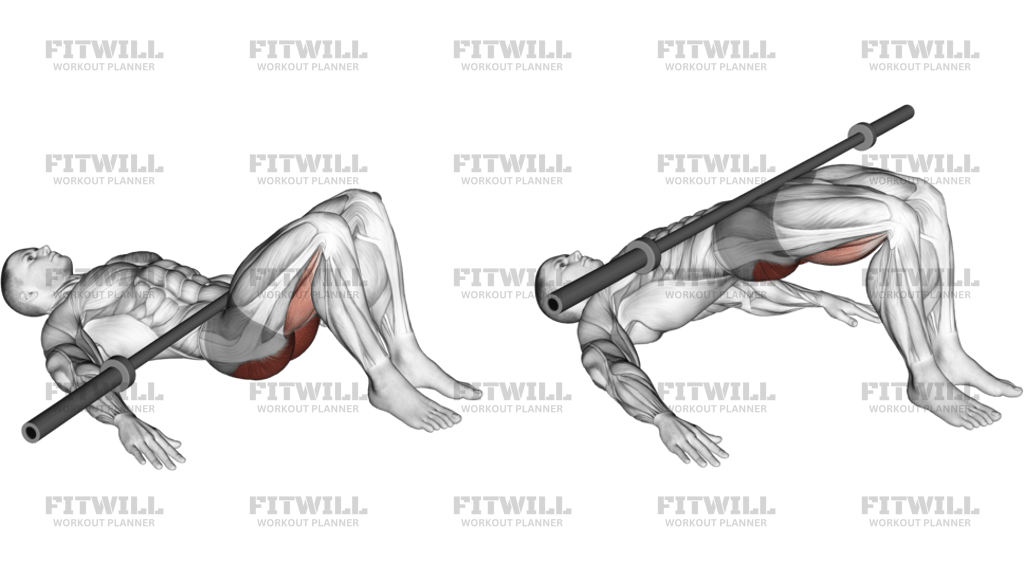
Barbell Hip Thrust is a bench-supported lower-body strength exercise built around powerful hip extension. With your upper back anchored on the bench and the barbell resting across the crease of the hips, the movement trains the glutes hard while also asking the hamstrings and core to keep the pelvis and rib cage organized. It is a useful choice for lifters who want direct glute work without loading the spine the same way a squat or deadlift can.
The setup matters because the bench position, foot placement, and bar path determine whether the load stays on the glutes or slides into the lower back. When the shoulder blades are fixed on the bench and the feet are planted so the shins are close to vertical at the top, the hips can drive up and down in a clean line. If the feet are too far forward, the hamstrings usually take over; if they are too close, the knees and quads dominate and the range feels cramped.
A good rep starts by bracing before the lift, then driving the hips upward until the torso and thighs form a strong top position. At the top, the pelvis should stay level and the ribs should not flare; the goal is a firm lockout, not an exaggerated arch through the lower back. On the way down, lower the hips under control until the glutes lengthen, then repeat with the same bar path and breathing pattern so every rep looks and feels consistent.
Barbell Hip Thrust is often used for glute development, posterior-chain strength, or as an accessory after heavier compound work. It can be scaled with bodyweight, a dumbbell, or a lighter barbell for beginners, but the biggest payoff comes from clean reps and a setup that lets you feel the hips do the work. Keep the neck relaxed, keep pressure through the whole foot, and treat the top position as a controlled squeeze rather than a bounce.
Because the bar sits directly over the hips, comfort and control are important. A pad, towel, or soft bar sleeve can make the movement easier to set up, especially when loads get heavier. If the bench is too high or the upper back slides around, reduce the height or choose a more stable surface so the torso can stay fixed while the hips move through their full range.
[ Workout Log & Planner ]
Put your next workout in Fitwill
Keep your plan and training log ready when you are.


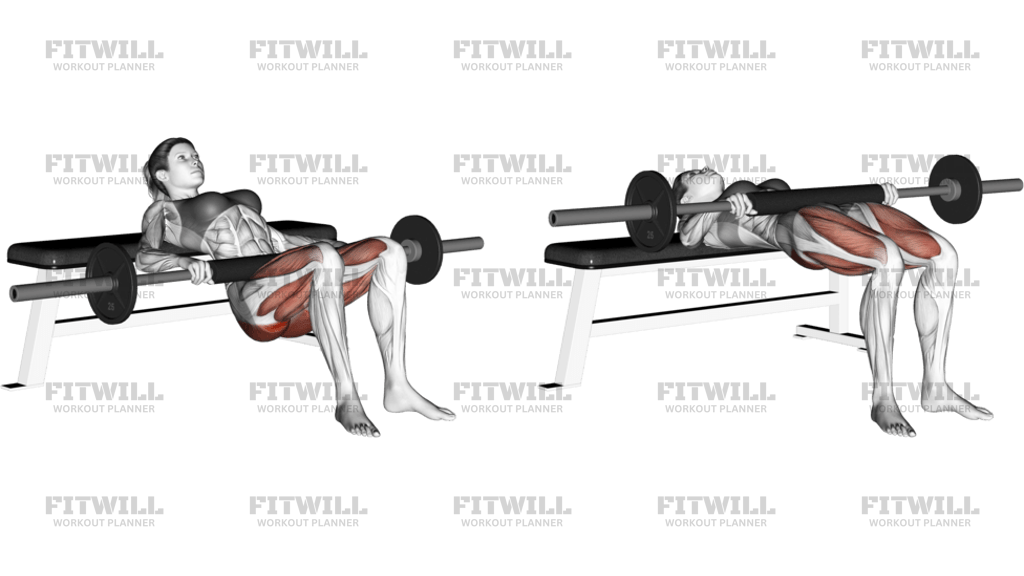
Instructions
- Sit on the floor with your upper back against the front edge of a stable bench and roll the barbell over your hips.
- Bend your knees, plant your feet about hip-width apart, and set your heels far enough away that your shins are nearly vertical at the top.
- Grip the bar lightly with both hands to keep it centered and tuck your chin so your neck stays long.
- Brace your abs, press your upper back into the bench, and drive through the whole foot to lift your hips.
- Raise the bar until your torso is roughly parallel to the floor and your knees, hips, and shoulders form a strong top position.
- Squeeze your glutes at the top without leaning back or arching your lower back.
- Lower your hips under control until the bar returns to the bottom position and you feel the glutes lengthen.
- Keep breathing steady, exhaling as you drive up and inhaling as you lower.
- Set the bar down carefully after the final rep and reset your feet before leaving the bench.
Tips & Tricks
- If the bar rolls on your hips, use a pad or towel and keep both hands on the bar until you start the lift.
- Aim for vertical shins at the top; if your knees drift too far forward, move your feet farther away from the bench.
- Do not overextend at lockout. A hard glute squeeze is enough, and the ribs should stay down.
- Keep your chin tucked and eyes forward or slightly up so the neck does not crank back at the top.
- Let the bar travel straight up and down instead of drifting toward your chest or feet.
- If you feel the movement mostly in hamstrings, widen or adjust your foot placement until the glutes take over again.
- Use a controlled pause at the top when you want more glute tension and less bouncing.
- Lower the bar slowly enough that you can feel the glutes lengthen, but do not relax on the bench between reps.
- Choose a bench height that lets your shoulder blades stay supported without your lower back hanging off the edge.
Frequently Asked Questions
What does Barbell Hip Thrust train most?
Barbell Hip Thrust primarily trains the glutes, with the hamstrings and core helping stabilize the pelvis and torso.
Where should the bar sit during Barbell Hip Thrust?
The bar should sit in the crease of the hips, usually with a pad or towel between the bar and your pelvis for comfort.
How high should my hips go in Barbell Hip Thrust?
Lift until your torso is roughly parallel to the floor and your glutes are fully squeezed, but stop before your lower back takes over.
How do I know if my feet are in the right spot?
At the top, your shins should be close to vertical. If you feel mostly hamstrings, move your feet slightly farther away; if the movement feels cramped, move them a bit closer.
Can beginners do Barbell Hip Thrust?
Yes. Beginners can start with bodyweight, a light barbell, or a dumbbell across the hips while learning the bench position and hip path.
What is the most common mistake in Barbell Hip Thrust?
The most common mistake is overextending the lower back at the top instead of finishing with a glute squeeze and a stacked rib cage.
Should I feel Barbell Hip Thrust in my lower back?
You should feel the glutes doing most of the work. A small amount of back tension can happen, but sharp lower-back loading usually means the lockout or foot position needs to change.
What can I use instead of a barbell for this exercise?
A dumbbell, fixed-weight plate, or even bodyweight can work if you are still learning the setup or do not have a barbell available.