Dumbbell Lateral Lunge With Bicep Curl
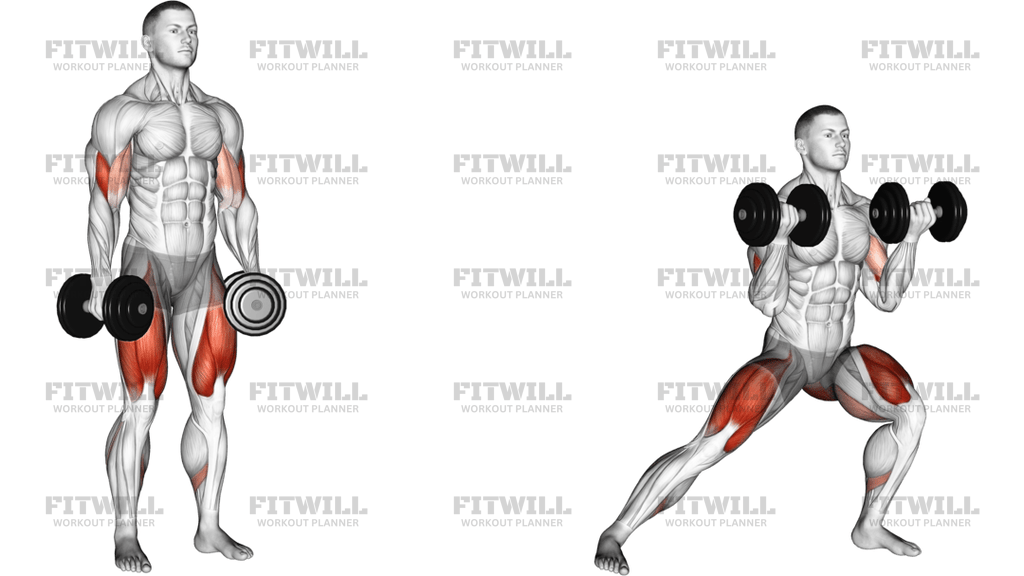
Dumbbell Lateral Lunge With Bicep Curl is a compound lower-body and upper-body movement that pairs a wide side lunge with a simultaneous dumbbell curl. The exercise asks you to control body weight in the frontal plane while keeping the dumbbells steady enough to train the biceps without turning the repetition into a swing.
The main training value comes from the combination of hip, knee, and ankle control on the loaded side plus upper-arm work as you bring the dumbbells to shoulder height. The lunge places most of the demand on the stepping leg, especially the quads, glutes, and inner-thigh muscles, while the curl adds an upper-body strength component and forces you to keep your torso organized.
Setup matters because the lateral step determines the quality of the whole rep. Start standing tall with a dumbbell in each hand, arms long at your sides, then step out far enough that the working knee can bend without collapsing inward. Keep the non-working leg straighter and the opposite foot flat so you can sit into the hip instead of twisting the trunk or tipping forward.
From there, lower with control into the side lunge, keep your chest lifted, and curl the dumbbells without letting the elbows drift ahead of the ribs. The curl should happen from a stable base, not from a bounce at the bottom. When you drive back to standing, press through the bent leg, re-center the hips, and lower the weights under control before repeating on the other side or on the same side as programmed.
This is a good option when you want a leg exercise that also challenges coordination, grip, and arm strength. It fits well in accessory blocks, athletic conditioning, or full-body sessions where you want more movement variety than a basic squat or curl. Choose a lighter load than you would for either exercise on its own, because the side lunge demands balance and the curl gets harder if you rush the lower-body portion.
Keep the movement smooth and repeatable. If the torso folds over, the knee caves in, or the dumbbells start swinging, shorten the step or reduce the load. The best repetitions look controlled from the first step out to the final return to standing.
Fitwill
Log Workouts, Track Progress & Build Strength.
Achieve more with Fitwill: explore over 9600 exercises with images and videos, access built-in and custom workouts, perfect for both gym and home sessions, and see real results.
Start your journey. Download today!




Instructions
- Stand tall with a dumbbell in each hand, arms straight at your sides, feet about hip-width apart.
- Step your right foot out wide so the right leg can bend while the left leg stays mostly straight.
- Keep both feet flat and point the toes slightly forward or slightly out, not hard to the side.
- Sit your hips back and lower into the right-side lunge until the right knee tracks over the right foot.
- Keep your chest lifted and your torso long instead of folding over the front thigh.
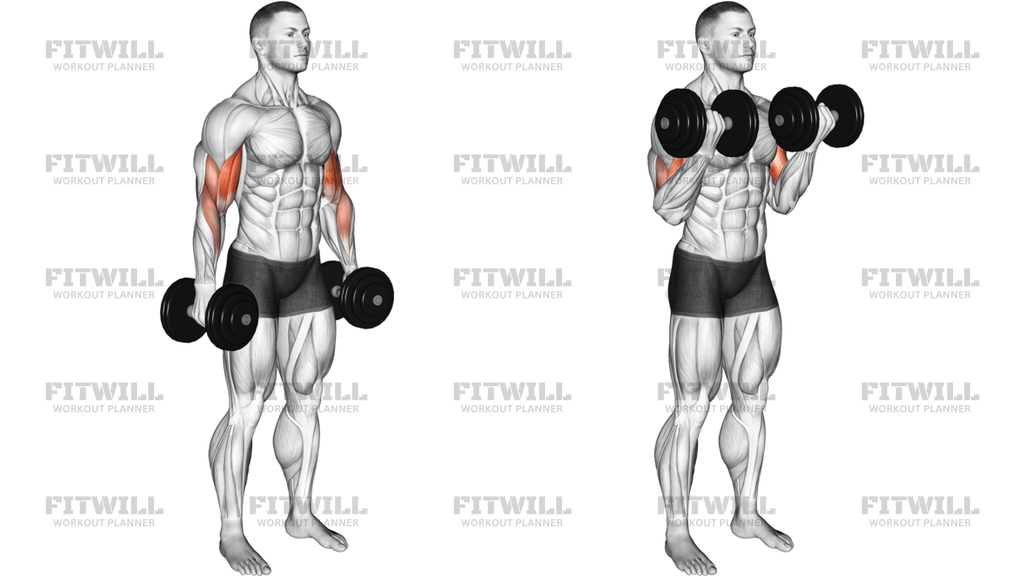
- As you settle into the bottom position, curl both dumbbells toward your shoulders without swinging your elbows forward.
- Pause briefly with the weights near shoulder height, then lower them under control.
- Press through the right foot to return to standing and bring the feet back under your hips.
- Repeat on the opposite side or complete all reps on one side before switching, depending on the program.
- Exhale during the curl and when driving back to standing, then reset before the next rep.
Tips & Tricks
- Take a wider step than you would for a normal squat so the moving knee has room to bend without the torso collapsing.
- Keep the non-working leg long and the heel down; that straight leg is part of the side-lunge stretch and should not turn into a second squat.
- Let the dumbbells hang naturally at the start, but do not let them swing forward when you step out.
- Curl from the bottom with the upper arms close to your sides so the biceps work instead of the shoulders taking over.
- If the curl becomes jerky, reduce the load before you try to force a bigger lunge depth.
- Keep the planted foot tripod solid, especially through the heel and big toe, so the knee stays aligned over the middle of the foot.
- A small pause at the bottom helps stop momentum and makes the curl cleaner.
- Use a slower return to standing if your balance is the weak point; the lowering phase exposes sloppy foot placement fast.
- If your torso starts tipping forward, shorten the lunge and keep the ribcage stacked over the pelvis.
- Stop the set when the dumbbells start pulling you off balance or the knee caves inward on the working side.
Frequently Asked Questions
What does Dumbbell Lateral Lunge With Bicep Curl train?
It combines a side-lunge pattern for the thighs, glutes, and inner thigh with a curl that trains the biceps and grip.
Should I curl the dumbbells while I am standing up or while I am in the lunge?
The cleanest version curls from the loaded bottom position, when your base is set and the torso is still tall.
How wide should my step be for the lateral lunge?
Wide enough that the working knee can bend and the other leg stays mostly straight, but not so wide that the foot loses contact with the floor.
Which side of the body should I feel most?
You should feel the stepping leg working hardest, especially through the outer hip, quad, and glute, with the biceps working during the curl.
Can beginners use this exercise?
Yes, but it is best learned with light dumbbells and a shallow side step until balance and timing feel natural.
What is the most common mistake with this movement?
Most people either step too narrowly or let the curl turn into a swing, which takes tension away from both halves of the exercise.
Do I need to alternate sides every rep?
Not always; some programs alternate reps, while others have you do a set on one side before switching.
How heavy should the dumbbells be?
Choose a lighter load than you would for a plain lunge or a plain curl, because the combined movement is more demanding.
Can I use this as a warm-up?
Yes, if you keep the load light and the range controlled, it can work as a dynamic accessory drill before heavier lower-body work.