Dumbbell Seated Kickback
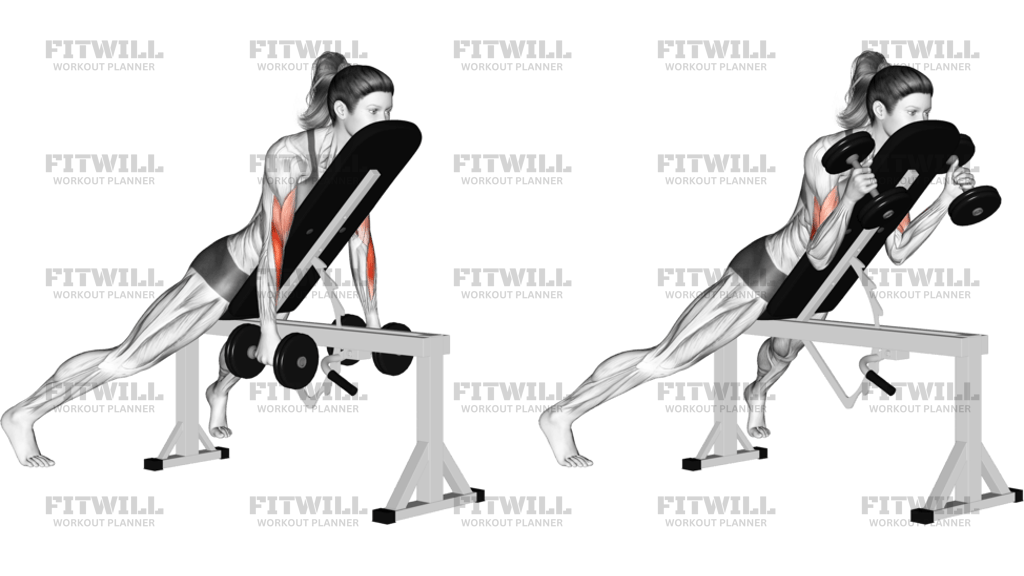
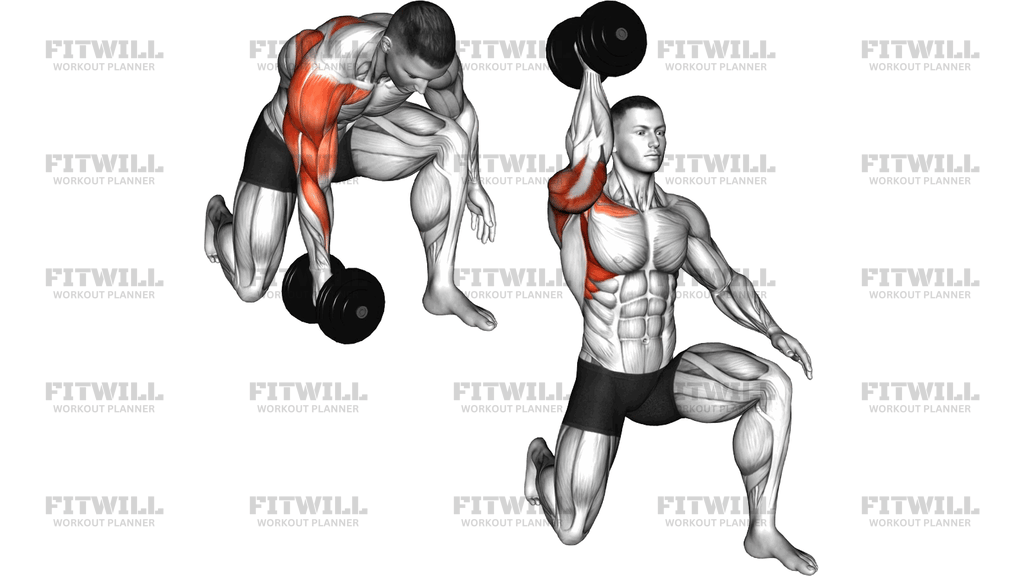
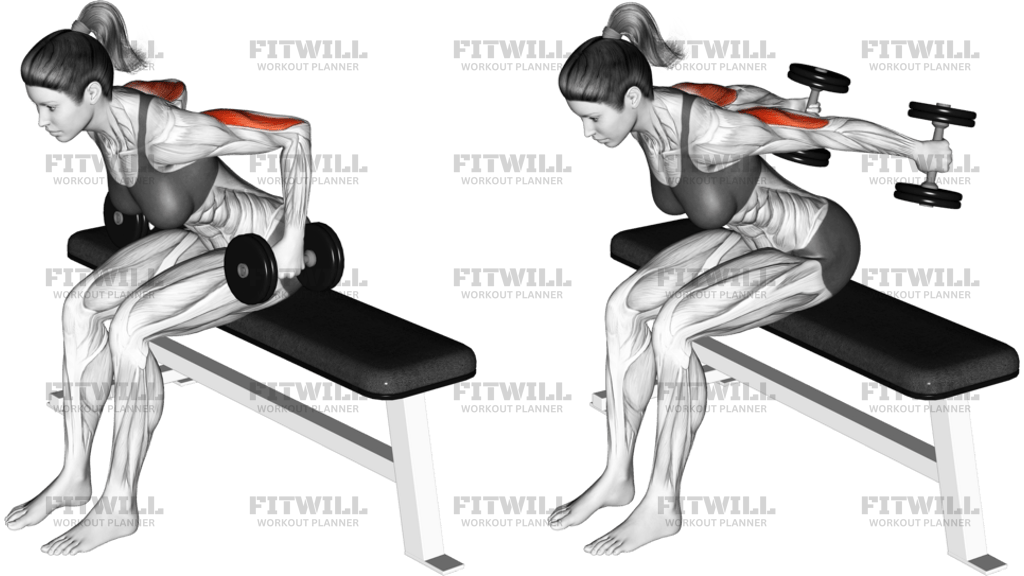
The Dumbbell Seated Kickback is a strict triceps isolation exercise performed from a seated, hinged position with the upper arm held close to the torso. It is useful when you want to build elbow extension strength without relying on momentum, because the seated setup removes a lot of the body English that often turns arm work into a whole-body lift. The image shows a forward hinge over a bench with the dumbbell traveling straight behind the body, which is the key motion to keep consistent.
This movement mainly challenges the triceps while the shoulders, upper back, forearms, and trunk work to keep the torso steady. The long head of the triceps is especially involved because the shoulder stays flexed while the elbow extends. That makes the Dumbbell Seated Kickback a practical accessory exercise for lifters who want cleaner arm definition, pressing support, or extra elbow-extension volume without loading the joints as heavily as bigger compound presses.
Setup matters more here than in many other dumbbell exercises. Sit on the bench, hinge forward until your chest is over your thighs, and let the working upper arm stay close to your side with the elbow bent. A stable torso and fixed upper arm give the triceps a clear line of force, while a drifting shoulder or swinging trunk shifts the effort away from the target muscles. If the bench position or your hinge angle changes from rep to rep, the exercise stops feeling like a triceps kickback and becomes a loose swing.
In each repetition, the forearm should do the moving while the upper arm stays mostly still. Extend the elbow until the arm is straight behind you, then lower the dumbbell under control until the elbow returns to the same bend you started with. Keep the wrist neutral and avoid shrugging the shoulder at the top, because the goal is a clean elbow extension rather than a bigger rearward swing. A smooth tempo and brief squeeze at lockout make the Dumbbell Seated Kickback much more effective than chasing heavy weight.
This is a good choice for higher-rep accessory work, arm-focused sessions, or the finishing portion of an upper-body workout. It is also beginner friendly if the load stays light enough to keep the torso fixed and the elbow path clean. Use it when you want a simple triceps movement that rewards precision, and stop the set once the upper arm starts drifting, the torso starts rocking, or the dumbbell can no longer travel in a straight line behind the body.
[ Workout Log & Planner ]
Put your next workout in Fitwill
Keep your plan and training log ready when you are.


Instructions
- Sit on the end of a flat bench with one dumbbell in hand, hinge forward from the hips, and plant both feet flat on the floor.
- Lean your chest over your thighs so your torso stays stable, then keep the working upper arm tucked close to your side with the elbow bent.
- Set your wrist in line with your forearm and square your shoulders so the dumbbell starts hanging just below the elbow.
- Brace your trunk and keep your neck long before you begin the rep.
- Drive the dumbbell straight back by extending the elbow until the arm reaches full extension behind you.
- Pause briefly at the top and squeeze the triceps without letting the shoulder roll or the torso swing.
- Lower the dumbbell slowly until the elbow returns to the starting bend while the upper arm stays fixed.
- Inhale on the way down, exhale as you kick back, and reset your hinge before the next repetition.
- Finish the set by bringing the dumbbell back to the start position under control and sitting upright only after the last rep.
Tips & Tricks
- Choose a lighter dumbbell than you would for a standing kickback; the seated hinge exposes cheating quickly.
- If your upper arm moves behind your torso, the load is too heavy or your shoulder is taking over.
- Think about swinging only the forearm; the elbow should act like a hinge pinned in place.
- Keep the wrist neutral instead of bending it back, especially near lockout.
- A short pause at full elbow extension usually gives better triceps tension than a fast snap.
- Do not let the torso rock forward and back to help the dumbbell move; the bench is there to make you stricter, not looser.
- If the bench edge digs into your thighs, sit slightly farther back and hinge a little more from the hips.
- Stop a rep or two before your shoulder starts shrugging or the dumbbell stops traveling in a clean line.
Frequently Asked Questions
What does the Dumbbell Seated Kickback train most?
It mainly trains the triceps through elbow extension, with the shoulders, forearms, and trunk helping you stay stable in the hinge.
Why do I need to keep my upper arm still in the Dumbbell Seated Kickback?
A fixed upper arm keeps the tension on the triceps. If the shoulder drifts, the movement turns into a swing and the triceps do less work.
Should I do the Dumbbell Seated Kickback one arm at a time?
Either version works, but one arm at a time usually makes it easier to keep the torso still and the elbow path clean.
How heavy should the dumbbell be for this exercise?
Use a weight you can extend smoothly without shrugging, swinging, or losing the bent-over position. Most lifters need less load than they expect.
What is the most common mistake with the Dumbbell Seated Kickback?
The biggest mistake is turning it into a shoulder swing by moving the upper arm. Keep the elbow tucked and let only the forearm move.
Can beginners use the Dumbbell Seated Kickback?
Yes. It is beginner friendly if the dumbbell is light and the hinge position stays stable from the first rep to the last.
Do I need a bench for the Dumbbell Seated Kickback?
A bench or sturdy seat helps you hinge forward and keep the torso fixed. Without it, the exercise is harder to keep strict.
Why do my shoulders feel it more than my triceps?
Usually the upper arm is drifting or the torso is too upright. Re-hinge forward, tuck the elbow closer to your side, and use a lighter dumbbell.