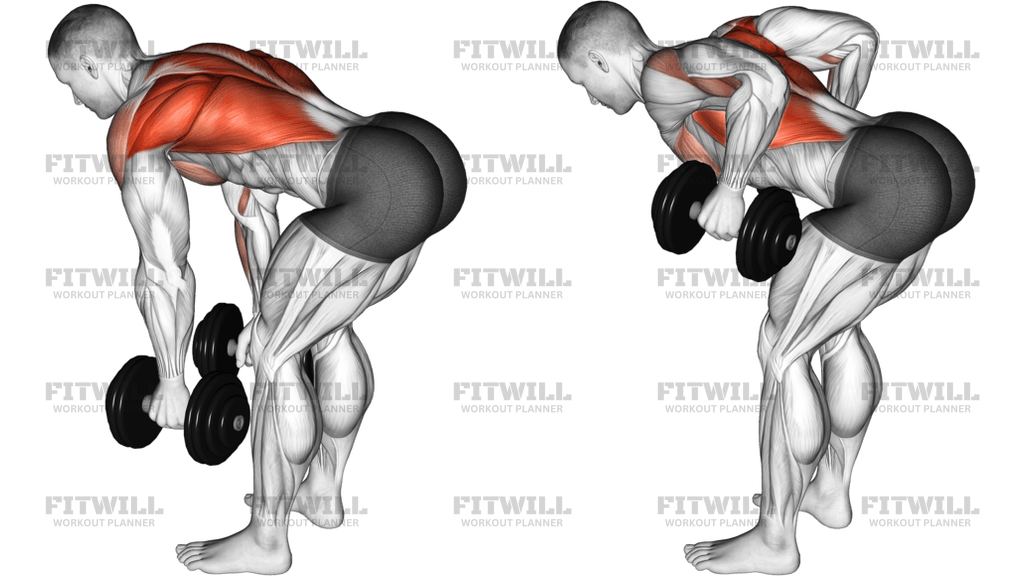
Dumbbell Seated Bent-Over Alternate Rear Delt Fly
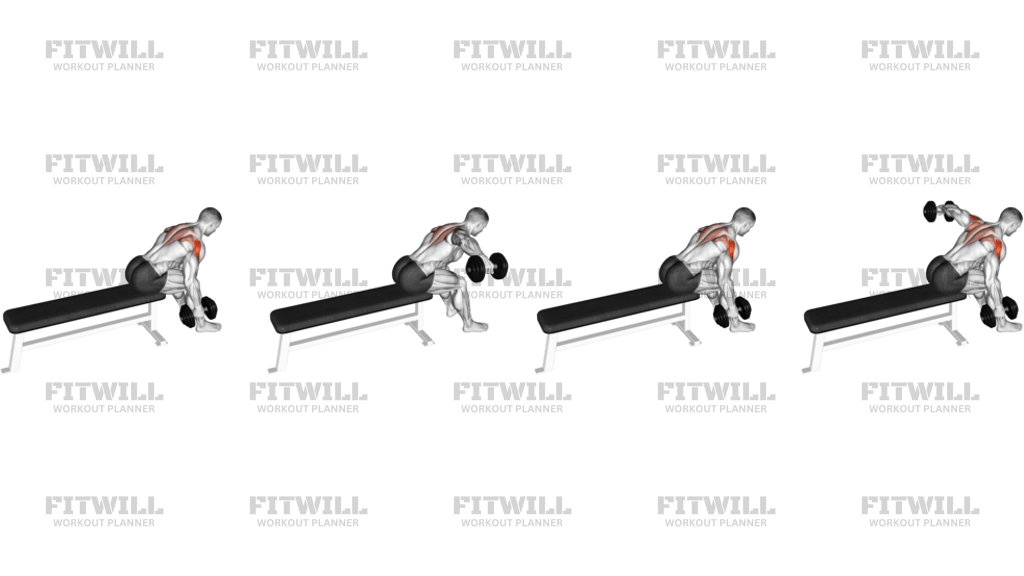
Dumbbell Seated Bent-Over Alternate Rear Delt Fly is a seated shoulder-isolation exercise that uses a flat bench and a pair of dumbbells to load the rear delts with help from the upper back. The seated hinge takes most of the bounce out of the lift, which makes it easier to keep the tension on one arm at a time and to see whether each rep is truly coming from the shoulder instead of from torso swing.
The working arm moves out and slightly back in a short arc while the other dumbbell stays hanging under the shoulder. That alternating pattern is useful when you want cleaner reps, less cheating, and a little more time under tension on each side. The exercise is also a good way to train shoulder balance, since the nonworking side has to stay quiet while the body remains folded forward and braced on the bench.
Setup matters here because the torso angle changes the feel of the movement. Sit near the edge of the bench, hinge from the hips, and keep the chest supported over the thighs without rounding the low back. A stable base through the feet, a neutral neck, and a light elbow bend all help the rear delt do the work. If the shoulders shrug up toward the ears or the torso starts twisting, the load is usually too heavy or the hinge has drifted too upright.
On each rep, lift only until the upper arm is close to shoulder height or just below it, then lower under control before switching sides. The goal is smooth, repeatable tension rather than a big swinging range. Breathe out as the dumbbell travels up, inhale on the way down, and keep the rhythm steady enough that you can feel the rear delt finish each rep without losing posture.
This exercise fits well in accessory shoulder work, upper-back training, or any session where you want to build rear-delt size, posture, and shoulder control without loading the joints aggressively. It is beginner-friendly when the weight is light and the bench position is strict, but it still rewards experienced lifters because small technique errors show up quickly. Treat it as a precision movement: the quieter the torso, the cleaner the rear-delt work.
[ Workout Log & Planner ]
Put your next workout in Fitwill
Keep your plan and training log ready when you are.


Instructions
- Sit on the edge of a flat bench with your feet flat, hinge forward from the hips, and let both dumbbells hang under your shoulders with a slight bend in the elbows.
- Keep your chest braced over your thighs, your lower back neutral, and your neck long so your head stays in line with your spine.
- Set one arm as the working side and keep the opposite dumbbell still beneath you while the nonworking shoulder stays relaxed.
- Raise the working dumbbell out and slightly back in a short arc until your upper arm is near shoulder height or just below it.
- Lead the rep with the elbow and rear shoulder, not with the hand, and avoid shrugging the shoulder up toward your ear.
- Pause briefly at the top while keeping your torso square to the floor and your ribs from twisting open.
- Lower the dumbbell slowly to the hanging position without letting it swing or bounce off the bottom.
- Switch sides and repeat the same path for the next rep, keeping the tempo and torso position identical on both sides.
- Continue alternating sides for the planned reps, then set both dumbbells down before sitting upright.
Tips & Tricks
- Use a weight that lets you keep the nonworking arm quiet; if the torso rocks to move the dumbbell, it is too heavy.
- A slight elbow bend should stay nearly fixed throughout the set so the movement comes from the shoulder rather than a press or row.
- Keep the lift in a short rear-delt arc; trying to yank the dumbbell too high usually turns it into a shrug.
- If your neck starts tensing, reset your gaze to the floor a few feet ahead and lengthen the back of the neck.
- Let the working shoulder blade move naturally, but do not force a hard squeeze at the top that pulls the arm behind the torso.
- The bench hinge should stay locked in place; any rotation through the ribs or pelvis is a sign to slow down and lighten the load.
- Lower each rep on purpose so the rear delt controls both the lift and the return instead of only the upward phase.
- If your grip fails before the rear delt does, switch to a lighter dumbbell so the shoulder remains the limiting factor.
Frequently Asked Questions
What does Dumbbell Seated Bent-Over Alternate Rear Delt Fly work most?
It primarily targets the rear delts, with the upper back and trunk helping to stabilize the hinge position.
Why do I alternate arms instead of lifting both dumbbells together?
Alternating keeps the torso quieter and makes it easier to feel each rear delt working without momentum from the other side.
How far should the dumbbell travel on each rep?
Raise it until the upper arm is close to shoulder height, then stop before the shoulder shrugs or the torso starts to rotate.
Should I keep my chest on my thighs the whole time?
Keep the chest braced over the thighs and the hinge fixed, but do not collapse your low back or round aggressively to reach lower.
Is this more of a shoulder or upper-back exercise?
It is a shoulder exercise first, but the rhomboids, mid traps, and other upper-back stabilizers assist with control.
Can beginners use this movement safely?
Yes, as long as the dumbbells are light and the bent-over position stays stable and controlled.
What is the most common form mistake?
The usual error is twisting the torso or shrugging the shoulder to get the dumbbell higher instead of using the rear delt.
Where does this fit in a workout?
It works well in accessory shoulder work, upper-back training, or as a controlled finisher after bigger pressing and pulling lifts.