Kettlebell Dead Clean
Kettlebell Dead Clean is a floor-start clean that takes the bell from a dead stop on the ground into the front rack without a swing between reps. It is a power-and-skill exercise that teaches you how to load the hips, stay connected through the torso, and catch the bell quietly against the forearm and shoulder. Because each rep starts from the floor, the movement rewards position and timing more than speed for its own sake.
This exercise trains the posterior chain, grip, upper back, and trunk while also asking the shoulder to stabilize the rack position. The hips and legs create the drive, the lats keep the bell close, and the core keeps the torso from folding or twisting as the kettlebell moves. That combination makes Kettlebell Dead Clean useful for general strength work, athletic preparation, and conditioning blocks where you want crisp reps instead of long grinding sets.
The setup matters because the bell has to begin in the right place for the clean to happen smoothly. Stand with the kettlebell slightly in front of midfoot, hinge down with a flat back, and grip the handle firmly before the rep starts. From there, drive through the floor, let the bell travel close to the body, and guide it into the rack so it lands softly rather than slamming into the wrist or forearm.
A good rep should look compact and controlled. The bell should stay close on the way up, the elbow should tuck rather than flare, and the hand should rotate through the handle so the kettlebell rolls around the wrist into the rack. If the bell drifts forward, the clean turns into a curl; if you yank with the arm, the catch gets noisy and the shoulder takes over too early. Smooth timing keeps the movement powerful and efficient.
Use Kettlebell Dead Clean when you want a dynamic lift that still demands precision. It fits well in strength sessions, power blocks, or full-body circuits, especially when you want to teach athletes how to generate force from the floor and absorb it cleanly at the shoulder. Start light enough to own the path of the bell, then add load only as the start position, hip drive, and catch stay sharp from the first rep to the last.
Fitwill
Log Workouts, Track Progress & Build Strength.
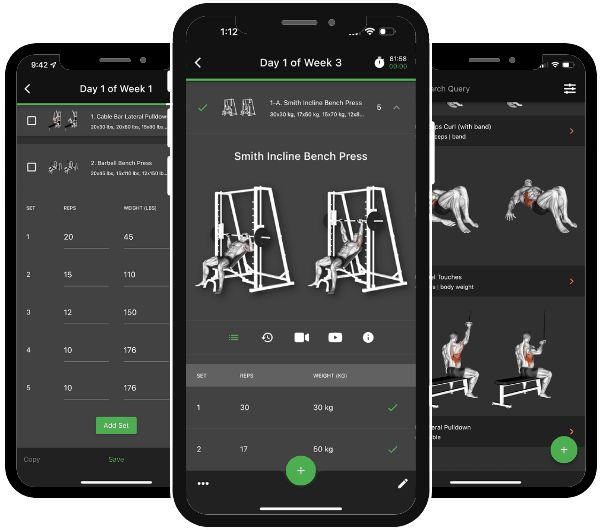
Achieve more with Fitwill: explore over 5000 exercises with images and videos, access built-in and custom workouts, perfect for both gym and home sessions, and see real results.
Start your journey. Download today!


Instructions
- Place a kettlebell on the floor between your feet and stand with your feet about hip-width apart, toes turned slightly out.
- Hinge down with a flat back, bend your knees enough to reach the handle, and keep the bell a few inches in front of your shins.
- Grip the handle with one hand, pack the shoulder on that side, and keep your free arm out of the way for balance.
- Brace your torso, take tension out of the slack, and keep your chest angled over the bell before you move.
- Drive through the floor to lift the bell close to your body, keeping it tight to your thighs and hips instead of letting it arc away.
- As the bell rises, pull the elbow back and slightly up, then let the hand rotate around the handle so the kettlebell rolls rather than flips.
- Catch the bell softly in the front rack with the forearm vertical, wrist neutral, and the bell resting against the outside of the forearm and upper arm.
- Stand tall to finish each rep, then guide the bell back down the same path and reset it on the floor before the next rep if you are using dead clean reps.
- Exhale through the drive and reset your breath before the next rep so each clean starts from a controlled dead stop.
Tips & Tricks
- Keep the bell close enough that it nearly brushes your thighs on the way up; if it swings forward, the catch gets sloppy.
- Think hip drive first, arm second. If your biceps are doing the work, the clean is too curl-like.
- Let the hand slip around the handle instead of crashing over the knuckles. A quiet catch usually means the timing is right.
- The front rack should land with the wrist stacked and the forearm vertical; a bent wrist is usually a sign the bell is too far out front.
- Reset fully between reps when you are training dead cleans. Each rep should start from a dead stop, not the rebound of a swing.
- Keep the free shoulder relaxed and square so your torso does not twist as the bell comes up.
- If the bell bangs your forearm, shorten the pull and move the elbow through faster so the bell can roll into position earlier.
- Use a lighter kettlebell until you can keep the back flat on the pickup and the rack position quiet on every rep.
Frequently Asked Questions
What muscles does Kettlebell Dead Clean work most?
It mainly trains the glutes, hamstrings, upper back, lats, grip, and core, with the shoulder stabilizing the rack position.
How is Kettlebell Dead Clean different from a regular clean?
A dead clean starts from the floor each rep instead of using a swing or backswing to load the bell. That makes the setup stricter and removes a lot of momentum.
Should the kettlebell flip over my hand or roll into the rack?
It should roll around the hand and settle softly into the rack. If it flips or slaps the forearm, the bell is drifting too far away or the pull is too aggressive.
Can beginners do Kettlebell Dead Clean?
Yes, if they start with a light kettlebell and learn the hinge, grip, and rack position first. The movement is technical, so crisp reps matter more than load.
What is the most common mistake in the clean?
Pulling with the arm and letting the bell swing forward is the biggest one. Keep the bell close, use the hips to drive it up, and let the elbow move through early.
Why does my wrist get hit during the catch?
Usually the bell is traveling too far from the body or the hand is not rotating around the handle soon enough. Keep the path tight and catch with a neutral wrist.
What should I feel at the top of Kettlebell Dead Clean?
You should feel the bell supported in the front rack, with the core braced and the glute on the working side helping you stand tall.
Can I use Kettlebell Dead Clean in a conditioning workout?
Yes, but keep the reps sharp and the bell light enough that every set starts from a dead stop. Once the catch gets noisy, the set is too fatigued.