Kettlebell Single-Arm Clean
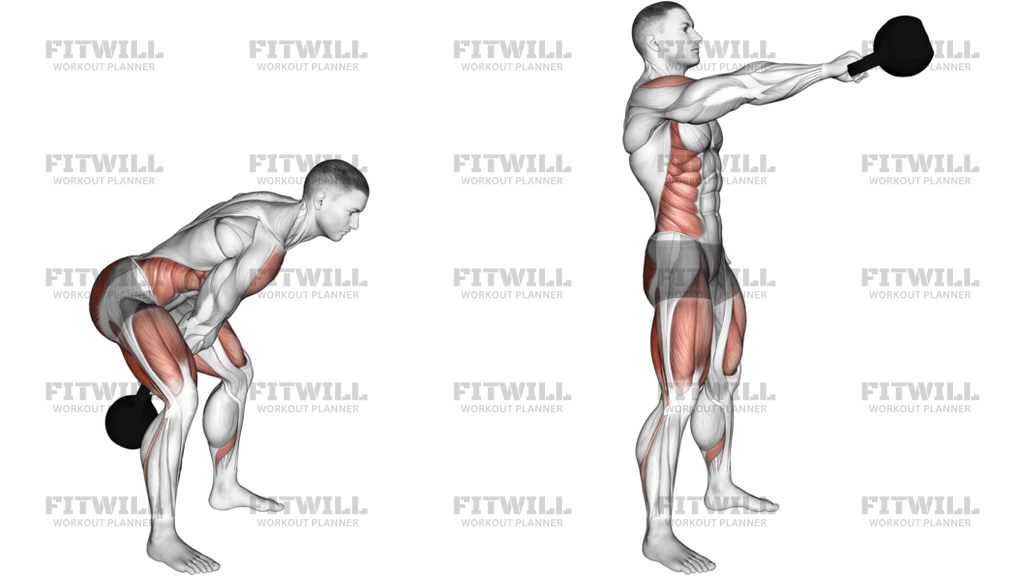
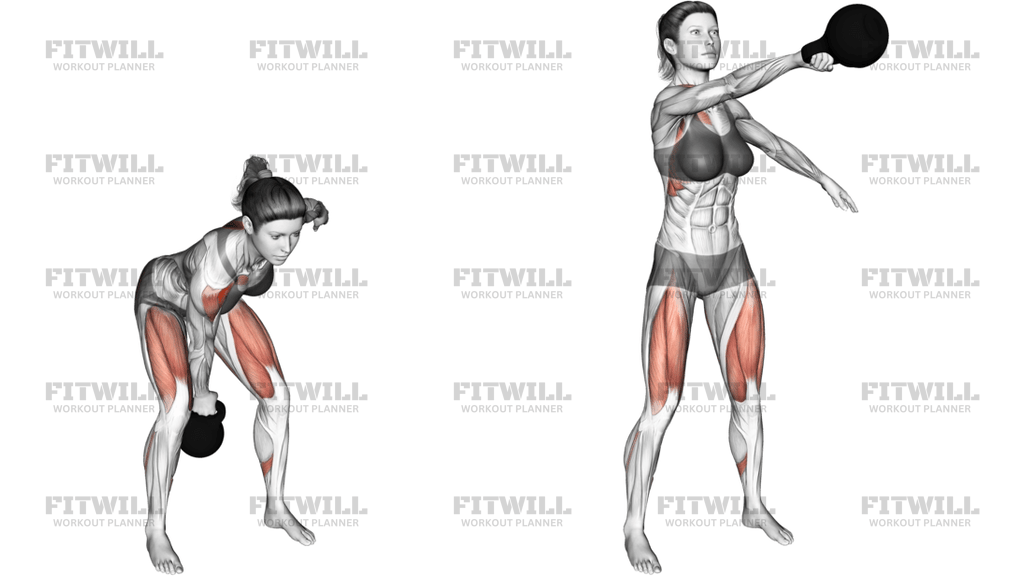
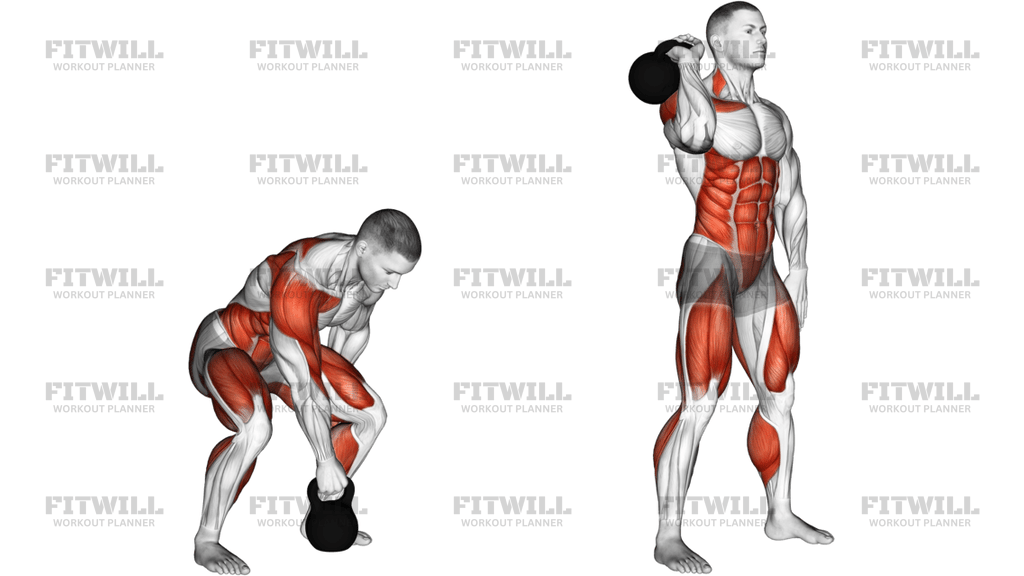
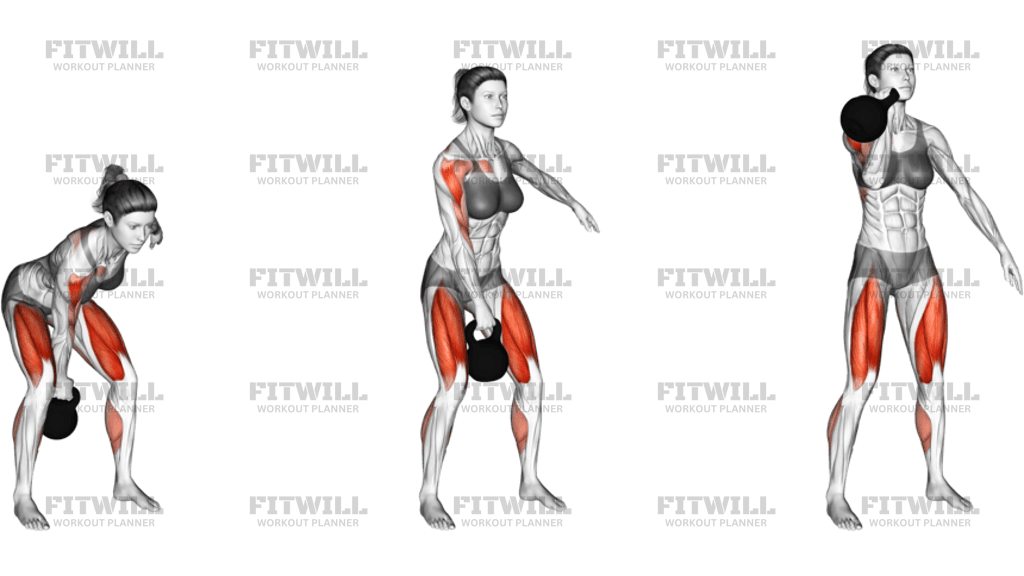
The kettlebell single-arm clean is a hinge-based power drill that moves a kettlebell from a backswing into the front rack on one side. It is not a curl and not a wide swinging pull. The bell should travel close to your body, rotate smoothly around the hand, and finish quietly in the rack with the wrist neutral and the elbow tucked.
This exercise builds a useful mix of hip drive, upper-back control, grip strength, and trunk stability. The glutes and hamstrings create the pop from the hinge, while the lats, traps, forearm, and core help guide the bell and absorb the catch. Because the movement is unilateral, it also exposes side-to-side differences in balance, timing, and shoulder control.
Setup matters a lot. Start with the kettlebell slightly in front of you, hinge to grip the handle, and hike it back between the legs to create tension before the clean. From there, the hips do the work: extend hard enough to float the bell up, then guide it around the forearm instead of pulling the weight higher with the arm. A clean rep should feel crisp, compact, and close to the body rather than flared or noisy.
Use the kettlebell single-arm clean for strength-power work, conditioning circuits, or as a skill bridge into presses, front-rack squats, or complexes. It also works well as a technical drill for learning how to receive a kettlebell without slamming the forearm. Keep the load light enough to stay precise, especially if you are new to kettlebell timing or if the rack position tends to collapse at the shoulder.
The safest reps are the ones where the bell lands softly in the rack and the spine stays organized through the hinge. If the kettlebell is crashing into the forearm, looping away from the body, or turning into an arm pull, the bell is too heavy or the timing is off. Clean reps should look and feel controlled from the backswing to the rack.
[ Workout Log & Planner ]
Put your next workout in Fitwill
Keep your plan and training log ready when you are.


Instructions
- Place the kettlebell slightly in front of you, stand with feet about hip-width apart, and hinge at the hips with a flat back to take the handle in one hand.
- Keep the free arm out for balance, soften the knees, and load the hips so your torso stays long rather than rounded over the bell.
- Hike the kettlebell back between your thighs like the start of a one-arm swing to create tension before the clean.
- Drive the hips forward to float the bell upward; the arm stays relaxed and close to the body while the bell rises.
- As the bell comes up, keep the elbow near your ribs and guide the kettlebell around the hand instead of curling it higher.
- Receive the bell softly in the front rack with the wrist neutral, forearm vertical, and the kettlebell resting on the forearm and upper arm.
- Pause long enough to feel balanced, then lower the bell under control by letting it roll back down into the backswing.
- Reset the hinge for the next rep or lower the bell to the floor, breathing out on the hip drive and re-bracing before each clean.
Tips & Tricks
- Think of the clean as a fast hinge, not a pull with the biceps; the hips should create most of the speed.
- Keep the kettlebell close to your zipper line on the way up so it does not loop away from the body.
- Let the bell rotate around the hand instead of flipping over the forearm; a heavy forearm slap usually means the path is too wide or the timing is late.
- Use a neutral wrist in the rack, with the knuckles pointing up rather than letting the wrist bend back.
- If the bell feels noisy in the catch, reduce the load and slow the approach until the rack is quiet.
- Keep your chest proud and ribs stacked over the pelvis so the clean does not turn into a back extension.
- Do not squat the bell up; if the knees are doing most of the work, the hinge and hip snap need more practice.
- For conditioning sets, alternate sides only after the bell settles cleanly in the rack or on the floor so each rep stays sharp.
Frequently Asked Questions
What muscles does the kettlebell single-arm clean work?
It mainly trains the glutes, hamstrings, lats, traps, grip, and core, with the shoulder stabilizing the front-rack position.
Is this the same as a kettlebell swing?
No. A swing finishes with the bell floating in front of you, while the clean turns that upward drive into a controlled catch in the rack.
How should the kettlebell travel during the clean?
It should stay close to your body and rotate smoothly around the hand, not arc outward or bang into the forearm.
Should I use my arm to lift the kettlebell into the rack?
No. The arm guides the bell, but the hip drive creates the lift and the elbow simply tucks around the bell at the top.
Where should the kettlebell finish on my body?
In the front rack, with the handle resting diagonally across the palm, the forearm vertical, and the elbow tucked near the ribs.
Can beginners learn the single-arm clean?
Yes, but start light and practice the hinge and swing path first so the catch in the rack feels quiet and controlled.
What is the most common mistake with this exercise?
The usual error is looping the bell away from the body and letting it crash onto the forearm instead of rotating it smoothly into the rack.
Can I use this before presses or front-rack squats?
Yes. It is a good prep drill because it teaches you how to receive a kettlebell cleanly before moving into other front-rack work.