Kettlebell Farmers Walk
Kettlebell Farmers Walk is a loaded carry performed with a kettlebell in each hand while you walk a set distance or time. It trains grip endurance, upper-back posture, trunk stiffness, and the ability to keep your body organized while the load is hanging at your sides. Unlike a swinging or pressing exercise, the goal here is not to create speed or range. The goal is to stay tall, stay braced, and keep the bells steady as you move.
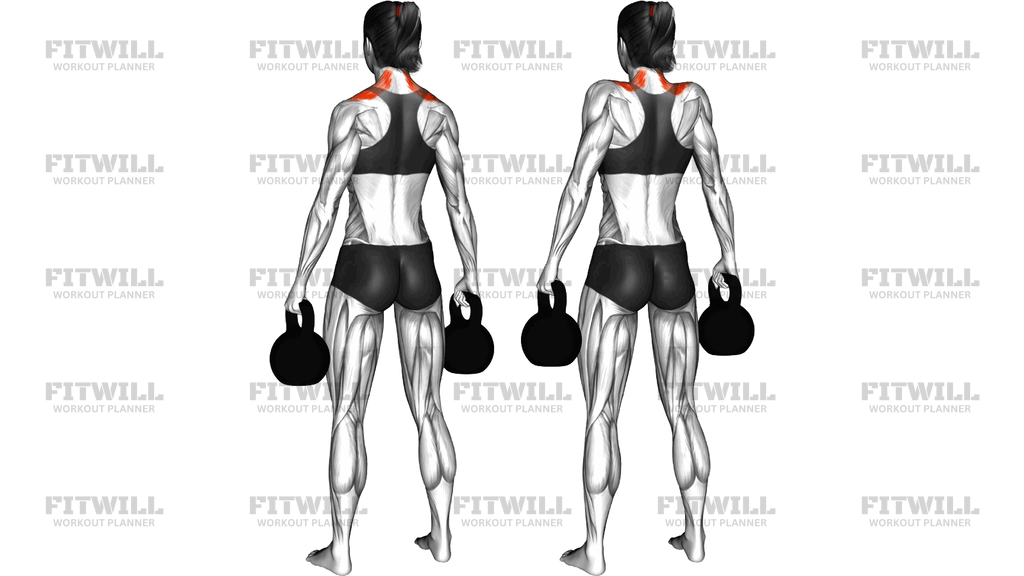
Because the load sits below your center of mass, this exercise exposes small breakdowns in posture very quickly. If the shoulders creep up, the ribs flare, or the torso leans to one side, the carry becomes less effective and more stressful on the low back and neck. A good farmers walk starts with a clean pickup, then continues with short, deliberate steps and a quiet upper body. The image for this exercise shows the bells carried beside the thighs with the arms long and the body walking in a controlled line, which is the exact feel you want to recreate.
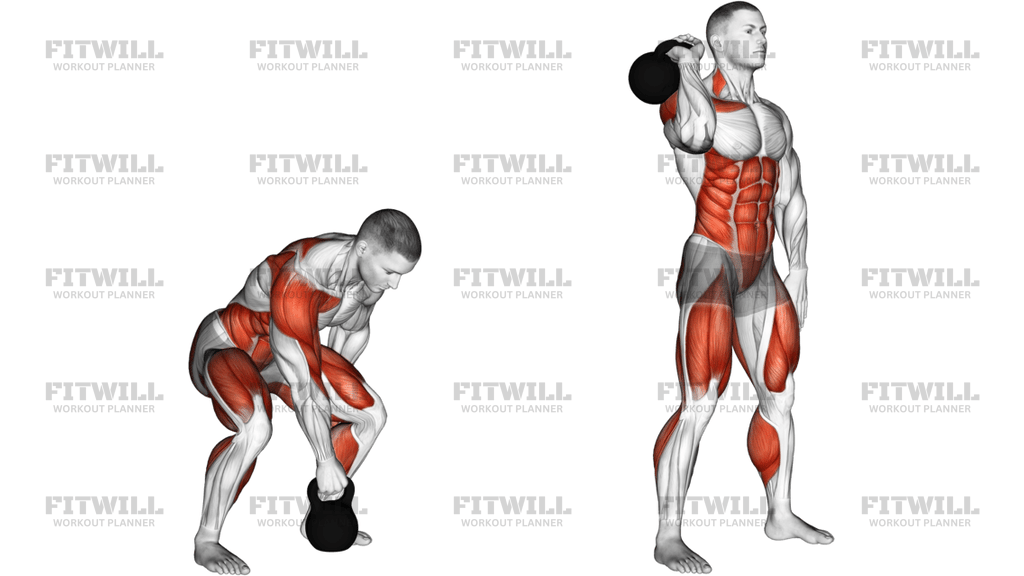
Set the kettlebells just outside your feet, hinge down with a flat back, and grip the handles firmly before standing. Once you are upright, stack the ribs over the pelvis, keep the chin level, and let the arms hang straight without letting the bells swing forward. The walk should feel smooth and purposeful, not rushed. If you need to turn, do it with small steps instead of twisting through the trunk. The carry ends when you have covered the planned distance or when your posture and grip start to degrade.
This is a useful drill for general strength, conditioning, and athletic preparation because it teaches you to maintain force while moving. It fits well in warmups, accessory blocks, core-focused sessions, and finishers where you want a hard but simple conditioning effect. Beginners can use light bells and short carries, while advanced lifters can challenge grip, posture, and total work by increasing load, distance, or number of rounds.
Treat the farmers walk like a skill, not a race. Choose a load that lets you walk with level shoulders, stable breathing, and a controlled pace from start to finish. If the bells start to bang against your legs, your torso starts drifting, or your grip opens before your legs are finished, the set is too heavy or too long for the quality you want. Clean repetitions are what make this carry valuable.
[ Workout Log & Planner ]
Put your next workout in Fitwill
Keep your plan and training log ready when you are.


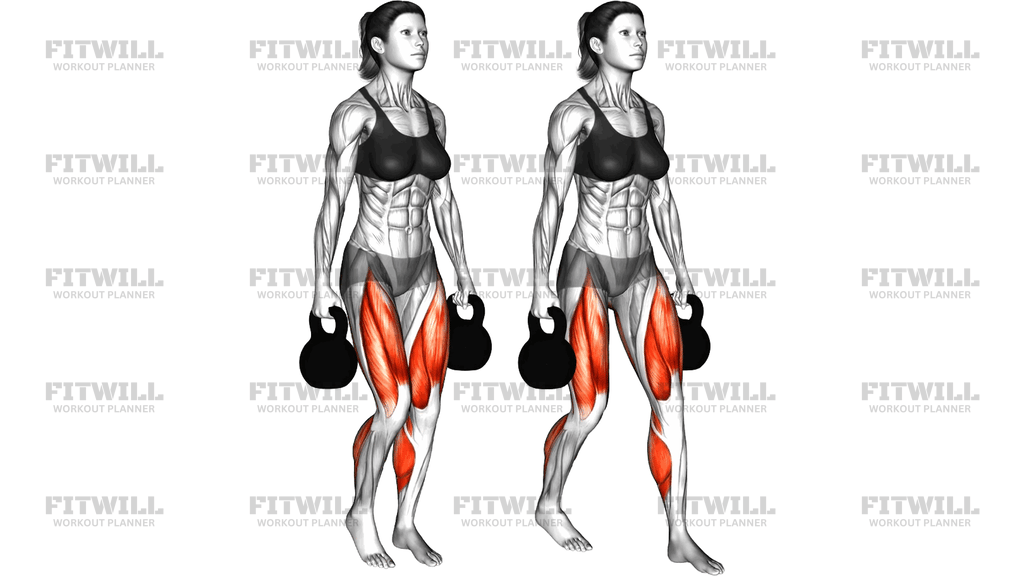
Instructions
- Place two kettlebells on the floor just outside your feet, with the handles parallel and easy to grab.
- Hinge down with a flat back, brace your torso, and take a firm grip on both handles.
- Drive through your feet to stand up, keeping the bells close to your thighs and your chest tall.
- Set your shoulders down and back without pinching hard, and keep your wrists straight.
- Walk forward with short, controlled steps while keeping your head level and your torso upright.
- Let the arms hang long; do not let the kettlebells swing, bang your legs, or pull your shoulders up.
- Breathe in through the nose and exhale steadily as you walk, maintaining a light brace through the midsection.
- If you need to turn, take small steps and avoid twisting through the trunk.
- Stop the carry when the grip, posture, or walking line starts to break down, then set the bells down by hinging at the hips.
Tips & Tricks
- Pick kettlebells you can hold without your shoulders hiking toward your ears.
- Shorter steps usually keep the torso steadier than long, reaching strides.
- Keep the bells slightly outside the thighs so they do not brush or bang your legs.
- If your grip fades before your posture does, the load is probably too heavy for the chosen distance.
- Think 'tall spine, quiet shoulders' instead of trying to march fast.
- On turns, slow down and re-stack the ribs over the pelvis before you continue.
- Chalk can help, but straps usually defeat the main grip-strength benefit of the carry.
- If the low back feels more loaded than the legs and trunk, shorten the distance or reduce the weight.
Frequently Asked Questions
What does the kettlebell farmers walk train most?
It builds grip endurance, shoulder stability, trunk control, and the ability to stay upright while carrying load.
Do I hold one kettlebell or two?
The standard farmers walk uses one kettlebell in each hand. A single-bell version is a suitcase carry variation.
How far should I walk?
Use a distance or time that lets you keep your posture clean, such as a short lane, 20-40 seconds, or a set number of steps.
What should my shoulders do during the carry?
Keep them level and gently set down, not shrugged. If they rise toward your ears, the load is getting too heavy.
Can beginners do this exercise?
Yes. Start with lighter kettlebells, a shorter walk, and a slow pace so you can learn to stay stacked and balanced.
What is the most common mistake?
People rush the walk, lean side to side, or let the bells pull their posture forward instead of staying tall and braced.
Where should I feel this working?
You should feel the grip, forearms, upper back, core, glutes, and legs working to keep you stable.
How do I make the carry harder?
Increase the load, extend the distance, add more rounds, or use a slower, more controlled walking pace.