Kettlebell Turkish Get Up Squat Style
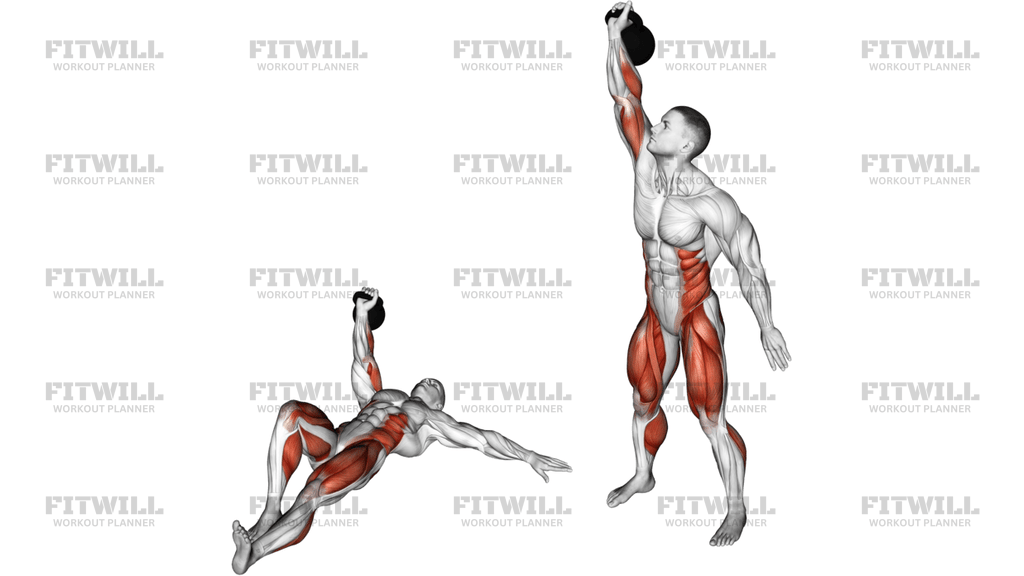
Kettlebell Turkish Get Up Squat Style is a full-body overhead stability exercise that starts on the floor and finishes standing with the kettlebell stacked over the shoulder. The squat-style version keeps the get-up grounded in a strong leg drive, so the quads do a lot of the work while the core and shoulder keep the load steady overhead.
The setup matters because every rep begins with the bell already locked out. Lie on your back with the kettlebell in one hand, wrist straight, elbow fully extended, and the bell directly above the shoulder. The same-side knee is bent with the foot planted, the other leg stays long, and the free arm opens out for balance. From there, you move through a controlled sequence instead of trying to stand in one rush.
As you rise, keep the kettlebell stacked over the shoulder and use each transition to create a better position: roll to the elbow, post on the hand, sit tall, then bring the body under the bell and stand by squatting rather than collapsing or twisting. On the way down, reverse the pattern with the same patience, placing the hand, sitting, and lowering the torso under control until you are back on the floor.
This exercise is useful when you want leg strength, trunk control, shoulder stability, and coordination in one movement. It is often used in technique blocks, warmups, and accessory work because the load can be kept light while the control demand stays high. Beginners can use it with a very light kettlebell or practice partial get-up stages first, but the shoulder must stay comfortable and the bell should never drift away from a vertical line over the arm.
[ Workout Log & Planner ]
Put your next workout in Fitwill
Keep your plan and training log ready when you are.


Instructions
- Lie on your back with one kettlebell in a single hand, the arm straight above the shoulder, the wrist stacked, the same-side knee bent, the foot flat, the other leg long, and the free arm angled out for balance.
- Press the bell straight up so it stays vertical over the shoulder, then set your eyes on it and keep the shoulder packed before you move.
- Roll onto the opposite elbow without letting the bell tip backward or drift across your face.
- Post on the hand, keep the chest tall, and sit up under control while the kettlebell remains locked out overhead.
- Sweep the long leg under you and bring the body into the squat-style transition so both feet can help you stand.
- Drive through the planted foot or feet and rise by squatting under the bell, keeping the rib cage down and the arm vertical.
- Stand fully with the hips and knees extended, then hold the finish long enough to prove the bell is still stacked cleanly over the shoulder.
- Reverse the path by sitting the hips back, placing the hand, lowering to the elbow, and returning to the floor one segment at a time.
- Complete the planned reps on one side before switching, or reset to the floor and repeat the sequence on the other side.
Tips & Tricks
- Choose a kettlebell you can keep steady overhead from the floor all the way to standing without bending the elbow.
- Keep the bell directly above the shoulder; if it drifts behind your head, the rep is too heavy or you are losing position.
- Use the free arm as a counterbalance on the floor, especially during the roll-to-elbow and sit-up portions.
- Keep the planted foot rooted so the knee tracks in line with the toes as you squat up under the bell.
- Think tall chest and down ribs when you move from the floor into the seated and standing positions.
- Pause briefly at the elbow, hand, and squat positions so each transition stays deliberate instead of rushing together.
- Lower the body in reverse order instead of dropping back to the floor, which keeps the shoulder under control.
- If the shoulder starts wobbling, shorten the range and practice the floor-to-hand or floor-to-sit pieces before full reps.
- Stop the set when the bell no longer stays vertical or when the stand begins to twist through the torso.
Frequently Asked Questions
What muscles does Kettlebell Turkish Get Up Squat Style work?
It emphasizes the quads, glutes, core, and shoulder stabilizers, with the grip and upper back also working to keep the kettlebell stacked.
Why is this called squat style?
The standing and lowering phases use a squat-dominant path under the bell instead of relying on a pure lunge transition.
Is this the same as a classic Turkish get-up?
The floor sequence is similar, but the squat-style finish changes how you rise and return to the ground.
How heavy should the kettlebell be?
Light enough that you can keep the arm locked, the wrist stacked, and the bell steady through every transition.
Should my eyes stay on the kettlebell?
Yes through the floor transitions, because watching the bell helps keep the shoulder organized and the arm vertical.
What is the most common mistake?
Letting the kettlebell drift away from the shoulder line or rushing the transitions so the body twists under load.
Can beginners use this exercise?
Yes, but start with a very light kettlebell and practice the floor-to-hand and floor-to-sit pieces before doing full reps.
What if my shoulder feels unstable?
Reduce the load, shorten the range, or skip the overhead version until you can keep the bell stacked and pain-free.