Kettlebell One-Arm Swing
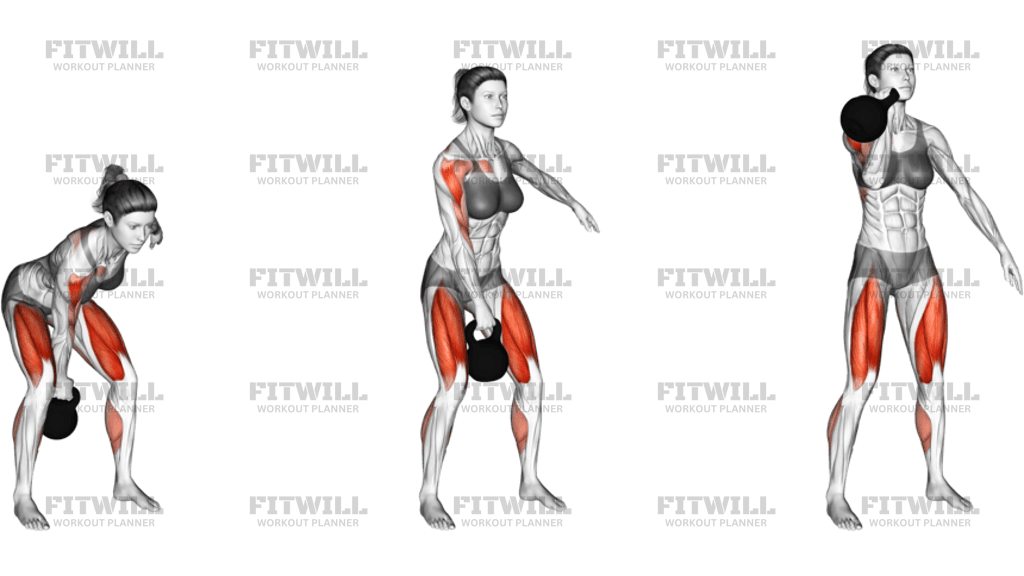
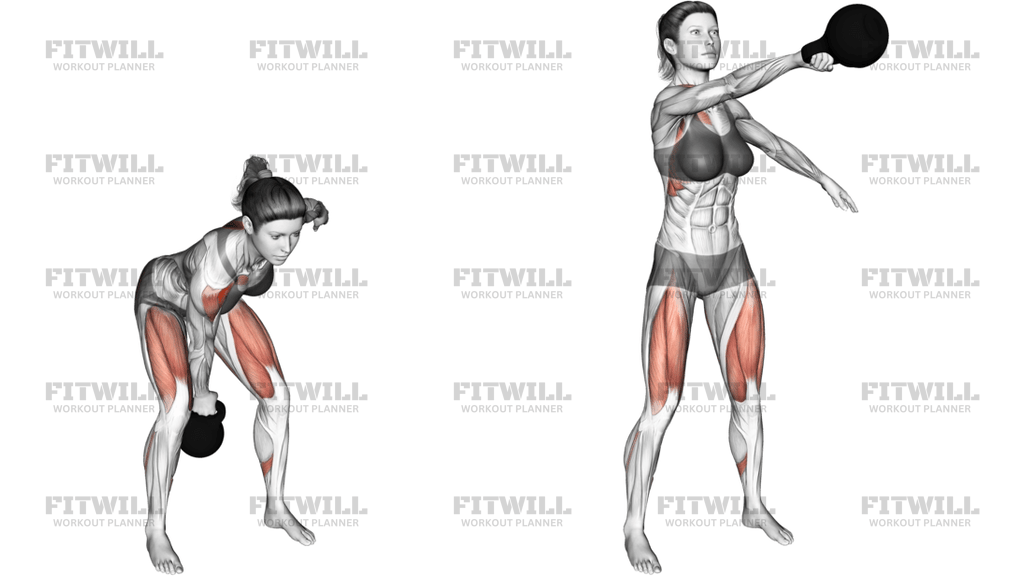
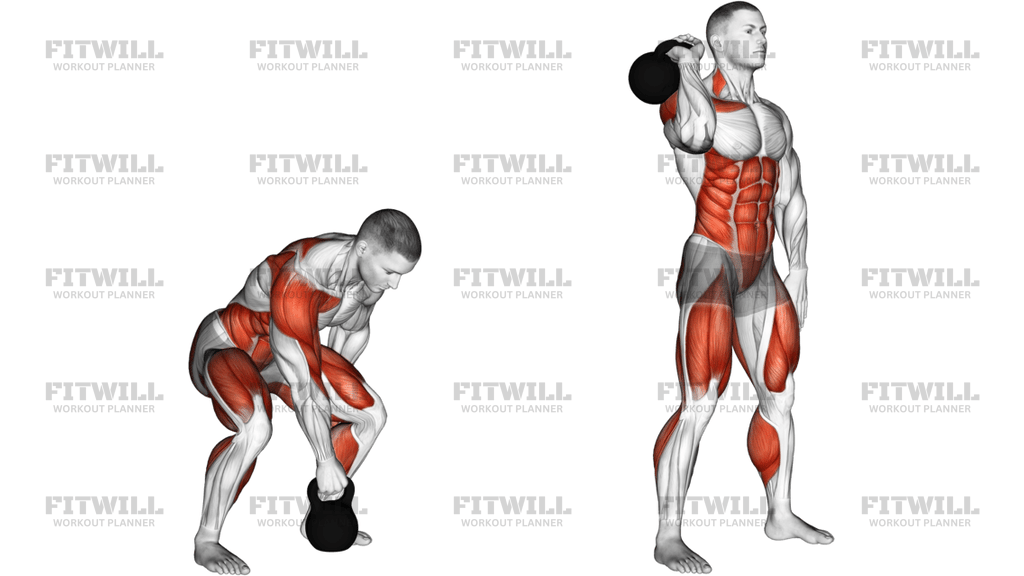
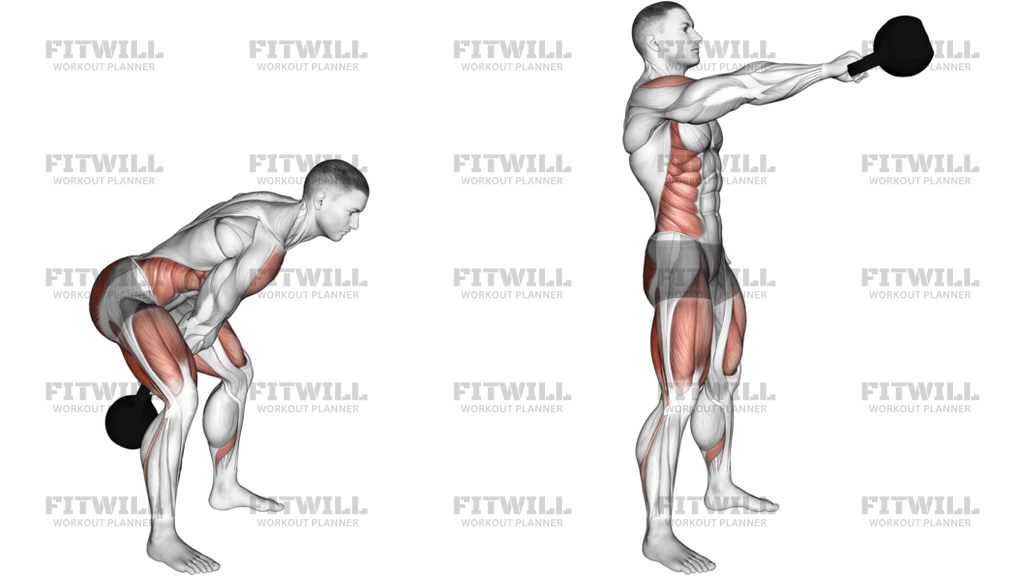
The kettlebell one-arm swing is a powerful hip-hinge drill that combines posterior-chain strength, conditioning, and trunk stability in one movement. With one hand on the handle and the other arm free for balance, you drive the kettlebell from a loaded backswing to roughly chest height by snapping the hips forward, not by lifting with the shoulder. The image shows a classic one-arm swing finish with the body tall, ribs stacked, and the bell floating in front of the shoulder line.
This exercise trains the glutes, hamstrings, hips, core, lats, and grip while also challenging anti-rotation through the torso. The one-sided load makes the trunk work harder to resist twisting, so the quality of the hinge matters more than the speed of the bell. A strong swing feels explosive at the hips but controlled through the spine, shoulders, and arms. The arm should stay long and relaxed like a strap, while the hips create the force.
Setup is what makes the swing safe and effective. Stand with the kettlebell slightly in front of you, feet about shoulder width, and hinge back until the handle is easy to reach without rounding the lower back. Before each rep, pack the shoulders, keep the neck long, and brace the midsection as the bell hikes back between the legs. That backswing stores tension in the hamstrings and glutes so the next drive can be crisp instead of rushed.
On the way up, think about aggressively standing tall and squeezing the glutes at the top while keeping the bell close to the body path. The bell should rise because your hips extend, not because you pull with the arm. At the top, finish tall with the arm parallel to the floor or slightly lower depending on your build and the bell size, then let the weight fall back under control and re-hinge immediately. Breathing should stay rhythmic and timed to the hip snap, with a short exhale at the top.
Use the one-arm swing for power endurance, posterior-chain conditioning, or as a hinge-focused accessory when you want a high-return movement without adding barbell complexity. It is usually best kept out of the set once the hinge turns into a squat, the shoulder starts lifting the bell, or the torso begins rotating. Start light enough to keep the swing crisp, then build load only as long as the path, posture, and timing stay identical rep to rep.
[ Workout Log & Planner ]
Put your next workout in Fitwill
Keep your plan and training log ready when you are.


Instructions
- Stand with the kettlebell about a foot in front of you, feet roughly shoulder-width apart, and hinge at the hips to reach the handle with one hand while keeping your back flat.
- Hike the kettlebell back between your legs like a football snap, letting the free arm stay out for balance and keeping your shoulders packed.
- Brace your midsection and load the hamstrings as the bell passes high between the thighs without letting your chest collapse.
- Drive the hips forward powerfully to send the kettlebell forward and up; keep the working arm long and let the hips create the lift.
- Finish tall with the glutes squeezed, ribs stacked over the pelvis, and the bell floating around chest height in front of the shoulder.
- At the top, do not shrug or lean back; the bell should feel weightless for a brief moment while your body stays upright.
- Let the kettlebell fall back down under control, then re-hinge as soon as it swings past the hips so the bell stays close to the body.
- Repeat for the planned reps, breathing out on the hip snap and resetting your brace on each backswing.
Tips & Tricks
- If the bell is pulling you into a squat, push the hips farther back before you start the next rep.
- Keep the swing arm loose; gripping harder will not make the bell rise, but it will fatigue the forearm sooner.
- The free hand should help you balance, not reach across the body and twist the torso.
- Use a bell light enough that the top position is a tall hip lock, not a backward lean.
- Think about snapping the handle forward from the hips rather than muscling the bell with the shoulder.
- If your low back feels the set more than your glutes and hamstrings, shorten the rep and clean up the hinge.
- Exhale sharply as the bell floats up, then inhale on the backswing to rebrace before the next drive.
- Stop the set when the kettlebell starts drifting away from the body or the arc gets inconsistent side to side.
Frequently Asked Questions
What muscles does the kettlebell one-arm swing work most?
It primarily trains the glutes and hamstrings, with the core, lats, grip, and shoulders helping stabilize the bell.
Is the kettlebell one-arm swing a squat or a hinge?
It is a hip hinge. Your hips go back on the backswing and snap forward to drive the bell, while the knees stay softly bent.
How high should the kettlebell rise in the one-arm swing?
In this version, the bell usually floats to about chest height. If it is much lower, the bell may be too heavy; if it is much higher, you may be pulling with the arm.
Can beginners do the one-arm kettlebell swing?
Yes, but only with a light bell and a solid hinge pattern first. If the lower back rounds or the bell drifts, regress to a two-hand swing or deadlift.
Should my shoulder be doing the work at the top?
No. The arm stays long and the shoulder stays packed; the hip snap should make the bell float, not a front-raise motion.
Why does the one-arm swing challenge my core more than a two-hand swing?
The off-center load tries to twist your torso, so your obliques and deep core muscles have to resist rotation and keep the ribs stacked.
What is the most common mistake with this swing?
People often turn it into a squat, an upright row, or a front raise. The rep should stay a hinge with the bell traveling close to the body.
How should I breathe during the kettlebell one-arm swing?
Take a breath and brace during the backswing, then exhale as you snap the hips and the bell floats up.