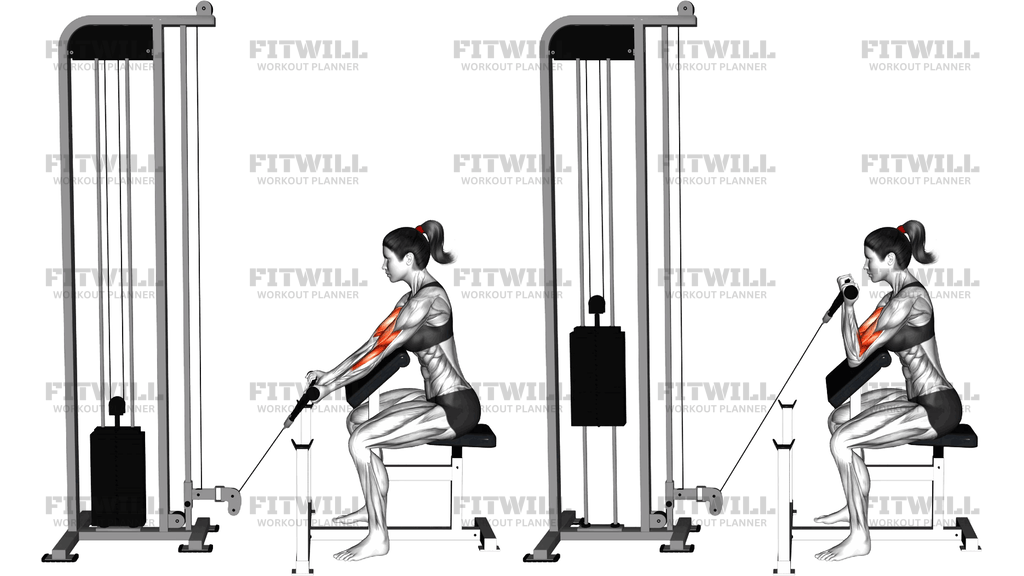
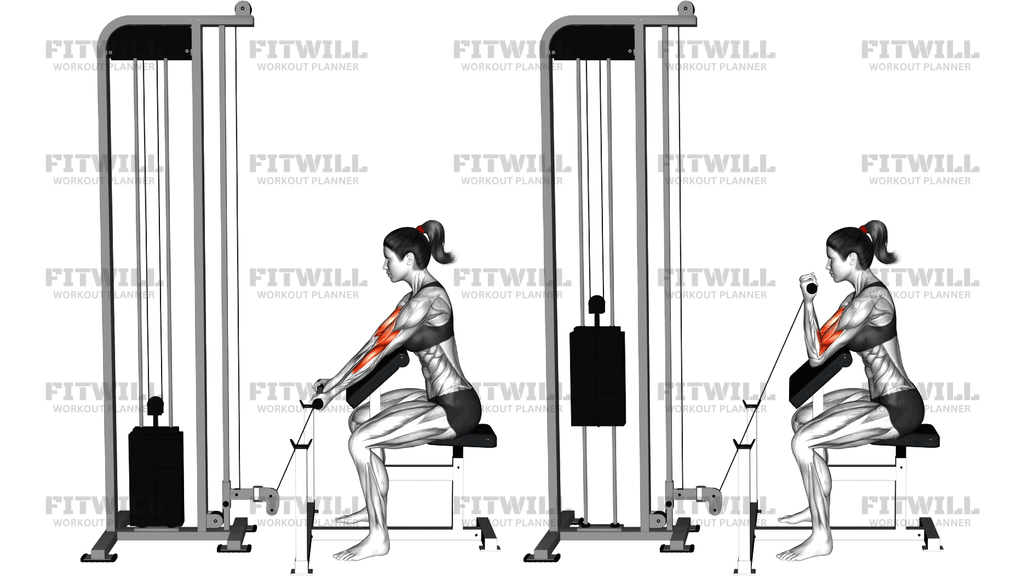
Cable Reverse-Grip Biceps Curl SZ-Bar
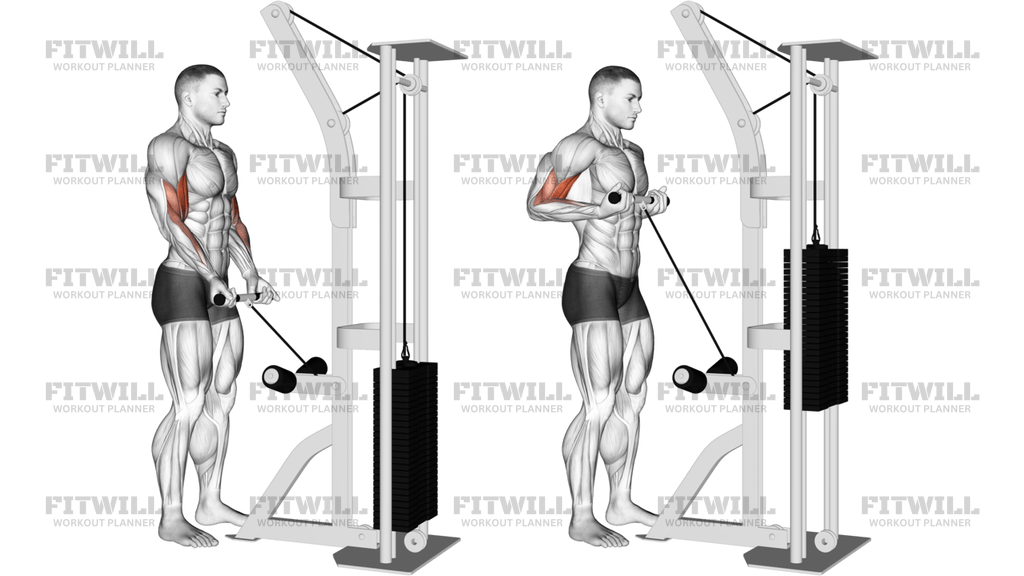
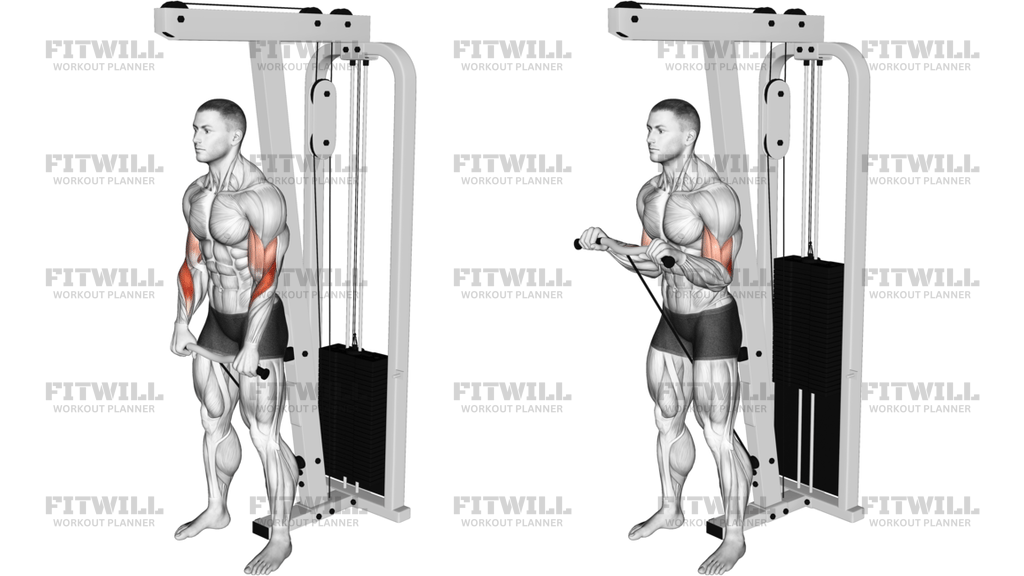
Cable Reverse Grip Biceps Curl with an SZ-bar is a standing cable curl performed with a pronated, palms-down grip. The cable keeps tension on the arm through the whole repetition, while the reverse grip shifts more of the work toward the brachialis, brachioradialis, and forearm flexors than a standard underhand curl.
This setup is useful when you want direct arm work without a lot of shoulder motion or body English. The EZ-bar shape helps the wrists sit in a more comfortable angle than a straight bar for many lifters, but the movement still rewards strict posture, quiet elbows, and a controlled tempo. If the torso starts leaning back or the shoulders roll forward, the forearms and upper arms usually take over and the curl becomes much less useful.
The exercise is best treated as a precise accessory movement. Stand close enough to the low pulley that the line of pull stays smooth, keep the upper arms next to your ribs, and curl until the forearms approach the upper arms without letting the elbows drift forward. The return should be slower than the lift so the cable never goes slack and the working muscles stay loaded instead of the stack dropping the weight for you.
Because the reverse grip reduces how much the biceps brachii can dominate the rep, this is a strong choice for building arm thickness, grip tolerance, and elbow-flexion strength. It fits well after heavier pulling work, during an arm-focused session, or in a higher-rep accessory block where clean repetition quality matters more than load. Light to moderate resistance is usually enough to make the forearms and upper arms work hard.
Use a stance you can hold still for every rep, keep the wrists in line with the forearms, and stop the set when the shoulders or lower back start helping. The goal is not to heave the handle upward; it is to keep constant cable tension on a strict reverse curl and finish each rep with the same shape you started with.
[ Workout Log & Planner ]
Put your next workout in Fitwill
Keep your plan and training log ready when you are.


Instructions
- Attach an SZ-bar to the low pulley and stand facing the cable with your feet about hip-width apart.
- Take a pronated, palms-down grip on the bar and let it hang in front of your thighs with your wrists straight.
- Set your shoulders down and back, stack your ribs over your pelvis, and keep a soft bend in the knees.
- Keep your upper arms close to your sides before the first rep so the cable starts with steady tension.
- Exhale and curl the bar upward by bending only at the elbows, bringing the knuckles toward your chest.
- Keep the elbows pinned near your ribs and avoid letting the shoulders roll forward or the torso lean back.
- Squeeze briefly near the top, then lower the bar slowly until the elbows are almost straight again.
- Reset your posture after each rep and repeat for the planned reps without losing the reverse-grip position.
Tips & Tricks
- Keep the wrists stacked over the forearms; letting them bend back turns the set into a grip and wrist exercise.
- Use a weight that lets the bar travel without bouncing off the stack at the bottom of each rep.
- Think about lifting the knuckles, not swinging the shoulders, so the elbows stay fixed beside the torso.
- A slightly narrower stance usually makes it easier to keep the cable line centered and the torso still.
- Lower the bar for two to three seconds to keep tension on the brachialis and brachioradialis.
- If the EZ-bar feels awkward, check that your hands are on the angled sections rather than forcing a straight-bar grip.
- Stop the set when your elbows start drifting forward or your chest starts pumping to cheat the curl up.
- This movement usually works best in moderate or higher rep ranges with clean, repeated arm flexion.
Frequently Asked Questions
What does the reverse grip change compared with a normal cable curl?
The palms-down grip reduces how much the biceps brachii can dominate and shifts more work toward the brachialis, brachioradialis, and forearm flexors.
Why use an SZ-bar on the cable instead of a straight bar?
The angled grips usually let the wrists sit in a more comfortable position while still keeping the curl strict and controlled.
Where should my elbows stay during the curl?
Keep them close to your ribs and mostly still. If they slide forward, the shoulders start helping and the curl turns into a body English rep.
Should I feel this in my forearms?
Yes. Forearm involvement is expected because the reverse grip and cable tension both challenge the brachioradialis and forearm flexors.
Is this a good biceps exercise for beginners?
Yes, if the load is light enough to keep the torso still and the wrists neutral. Beginners usually need less weight than they expect.
How do I know if I am using too much weight?
If you need to lean back, shrug, or lose the reverse grip position to finish the rep, the load is too heavy.
What muscles does the cable reverse-grip EZ-bar curl work?
It primarily works the biceps, with strong assistance from the brachialis, brachioradialis, and forearm flexors.
Where does this exercise fit in a workout?
It works well as an accessory arm movement after your heavier pulling or pressing work, or in a dedicated biceps session.