Dumbbell Behind Back Finger Curl
Dumbbell Behind Back Finger Curl is a standing forearm and grip exercise performed with the dumbbells held behind the hips. The setup matters because the arms stay straight at your sides while the hands work against the load from a mechanically awkward position, which makes this much more of a precision movement than a lift you can muscle through. It is usually used to train the finger flexors and wrist flexors, plus the forearm muscles that stabilize the wrist and help you control the handles.
The image shows the dumbbells hanging just behind the body, with the shoulders relaxed and the torso upright. That position keeps the movement focused on the hands and forearms instead of turning it into a shoulder raise or a swing. The exercise is effective when you hold the weight low and steady, then roll the handles deeper into the fingers and back into the palm under control. The goal is not a big body movement; it is a small, strict hand action that keeps tension on the forearms.
Done well, this exercise builds grip endurance, finger strength, and forearm control for pulling, carrying, deadlifting, climbing, and any work where the hands give out before the larger muscles do. Because the range is short and the load can feel deceptively easy at first, good reps depend on patience, clean wrist position, and a slow return. A load that is too heavy usually turns the set into elbow flexion, shoulder tension, or body sway, which shifts the stress away from the intended muscles.
Use it as an accessory movement after your main compound lifts, or as a focused finisher when you want direct forearm work without much setup. Keep the neck long, ribs down, and elbows straight enough that the forearms stay responsible for the motion. If the wrists start collapsing or the dumbbells drift forward away from the thighs, the set is no longer targeting the right area. The safest version is the one you can repeat cleanly, with the hands doing the work and the rest of the body staying quiet.
[ Workout Log & Planner ]
Put your next workout in Fitwill
Keep your plan and training log ready when you are.


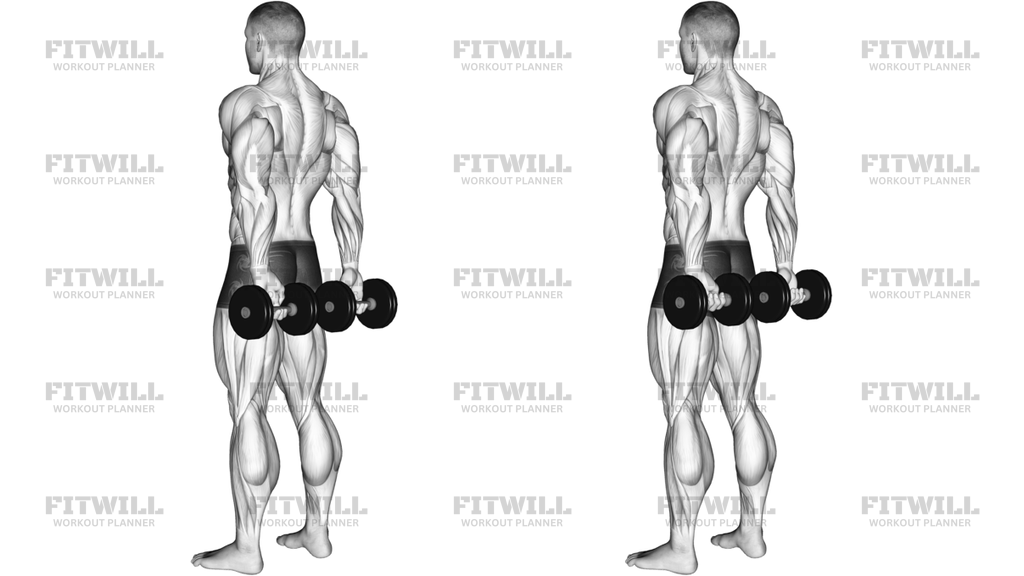
Instructions
- Stand tall and hold a dumbbell in each hand behind your hips, with your arms straight, feet about hip-width apart, and your shoulders relaxed.
- Let the handles sit deep in your fingers so the dumbbells hang behind your body without brushing the glutes or thighs.
- Keep your wrists neutral or slightly extended and lock your upper arms in place next to your sides.
- Brace your torso and keep your chest lifted without leaning forward or arching your lower back.
- Curl the fingers to roll each dumbbell from the fingertips toward the palm while keeping the elbows still.
- Squeeze at the top of the finger curl for a brief moment before reversing the motion.
- Slowly open the fingers and let the dumbbell roll back toward the fingertips under control.
- Repeat for the planned reps, breathing out as you curl and inhaling as you lower.
Tips & Tricks
- Use lighter dumbbells than you would for regular curls; the lever arm is short, but the finger work is still demanding.
- Keep the dumbbells slightly behind the line of the hips so the forearms stay loaded instead of the shoulders.
- Do not bend the elbows to help the curl; once the elbow starts moving, the set turns into an arm swing.
- Think about rolling the handle into the palm, not squeezing the whole arm hard from the start.
- Pause briefly in the fully curled position to avoid rushing the top half of the range.
- Lower slowly and keep tension in the fingers on the way down so the rep is not just a drop.
- If the wrists fold forward, reduce the load and reset the hand position before continuing.
- Keep the shoulders down and back, but relaxed enough that you are not shrugging through the set.
Frequently Asked Questions
What does Dumbbell Behind Back Finger Curl train most?
It primarily trains the forearm finger flexors and wrist flexors, with the grip muscles working hard to control the dumbbell handles.
Can beginners perform this exercise?
Yes, but beginners should start very light because the behind-the-back position makes the forearms fatigue quickly and can expose weak wrists.
Should my elbows bend during the curl?
No. Keep the upper arms still and let the fingers and wrist flexors do the work instead of turning it into a curl.
What is the most common mistake with this exercise?
The biggest mistake is using too much load and swinging the torso or bending the elbows to finish the rep.
Where should the dumbbells sit at the start?
They should hang behind the hips with the arms straight and the shoulders relaxed, not pressed into the thighs or held out in front of the body.
Why is the behind-the-back position useful?
It puts the hands and forearms in a stricter position, so the grip has to control the load without much help from the upper arm.
What should I do if the wrists start bending forward?
Lower the weight and reset the grip. A collapsing wrist usually means the load is too heavy or the hand position has drifted.
Can I use this as a grip-strength finisher?
Yes. It works well at the end of an upper-body or pulling session when you want direct forearm and grip fatigue without a big setup.