Dumbbell Incline One-Arm Hammer Press
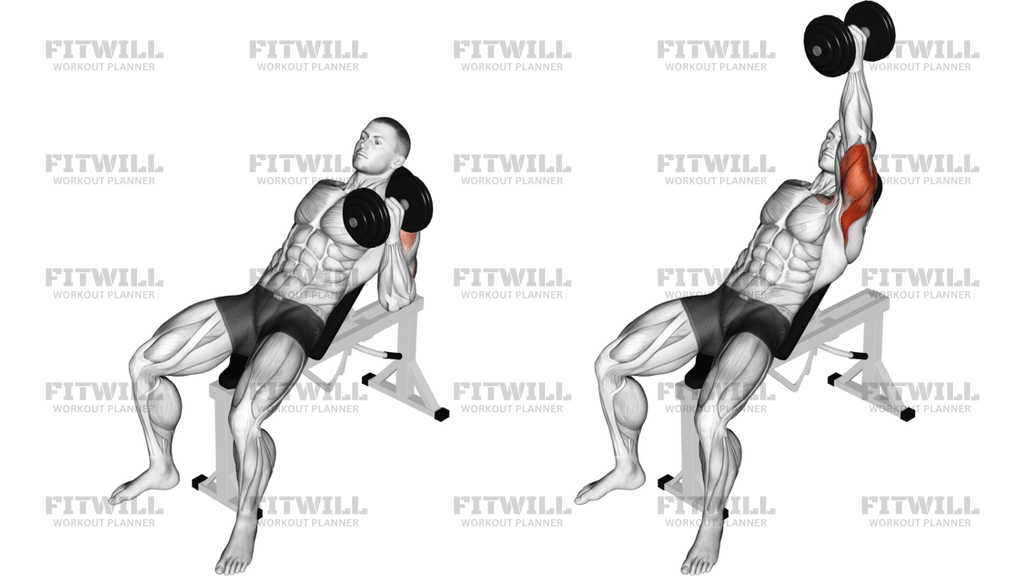
Dumbbell Incline One-Arm Hammer Press is a single-side pressing exercise performed on an incline bench with a neutral, hammer-style grip. The bench angle changes the line of press so the dumbbell travels slightly up and in, which lets you keep the wrist stacked over the elbow and press without the shoulder drifting too far forward.
This movement is most often used to build the triceps, with the anterior deltoid and forearm stabilizers helping to control the dumbbell through the entire path. Because only one arm is working at a time, the torso has to resist rotation and rib flare, so the core becomes part of the exercise instead of just passive support. The working side should feel like a strong press, not a loose shoulder swing.
The setup matters. Lie back with your head, upper back, and glutes anchored to the incline bench, and plant both feet firmly so the bench does not become a balancing act. Start with the dumbbell near shoulder level, palm facing inward, elbow under the hand, and the upper arm angled comfortably rather than pinned straight out to the side. From there, press the weight on a smooth arc until the elbow is straight without snapping into lockout.
On the way down, lower the dumbbell in a controlled line back to the outer chest and shoulder area, keeping the wrist neutral and the elbow from flaring excessively. The non-working side should stay quiet so the torso does not twist toward the load. Use breathing to stay organized: brace before the press, exhale as you drive up, and inhale on the descent.
This is a good choice when you want a pressing pattern that is joint-friendly, unilateral, and strict enough to reveal side-to-side differences. It fits well in upper-body strength work, accessory triceps work, or hypertrophy sessions where control matters as much as load. If the bench angle, elbow path, or torso position gets sloppy, the exercise turns into a shoulder-dominant press and the triceps tension drops quickly.
Fitwill
Log Workouts, Track Progress & Build Strength.
Achieve more with Fitwill: explore over 9600 exercises with images and videos, access built-in and custom workouts, perfect for both gym and home sessions, and see real results.
Start your journey. Download today!




Instructions
- Set an incline bench to a moderate angle and sit back with your upper back, head, and hips supported; plant both feet flat on the floor.
- Hold one dumbbell at shoulder level with a neutral grip, palm facing inward, and stack the wrist directly over the elbow.
- Brace your torso so your ribs stay down and your shoulders stay level before you start the press.
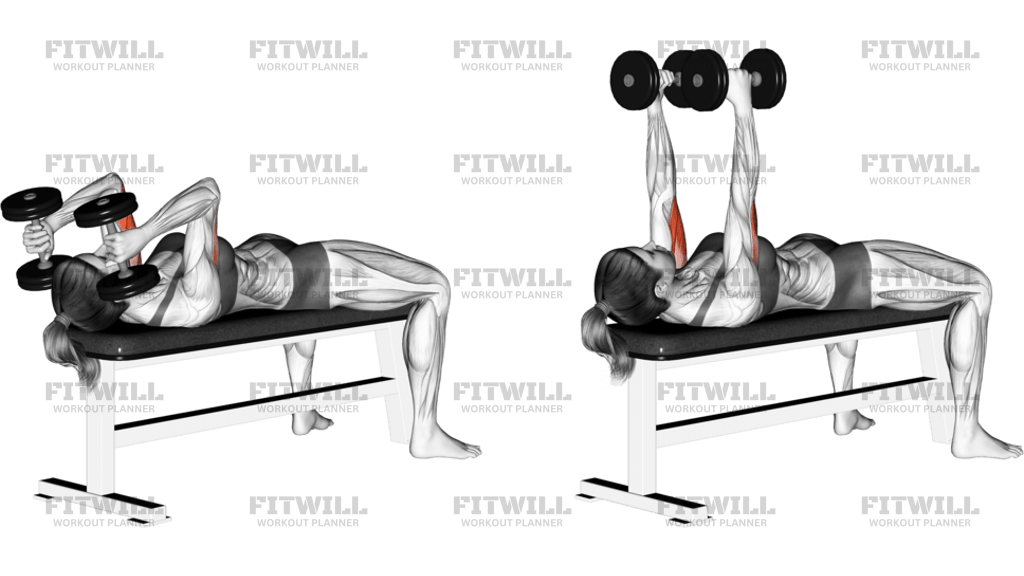
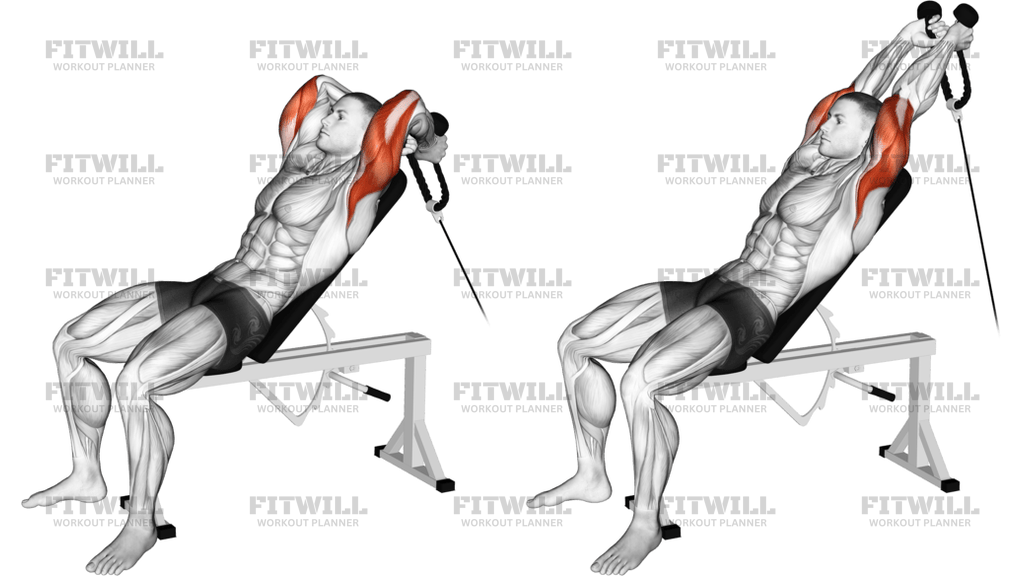
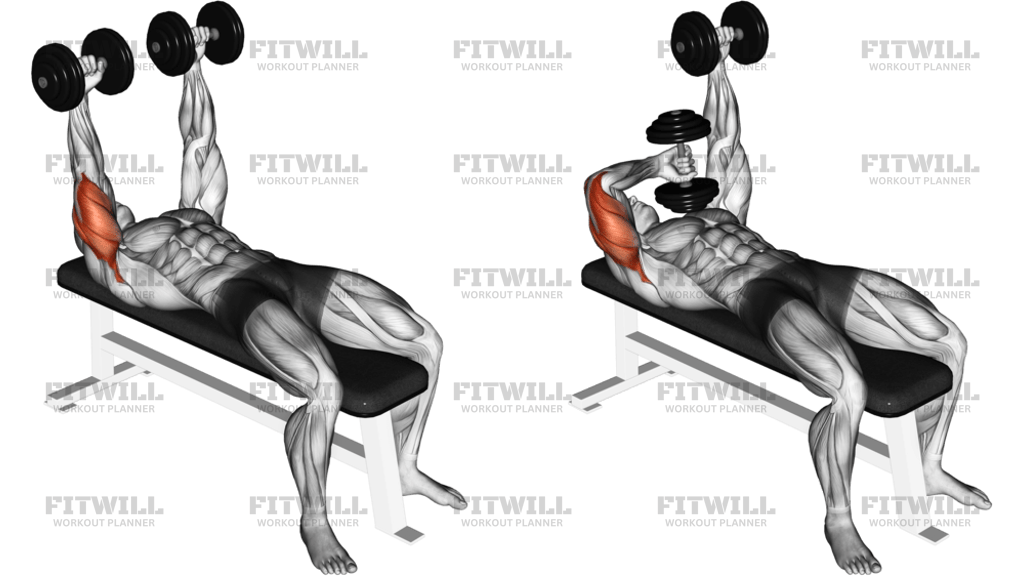
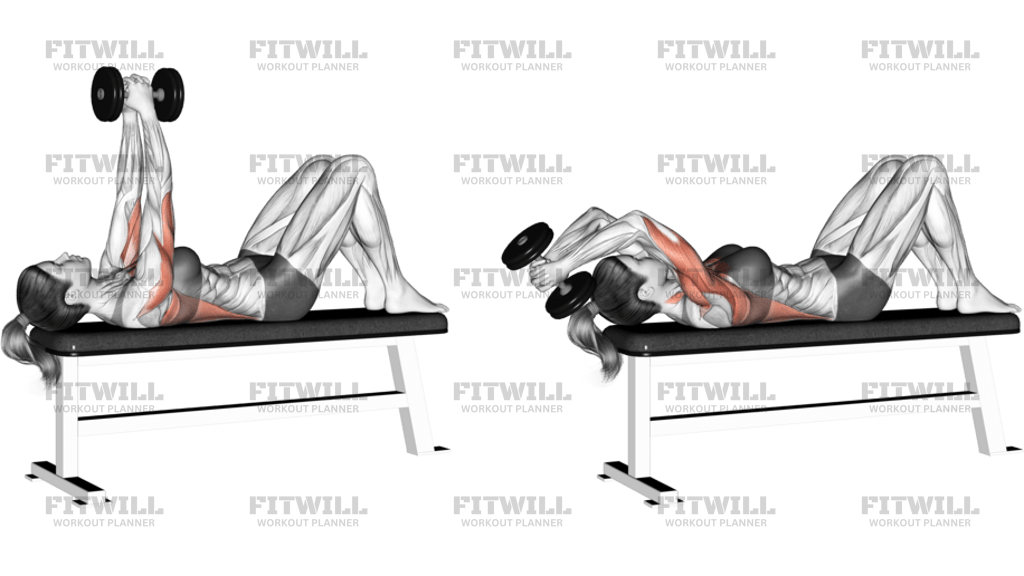
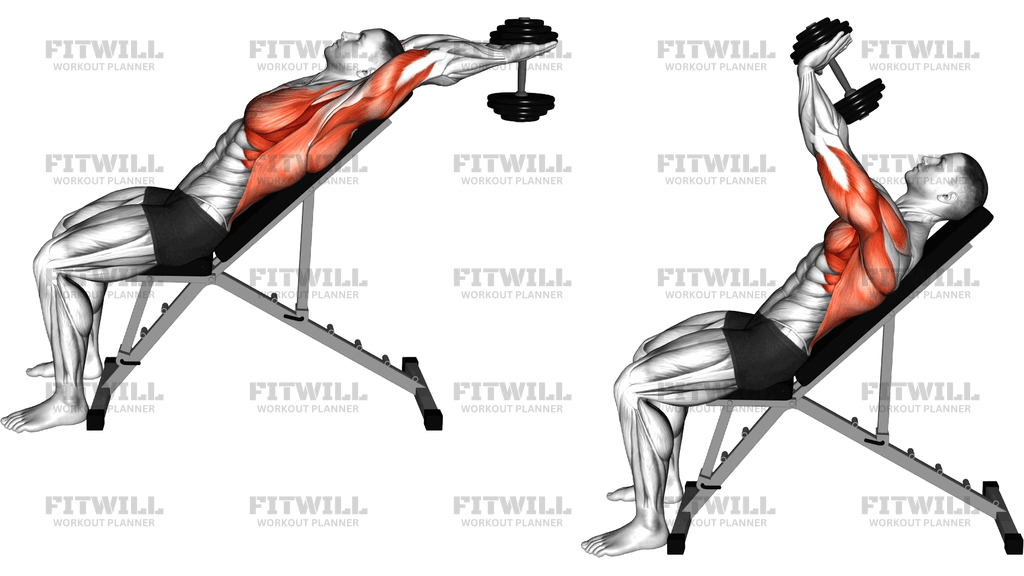
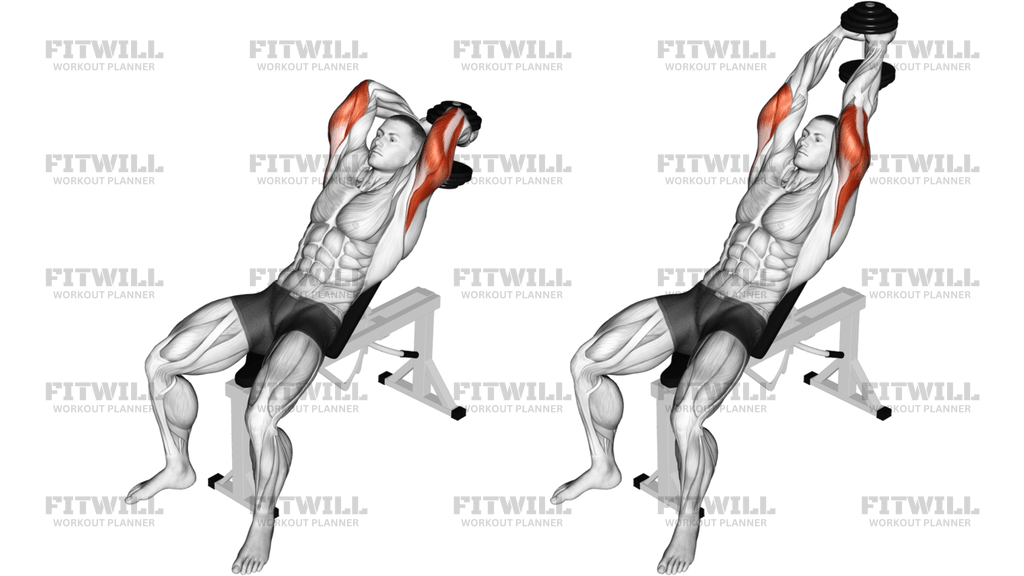
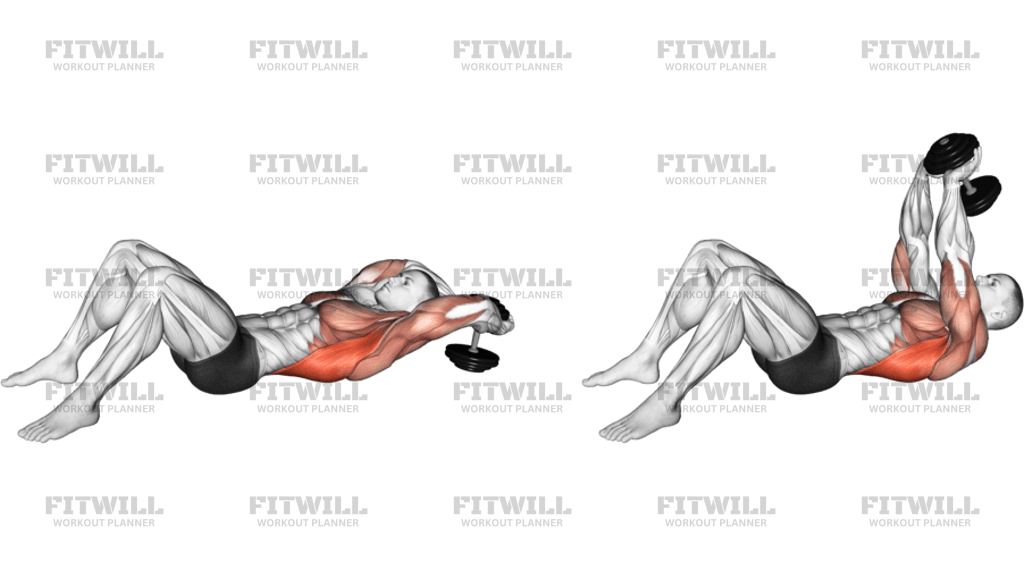
- Press the dumbbell up and slightly in on the same line shown in the image, keeping the elbow under the hand as you drive.
- Finish with the arm straight but not forcefully locked, and keep the shoulder from shrugging toward the ear.
- Lower the dumbbell slowly back to the start until the upper arm is again near the shoulder line and the elbow is comfortably bent.
- Keep the non-working side quiet so the torso does not twist toward the load or arch off the bench.
- Breathe out as you press and inhale as you lower for each repetition.
- Reset the shoulder and wrist before the next rep rather than bouncing out of the bottom.
Tips & Tricks
- Use a bench angle that feels like an upper-chest-to-triceps press, not an upright shoulder press; too steep changes the line of force.
- Keep the dumbbell in a neutral grip the whole time so the wrist and elbow stay stacked and the shoulder stays calmer.
- Do not let the elbow flare hard to the side on the way down; a slightly tucked path keeps the press more triceps-dominant.
- If your ribs lift off the bench, the rep is turning into a back arch and a shoulder cheat instead of a strict press.
- Lower the dumbbell under control until you feel a clear stretch, but stop before the shoulder rolls forward or the elbow drifts behind the bench line.
- Match both sides with the same bench angle and elbow path if you alternate arms, otherwise one side may get a shorter range than the other.
- Choose a load you can stabilize at the bottom; if the wrist wobbles, the press is too heavy for the neutral grip position.
- Keep the neck relaxed against the bench and avoid craning the head forward to help the weight move.
- Use a slower eccentric than concentric if you want more triceps tension and less momentum.
Frequently Asked Questions
What does the Dumbbell Incline One-Arm Hammer Press train most?
It mainly trains the triceps, with the front deltoid and forearm stabilizers helping to control the dumbbell.
Why use an incline bench instead of a flat bench?
The incline changes the press angle and usually makes it easier to keep the shoulder in a strong, controlled position while still loading the triceps.
What does the hammer grip change?
A neutral grip keeps the palm facing inward, which helps align the wrist and elbow and can feel friendlier on the shoulder than a fully pronated press.
Should my elbow stay tucked or flare out?
Keep it slightly tucked on the way down and under the hand on the way up; a hard flare turns the press into a less stable shoulder-dominant rep.
Can I do this exercise if I am a beginner?
Yes, as long as you use a light dumbbell, a stable incline bench, and a controlled range of motion.
How do I know if the weight is too heavy?
If your torso twists, your wrist bends back, or the dumbbell bounces out of the bottom, the load is too heavy for this strict variation.
What is the most common form mistake?
The biggest mistake is turning the press into a twisty half-rep by arching the back or letting the shoulder roll forward on the descent.
Can I alternate arms or must I stay on one side only?
Either works, but alternating sides makes it easier to keep the torso square and compare left-right strength cleanly.
Where should I feel the rep?
You should feel the triceps doing most of the work, with the shoulder and forearm mostly stabilizing the dumbbell.