Cable One-Arm Reverse Preacher Curl
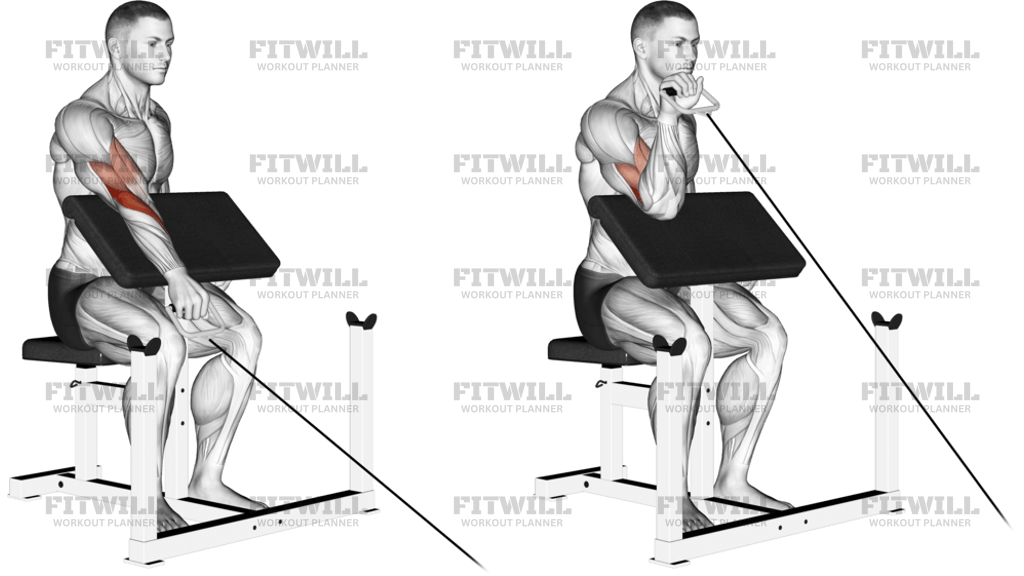
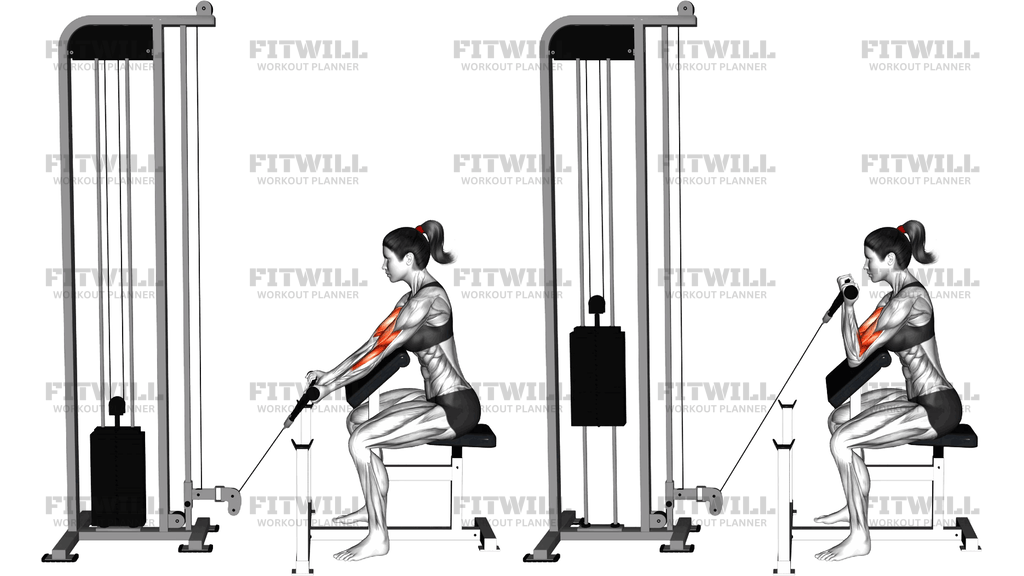
Cable One-Arm Reverse Preacher Curl is a single-arm cable isolation exercise that uses a preacher pad to keep the upper arm fixed while you curl with a palms-down grip. The pad removes most of the shoulder swing and makes the forearm and elbow-flexion work easy to feel, which is why this variation is useful when you want stricter curl mechanics than a standing cable curl.
The reverse grip shifts the emphasis away from a pure biceps squeeze and toward the brachialis and brachioradialis, with the biceps still contributing to elbow flexion. That makes the exercise a practical choice for arm development when you want more lower-arm and upper-arm thickness, cleaner elbow tracking, and less cheating from the torso. The single-arm setup also lets you match sides and correct any side-to-side strength difference.
Setup matters because the preacher pad should support the working upper arm before the first rep starts. Sit close enough that the arm stays anchored on the pad and the cable stays under tension at the bottom without pulling the shoulder forward. Keep the wrist stacked over the forearm, keep the elbow slightly in front of the pad edge, and let the handle travel in a smooth arc rather than a fast swing. If the shoulder rolls forward or the elbow lifts off the pad, the repetition stops being a preacher curl and turns into a body-English curl.
Each rep should begin from a long but controlled stretch, then curl the handle toward the front of the shoulder or upper chest while the upper arm stays planted. The wrist should stay neutral or slightly extended, not bent hard back, so the forearm stays loaded without losing the line of force. Lower the handle under control until the elbow is almost straight, pause briefly if needed to keep tension clean, and breathe steadily instead of holding your breath through the whole set.
This movement fits well in arm-focused sessions, upper-body accessory work, or any program where you want strict elbow flexion without momentum. It is especially useful when barbell or dumbbell reverse curls feel too loose, or when you want the cable to keep tension more constant across the range. Use a load that lets you keep the pad contact, the pronated grip, and the same curl path on every rep.
Fitwill
Log Workouts, Track Progress & Build Strength.
Achieve more with Fitwill: explore over 9600 exercises with images and videos, access built-in and custom workouts, perfect for both gym and home sessions, and see real results.
Start your journey. Download today!




Instructions
- Set the preacher pad so your upper arm can rest fully on it while you sit facing the low cable.
- Attach a single handle to the low pulley and grab it with one hand using a palms-down grip.
- Plant your feet, sit tall, and place the back of your upper arm against the pad before you start.
- Let the arm straighten under control until the elbow is almost fully extended and the cable stays taut.
- Keep your wrist neutral and your shoulder quiet as you begin curling the handle upward.
- Curl the handle in a smooth arc toward your upper chest or front shoulder without letting the elbow leave the pad.
- Squeeze briefly near the top, then lower the handle slowly until the forearm is nearly straight again.
- Breathe out as you curl and breathe in as you return to the start.
- Reset the shoulder and upper arm contact before the next rep if the pad or torso position shifts.
Tips & Tricks
- Keep the upper arm glued to the preacher pad; if it floats off the pad, the set becomes easier to cheat.
- Use a handle that feels stable in a reverse grip, since a slippery attachment makes the wrist fold back and steals tension.
- Think about lifting with the knuckles rather than bending the wrist, which keeps the forearm line cleaner.
- Stop the descent just short of locking out if the cable stack yanks your elbow forward at the bottom.
- Let the elbow track in the same spot on every rep instead of letting it drift outward or backward.
- Use a lighter load than a regular curl, because the pronated grip and fixed pad usually make the movement much stricter.
- Lower the handle slowly enough to feel the brachioradialis and brachialis stay loaded through the return.
- If your shoulder rolls forward at the top, shorten the range slightly and keep the curl path compact.
Frequently Asked Questions
What muscles work most in the Cable One-Arm Reverse Preacher Curl?
The reverse grip shifts a lot of the work to the brachialis and brachioradialis, while the biceps still help finish the curl.
Why use a preacher pad for this curl?
The pad fixes the upper arm in place, which reduces body swing and makes it harder to cheat the rep.
Should my palm face up or down?
Palm down. The pronated grip is what makes this a reverse preacher curl.
How far should I lower the handle?
Lower it until the elbow is almost straight and the cable is still under tension, but do not force a loose bottom position.
Why does this feel different from a regular preacher curl?
The reverse grip reduces the biceps' mechanical advantage and usually makes the forearm-side elbow flexors work harder.
Can I use a rope attachment instead of a handle?
A single handle is usually better here because it gives a cleaner, more stable reverse grip on one arm.
What is the most common mistake?
Letting the shoulder drift forward or lifting the upper arm off the pad so the curl turns into a partial cheat rep.
Is this a good beginner arm exercise?
Yes, if the load is light and the pad height lets the upper arm stay anchored without shoulder strain.