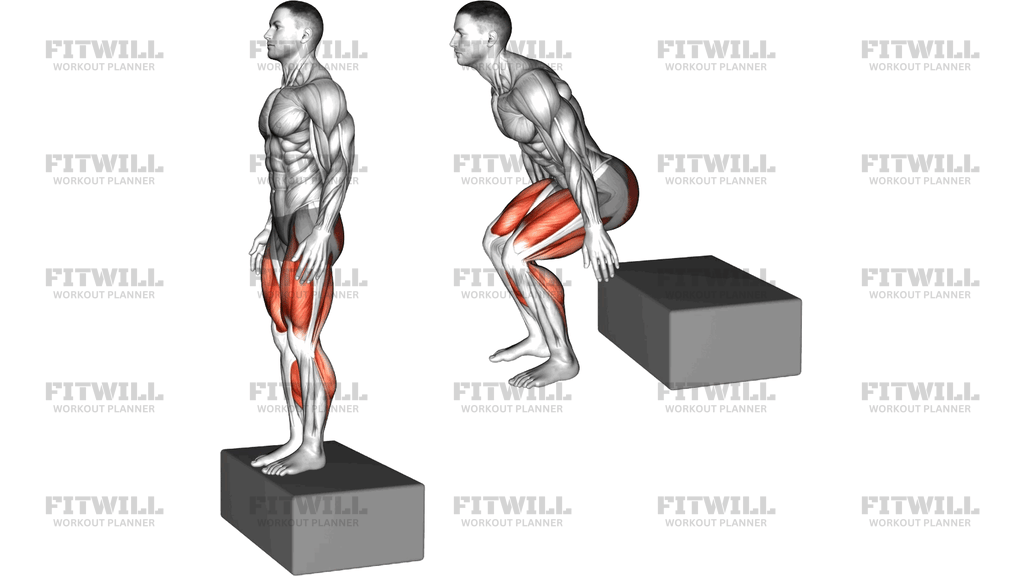
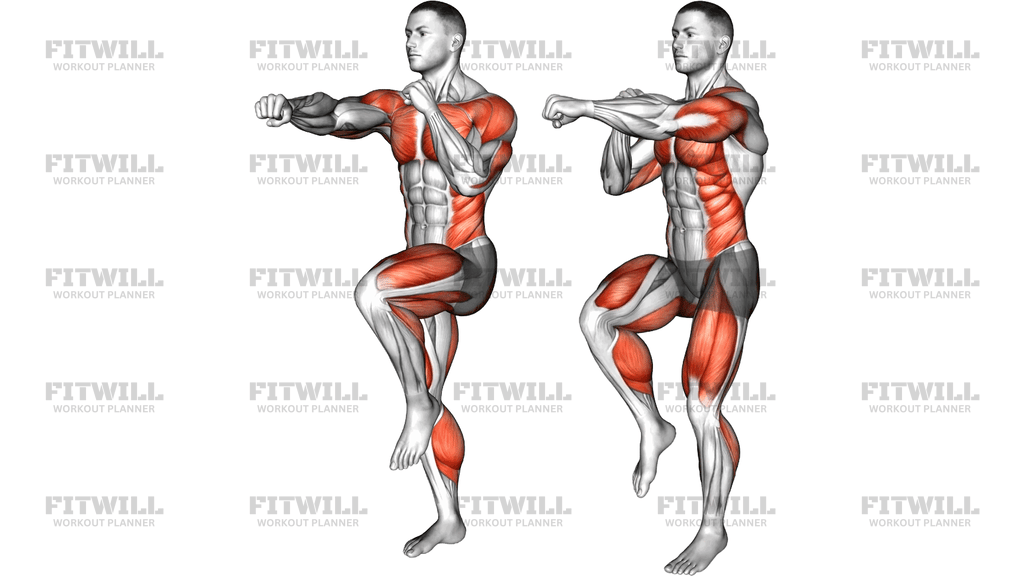
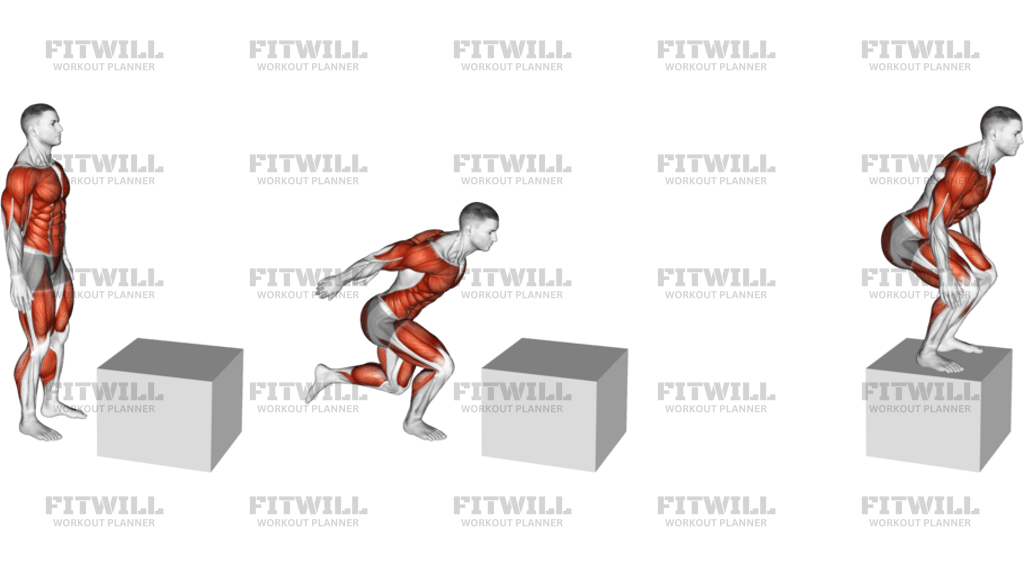
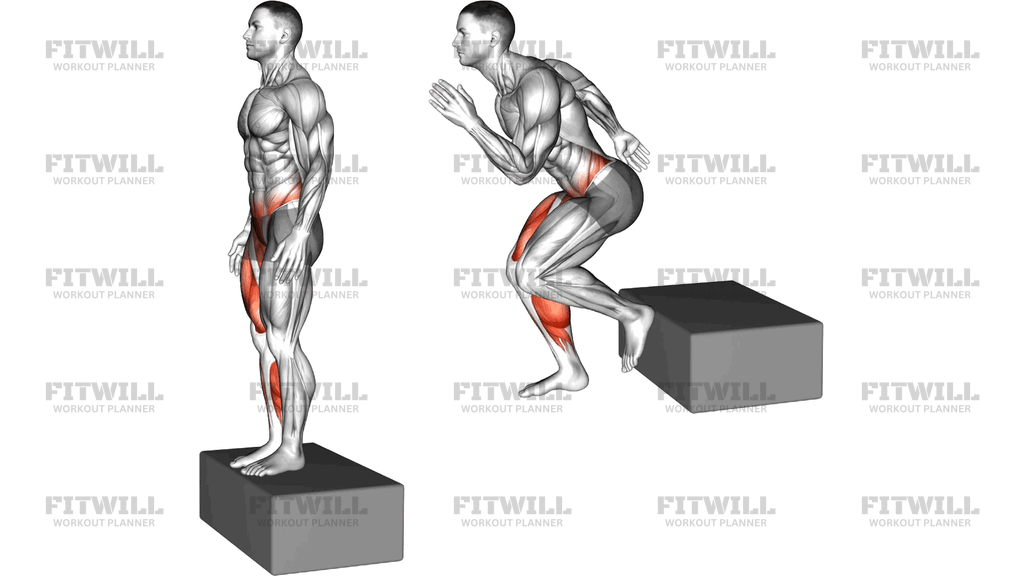
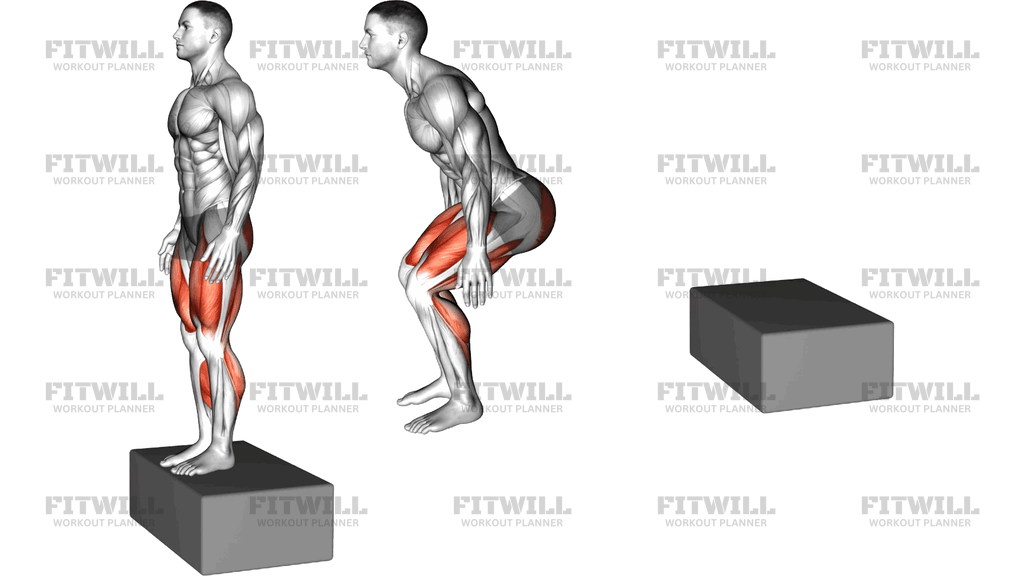
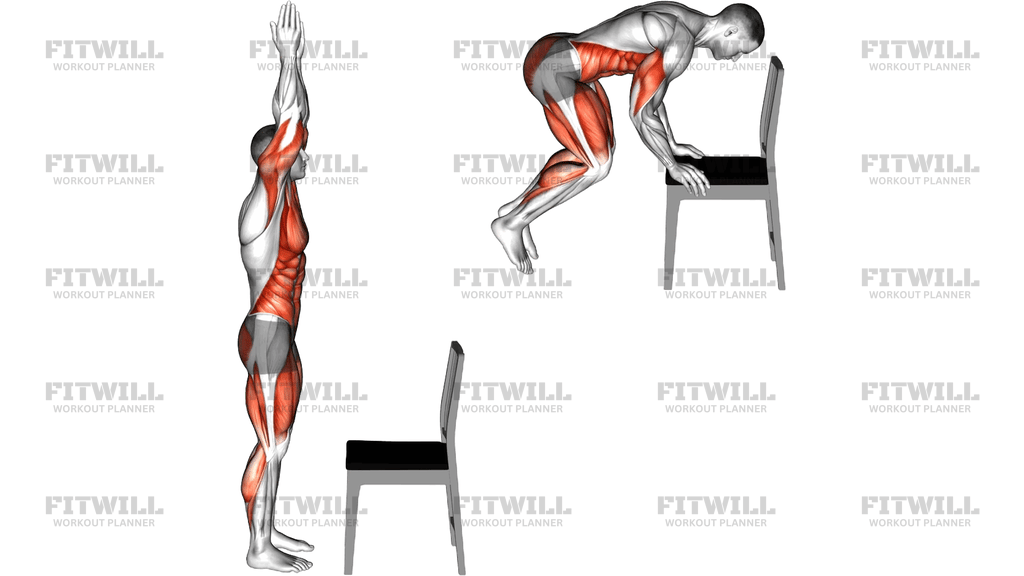
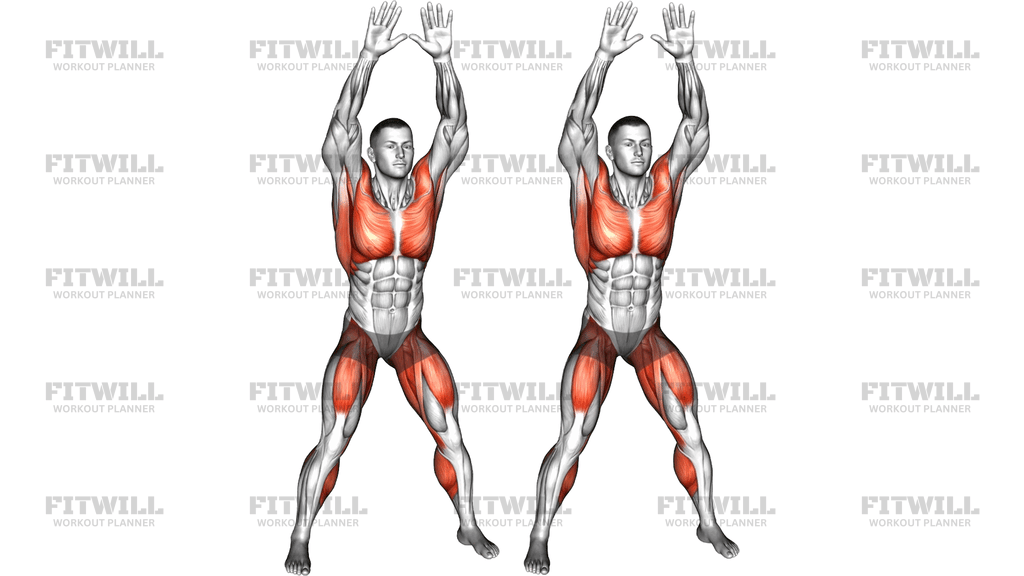
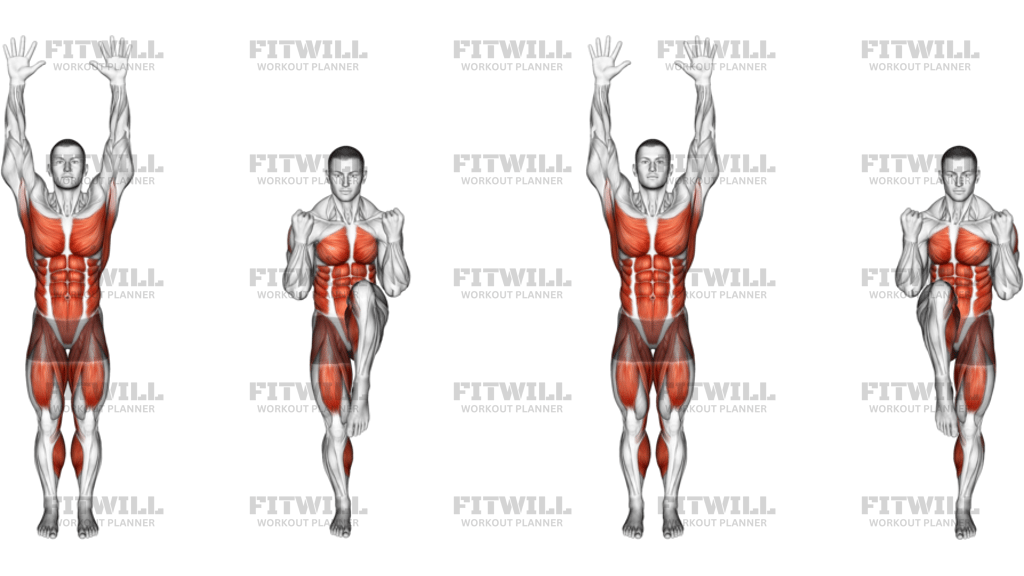
Squat To Overhead Reach
Squat To Overhead Reach is a bodyweight movement that combines a deep squat with a tall overhead finish. It is useful as a warm-up, a conditioning drill, or a simple lower-body and mobility pattern when you want the legs and trunk to work together without external load. The exercise asks you to control the descent, stay organized at the bottom, and finish each rep by standing long through the torso and reaching overhead.
The main work goes to the quads and glutes, with the core, upper back, and shoulder stabilizers helping you stay balanced as you rise. Because the arms travel overhead, the movement also exposes tight hips, ankles, and shoulders quickly. That makes Squat To Overhead Reach a practical drill for checking whether your squat depth, trunk position, and overhead mobility all line up in the same repetition.
Start with your feet about shoulder-width apart and your toes turned slightly out if that helps your squat pattern. Keep your weight spread across the whole foot, sit the hips back and down, and lower until your heels stay planted and your torso can stay tall. At the bottom, avoid collapsing onto the toes or letting the knees cave inward. The goal is a controlled squat that still leaves you able to drive up smoothly.
As you stand, press through the floor and lift the chest at the same time, then send the arms overhead as the hips and knees extend. Reach long rather than leaning back to fake the position, and keep the ribs from flaring as the hands finish above the head. If your shoulders are tight, reach slightly forward of the ears instead of forcing a rigid vertical line. Breathe in on the way down and exhale as you stand and reach.
Squat To Overhead Reach fits well in a warm-up before squats, lunges, jumps, or field work, and it can also be used in light circuits where quality matters more than load. It is approachable for beginners because it only requires body weight, but it still rewards attention to balance, depth, and spinal control. Move cleanly, reset between reps if needed, and stop short of any range that makes the heels lift, the low back arch hard, or the knees lose their track.
Fitwill
Log Workouts, Track Progress & Build Strength.
Achieve more with Fitwill: explore over 9600 exercises with images and videos, access built-in and custom workouts, perfect for both gym and home sessions, and see real results.
Start your journey. Download today!




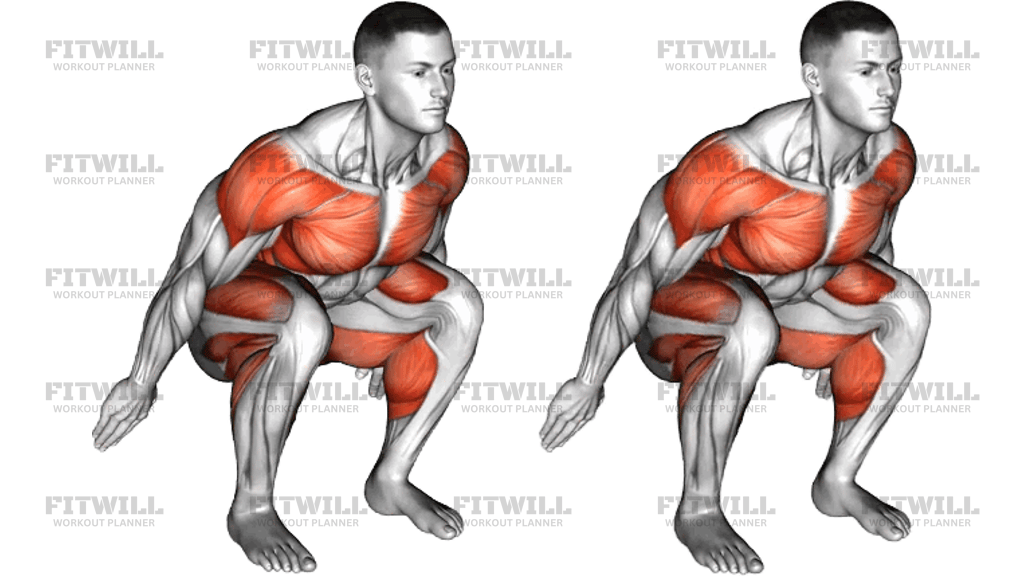
Instructions
- Stand with your feet about shoulder-width apart, toes slightly turned out, and your arms relaxed by your sides.
- Sit your hips back and down into a squat while keeping your heels flat and your chest lifted.
- Lower until your thighs reach a comfortable depth that still lets your spine stay long and your knees track over your toes.
- Keep your weight spread across the whole foot instead of rocking onto your toes at the bottom.
- Drive through the floor to stand up, extending the hips and knees together.
- As you rise, sweep your arms up and finish with an overhead reach as your body comes tall.
- Keep the reach active at the top without leaning back or shrugging your shoulders toward your ears.
- Lower your arms as you settle back into the next squat, breathing in on the way down and exhaling as you stand.
- After the last rep, stand tall, bring your arms down, and reset before the next set.
Tips & Tricks
- Keep the heels heavy when you squat; if they start lifting, shorten the depth before adding more reps.
- Let the knees travel in line with the middle toes instead of letting them cave inward on the ascent.
- Reach overhead by lengthening the body, not by arching the low back to make the hands look higher.
- If the shoulders are stiff, let the arms finish slightly in front of the ears rather than forcing a straight vertical line.
- Use a slower lowering phase if you tend to lose balance at the bottom of the squat.
- Pause for a beat at the top so the overhead reach is fully finished before the next descent.
- Keep the ribcage stacked over the pelvis; flaring the ribs usually turns the movement into a backbend.
- Treat each rep like a clean reset instead of bouncing straight out of the bottom.
- Stop the set when the squat depth, knee track, or overhead position starts to change from rep to rep.
Frequently Asked Questions
What muscles does Squat To Overhead Reach work most?
It emphasizes the quads and glutes, with the core, upper back, and shoulder stabilizers helping you stay stacked as you rise and reach.
Is Squat To Overhead Reach good for beginners?
Yes. It is bodyweight and easy to scale by limiting squat depth, slowing the tempo, or using a wall for light balance support if needed.
How deep should I squat in Squat To Overhead Reach?
Go only as deep as you can while keeping your heels flat, knees tracking over your toes, and your chest from collapsing forward.
Should I jump at the top of Squat To Overhead Reach?
No. This version is a controlled stand-and-reach drill, so the finish should be tall and deliberate rather than explosive.
Why do my arms drift forward instead of staying overhead?
That usually means your shoulders or upper back want a little more room. Reach slightly forward of the ears and avoid forcing a vertical arm line that makes your ribs flare.
What should I do if my heels lift during the squat?
Shorten the squat and keep more pressure through the midfoot and heel. If needed, take a slightly wider stance to help you stay grounded.
When is Squat To Overhead Reach most useful?
It works well before lower-body training, during conditioning circuits, or in a warm-up when you want a quick check of squat depth and overhead mobility.
What is the biggest form mistake in Squat To Overhead Reach?
Letting the low back arch hard at the top is the most common problem. Keep the ribs down and finish by standing tall, not by leaning backward.