Jump Box
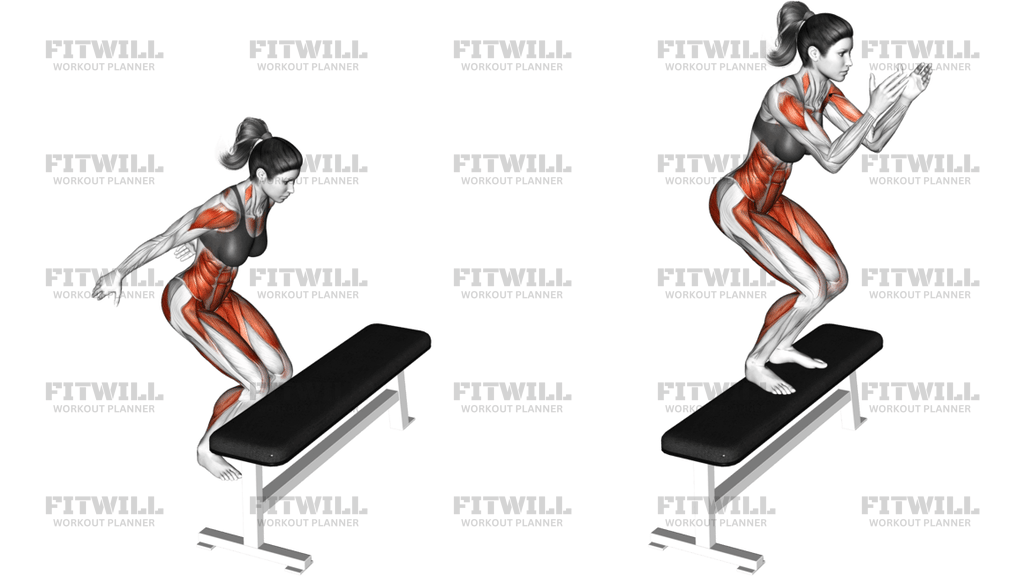
Jump Box is a body-weight plyometric drill built around a quick, explosive takeoff onto a raised surface such as a flat bench or box. It trains the hips, knees, ankles, and landing mechanics together, so the value of the movement comes from both the jump and the quality of the landing. Done well, it develops power, coordination, and confidence in athletic takeoffs without turning the rep into a sloppy hop or a noisy crash onto the platform.
The exercise is simple to name but easy to rush, which is why the setup matters. You want enough space in front of the box to load into a short countermovement, swing the arms, and jump up with both feet landing together on a stable surface. The goal is not to jump as high as possible at any cost; it is to leave the floor with enough force to land softly, balanced, and centered on the box.
Jump Box is useful when you want a lower-volume power drill that teaches force production and body control at the same time. It fits well in a warm-up, a plyometric block, or a conditioning session where the athlete still needs crisp technique. Because the movement is repetitive and reactive, it is better suited to fresh legs than to a fatigued set at the end of a hard workout.
Mechanically, the rep should feel like a quick dip, explosive drive, and quiet landing. The knees should track over the toes, the torso should stay braced, and the feet should land flat enough to stabilize quickly without collapsing inward. If the box is too high or the landing gets unstable, the exercise stops being a power drill and starts becoming a risky scramble.
Treat every rep as a controlled jump onto the platform, then a safe step-down to reset. That keeps the emphasis on power and landing quality instead of repeated impact from jumping back to the floor. For most people, the best version of Jump Box is the one that looks clean, sounds quiet, and ends with full balance on top of the box.
[ Workout Log & Planner ]
Put your next workout in Fitwill
Keep your plan and training log ready when you are.


Instructions
- Stand a short step away from a stable box or flat bench with your feet about hip-width apart and your arms free to swing.
- Fix your eyes on the top surface, then sit your hips back slightly and bend your knees to load for the jump.
- Swing your arms back as you keep your chest tall and your weight centered over midfoot.
- Drive through both feet and jump up so both feet leave the floor together and travel toward the top of the box.
- Bring your knees up just enough to clear the edge of the platform without tucking so hard that you lose balance.
- Land with both feet fully on the box, knees soft, hips back slightly, and your torso stacked over your feet.
- Stand tall on top of the box to finish the rep, then pause briefly to make sure you are balanced before moving again.
- Step down one foot at a time instead of jumping back off the box, then reset your stance for the next rep.
- Breathe in on the reset and exhale as you drive into each jump.
Tips & Tricks
- Choose a box height that lets you land in control; if you have to dive or tuck aggressively, the box is too high.
- Land with your whole foot on the platform, not just your toes, so you can stabilize without wobbling forward.
- Keep the jump quiet. A loud landing usually means you are dropping onto the box instead of absorbing the impact.
- Use a short countermovement rather than a deep squat; this is a quick power drill, not a max vertical jump.
- Swing the arms to help the takeoff, but do not throw your torso forward and fold at the waist.
- Step down after each rep. Jumping back to the floor adds unnecessary impact and can turn the set into conditioning instead of quality plyometrics.
- If your knees cave inward on landing, lower the box and focus on pushing the knees out over the toes.
- Stop the set when the landing gets slow, noisy, or off-center. Power work should look crisp before it feels hard.
Frequently Asked Questions
What does Jump Box train most?
It mainly trains explosive leg drive, coordination, and landing control. The hips, quads, glutes, calves, and stabilizers all work together to get you onto the box and balanced on top.
Is Jump Box the same as a box jump?
Yes, this is essentially a box jump onto a raised platform such as a flat bench or plyo box. The key is a two-foot takeoff and a controlled two-foot landing on top.
How high should the box be for Jump Box?
Use a height that lets you land with both feet stable and your chest tall. If you are clipping the edge or collapsing into a deep squat to catch yourself, lower the box.
Should I step down or jump down after each rep?
Step down. That keeps the focus on the jump itself and avoids extra impact from dropping off the platform.
What is the biggest mistake in Jump Box?
The most common mistake is chasing height and landing out of control. A clean jump to a slightly lower box is better than a high attempt that turns into a scramble.
Can beginners do Jump Box?
Yes, if the box is low and the landing feels stable. Beginners should start with a height they can clear easily and practice stepping down every rep.
Do I need to squat deeply before the jump?
No. A short athletic dip is usually enough. Going too deep slows the movement and often makes the jump less explosive.
What should my feet do when I land on the box?
Both feet should land flat enough to balance quickly, with the knees soft and tracking over the toes. You should be able to stand tall on top without readjusting your feet.