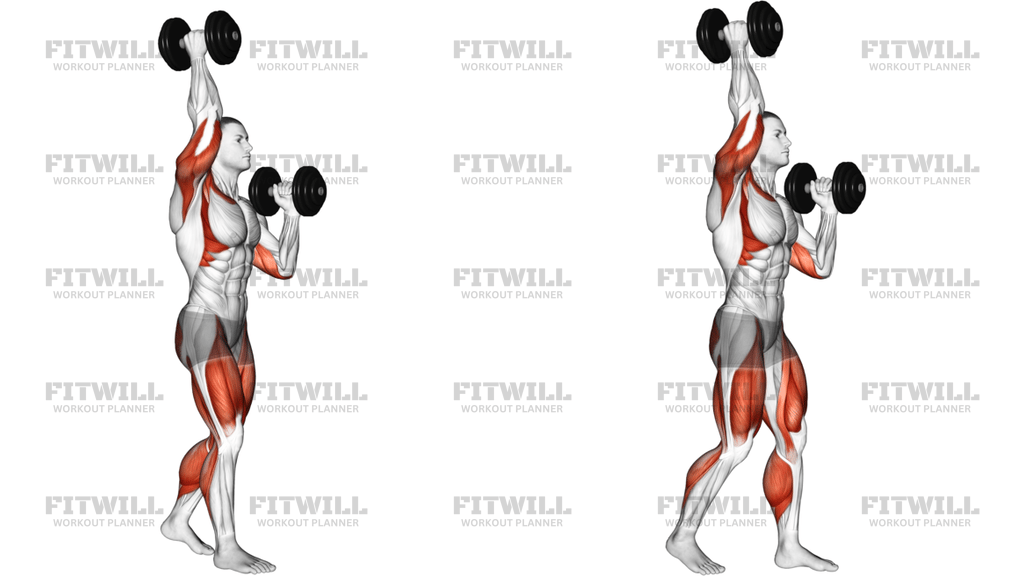
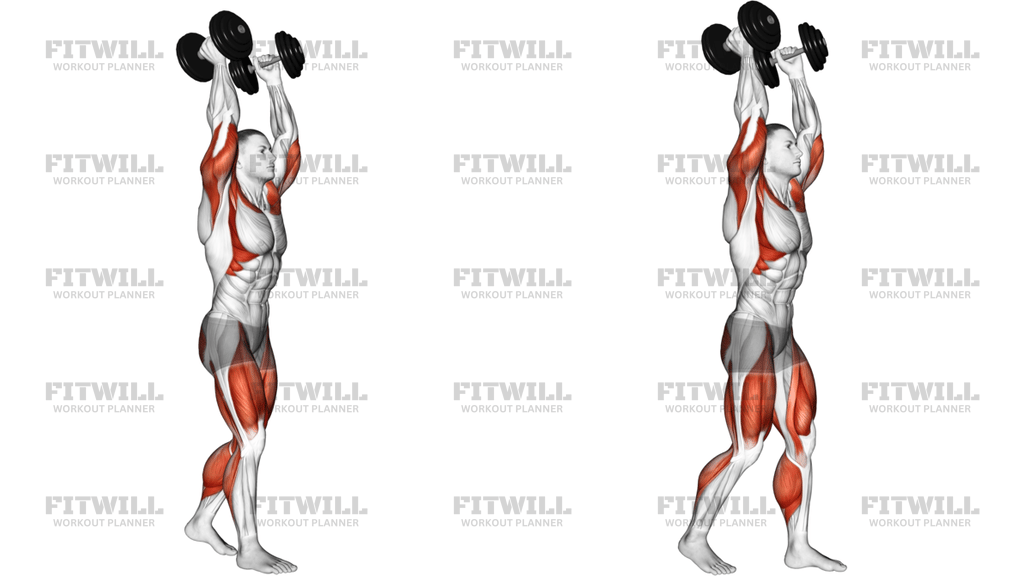
Dumbbell Overhead Side Lunge
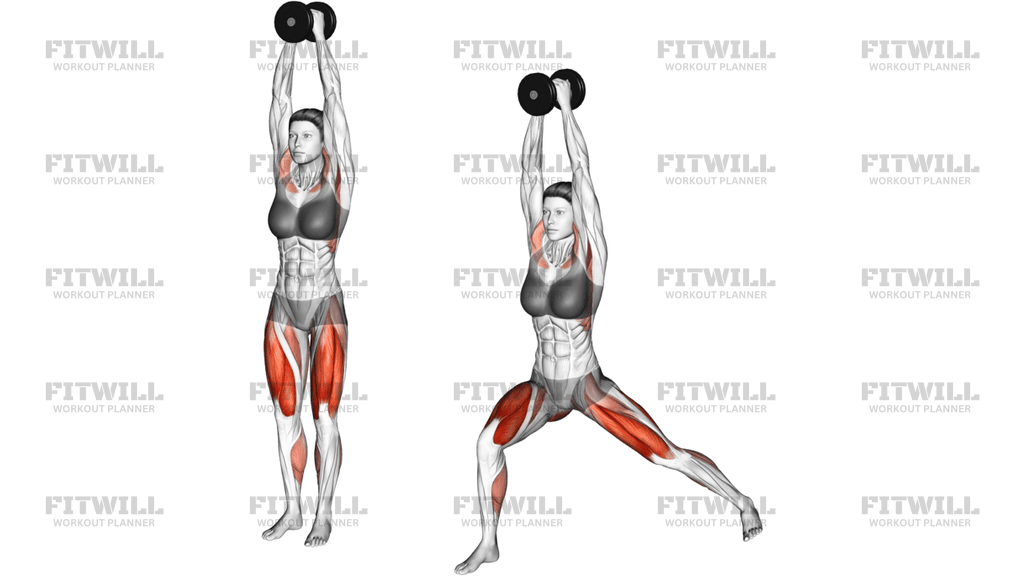
The Dumbbell Overhead Side Lunge is a lateral squat variation that combines lower-body loading with overhead shoulder stability. Holding the dumbbells straight above the shoulders changes the demand compared with a standard side lunge: the hips, thighs, and glutes still do most of the work, but the trunk and shoulders must keep the weights stacked while the body shifts side to side. It is useful for building single-rep control, frontal-plane strength, hip mobility, and the kind of bracing that keeps the ribs and pelvis organized under load.
The exercise is only as good as the setup. Before you step out, the dumbbells should be pressed overhead with straight arms, the wrists stacked over the elbows and shoulders, and the ribs kept down so the low back does not overextend. From there, the working leg bends as the hips sit back and the other leg stays long. That side-to-side shift is the heart of the movement: the planted foot stays flat, the knee tracks in line with the toes, and the torso stays tall instead of folding toward the floor.
Because the load is overhead, the movement asks for more than leg strength alone. Your core has to resist side bending and arching, the upper back has to keep the weights stable, and the standing side has to control the descent and push-off. If the dumbbells drift forward, the elbows soften, or the chest collapses, the rep loses the overhead challenge and becomes a rushed side lunge. Clean reps should feel deliberate, with a brief pause in the bottom position and a controlled return to standing.
This exercise fits well in strength sessions, athletic prep, and accessory work when you want to train legs and trunk together. It can also expose asymmetries between sides, which makes it useful for mobility and movement quality work. Use a lighter load than you would for a regular lunge pattern, especially if your shoulders, ankles, or hips are tight. If you cannot keep the weights overhead without arching your back or losing balance, reduce the load or practice the side lunge without the overhead position first.
[ Workout Log & Planner ]
Put your next workout in Fitwill
Keep your plan and training log ready when you are.


Instructions
- Stand tall with your feet about hip width apart and press both dumbbells overhead until your elbows are straight and your wrists, elbows, and shoulders are stacked.
- Set your ribs down, squeeze your glutes lightly, and keep your gaze forward so the torso stays tall before you move.
- Step one foot out wide to the side and keep both dumbbells directly above the center of your body as you shift into the lunge.
- Sit the hips back toward the stepping side, bend that knee, and keep the other leg long with the foot flat on the floor.
- Lower until the working thigh approaches parallel, or as far as you can without the trunk tipping or the overhead position changing.
- Pause briefly in the bottom and keep the weights stacked over the shoulders instead of drifting forward or backward.
- Drive through the planted foot to push back to standing while keeping the dumbbells overhead and the torso steady.
- Bring the feet back underneath you under control, then repeat on the same side or alternate sides as programmed.
- Exhale as you stand and reset your brace before the next repetition.
Tips & Tricks
- Choose a lighter pair of dumbbells than you would for a floor lunge; overhead control usually fails before the legs do.
- Keep the ribs tucked and the lower back quiet so the movement comes from the hips and legs, not from leaning back.
- Lock the elbows without shrugging the shoulders toward the ears; the weights should feel stacked over the midfoot.
- Let the stepping foot turn out only as much as needed to keep the knee tracking over the toes.
- Keep the non-working leg long and grounded instead of letting it collapse inward as you shift sideways.
- Think about sitting into the hip of the lunging side, not dropping straight down like a vertical squat.
- If balance is shaky, shorten the side step slightly and own the bottom position before adding range.
- A brief pause in the deepest clean position will reveal whether the shoulder and trunk are truly stable.
- Stop the set if the dumbbells drift forward, the elbows bend, or the torso starts to fold toward the floor.
Frequently Asked Questions
What does the Dumbbell Overhead Side Lunge train most?
It strongly trains the thighs and glutes on the stepping side, with major work from the core and shoulders to keep the dumbbells stable overhead.
Should the dumbbells stay directly over my head the whole time?
Yes. The best version keeps the weights stacked over the shoulders and midfoot so the overhead position actually challenges your trunk and balance.
How wide should I step out on the side lunge?
Step wide enough to load the hip and thigh of the working side, but not so wide that you lose control, twist the torso, or let the weights drift.
Do I alternate sides or do all the reps on one side first?
Either approach can work. Alternating sides is useful for balance and coordination, while doing one side at a time lets you build more control on the working leg.
Can beginners do this exercise?
Yes, but start with very light dumbbells or even no load overhead until you can keep the ribs down and the torso upright through the lunge.
What are the most common mistakes?
The biggest errors are arching the lower back, letting the dumbbells drift forward, collapsing the stepping knee inward, and cutting the lunge short.
Is this exercise good for mobility?
Yes. It asks for usable hip and ankle range on the side lunge while also exposing overhead shoulder mobility and trunk control.
What should I do if I cannot keep the dumbbells overhead comfortably?
Reduce the load, shorten the range, or practice the side lunge without the overhead hold until the shoulders and upper back can support the position.