Dumbbell Lying Alternate Extension
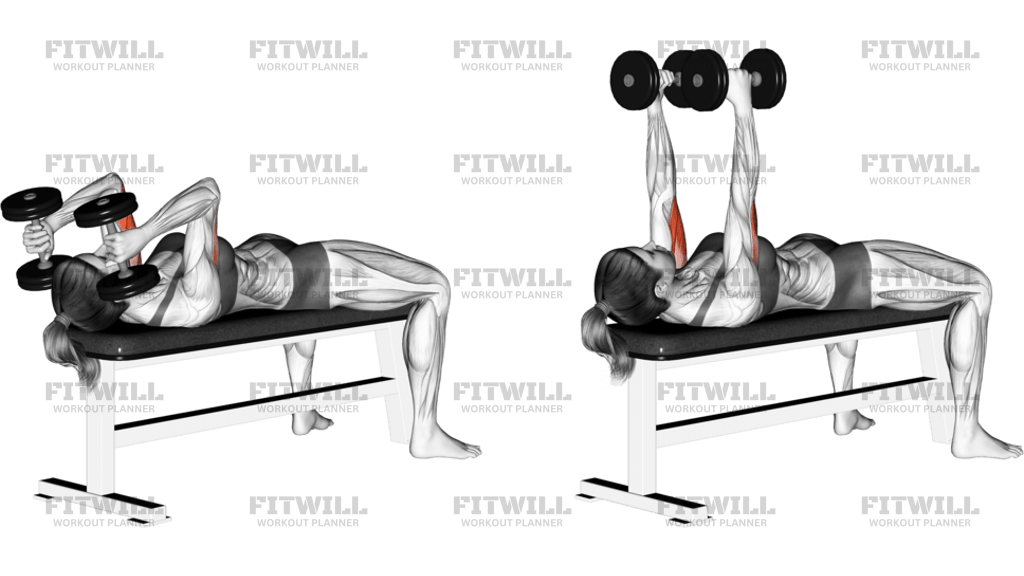
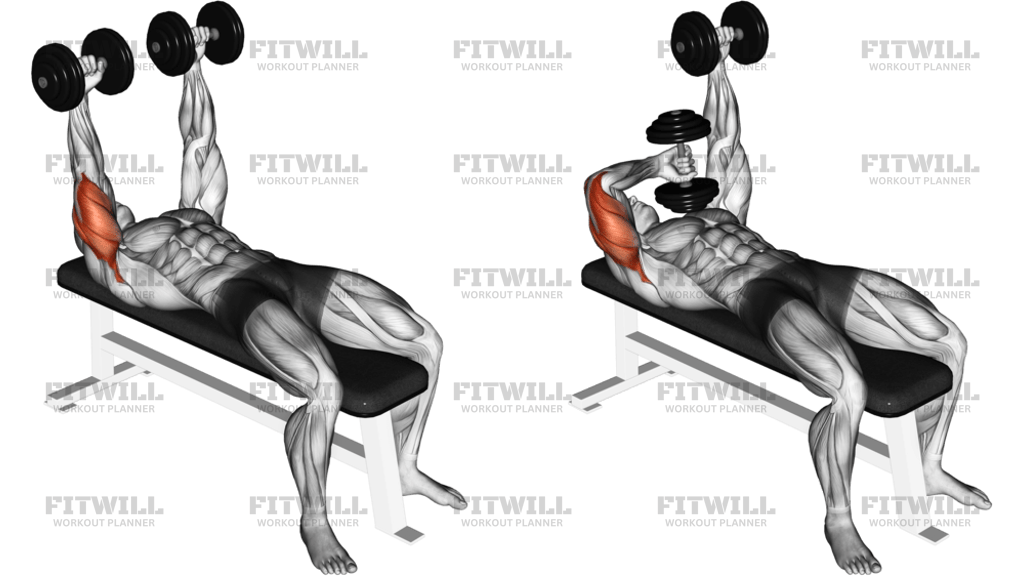
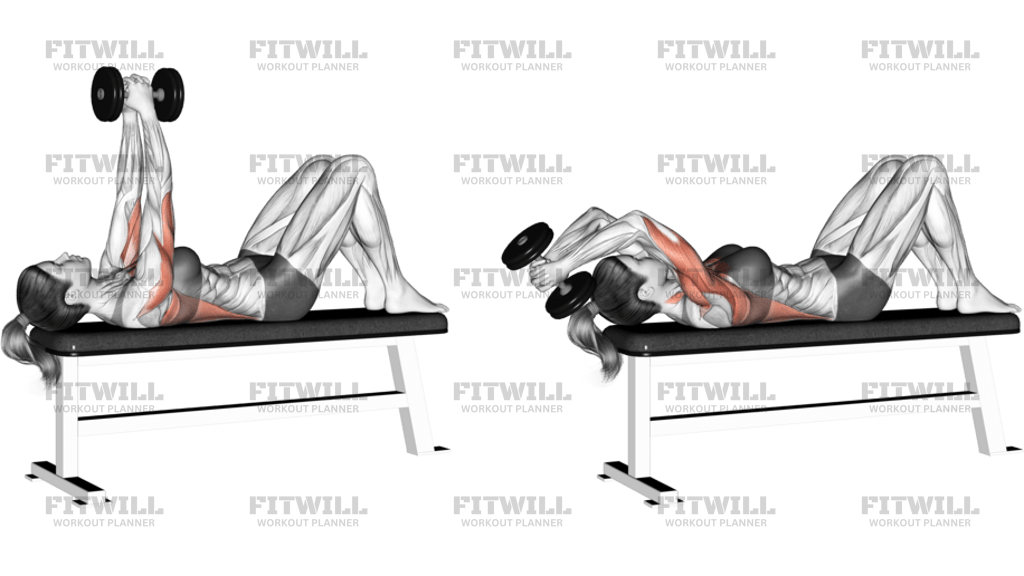
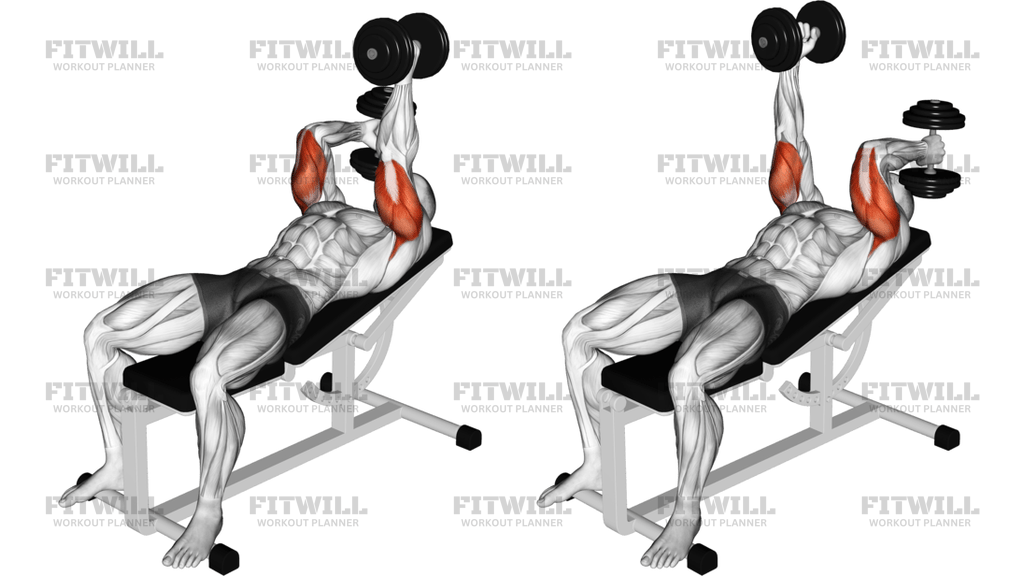
Dumbbell Lying Alternate Extension is a flat-bench triceps exercise where one arm stays locked out while the other bends and straightens under control. It is useful when you want the triceps to do the work without relying on a big body drive, because the bench removes most standing momentum and makes each arm's path easier to feel. The image shows a lifter on a flat bench with both dumbbells moving in an alternating pattern, which keeps the set focused on elbow extension rather than pressing from the shoulder.
Dumbbell Lying Alternate Extension primarily trains the triceps brachii, especially the long head, with the forearms working to stabilize the handles and the shoulders helping hold the upper arms in place. The torso and upper back also have to stay organized against the bench so the elbows do not drift as fatigue builds. That makes this a strong accessory movement for arm size, lockout strength, and cleaner elbow control in pressing work.
The setup matters more than it looks. Lie on a flat bench with your head supported, feet planted, and dumbbells held straight above the chest or slightly behind the shoulders. Keep your wrists stacked over your elbows and your upper arms mostly still so the movement comes from the elbow joint. If the elbows drift wide or the upper arms slide around, the exercise turns into a loose press and the triceps lose tension.
During the repetition, lower one dumbbell by bending that elbow until the weight approaches the side of the head or the area just behind the forehead, then extend it back up without snapping the elbow open. Keep the opposite arm still in the top position while you work one side, then switch sides in a controlled rhythm. The goal is not to bounce the dumbbells or chase a huge range; it is to keep the triceps loaded through a clean, repeatable arc.
Dumbbell Lying Alternate Extension fits well in arm-focused sessions, upper-body accessories, or as a triceps finisher after bench pressing. Because each arm works independently, it can expose side-to-side differences in control and elbow stability. Use a load that lets you keep both shoulders quiet, both wrists straight, and both dumbbells moving without the hips lifting or the back arching hard off the bench. When the rep quality drops, shorten the set instead of turning it into a fast, sloppy skull crusher variation.
[ Workout Log & Planner ]
Put your next workout in Fitwill
Keep your plan and training log ready when you are.


Instructions
- Lie on a flat bench with your head supported, feet flat on the floor, and a dumbbell in each hand above the chest.
- Press both arms straight up so the dumbbells are stacked over the shoulders and your palms face inward or slightly forward.
- Set your shoulders down against the bench and keep your elbows pointed mostly upward rather than flared wide.
- Bend one elbow and lower that dumbbell in a controlled arc toward the side of your head while the other arm stays locked out.
- Keep the upper arm on the working side nearly still so the motion comes from elbow flexion and extension.
- Extend the working arm back to the top until the elbow is straight but not aggressively snapped open.
- After one side returns to the top, lower the other dumbbell and repeat the same path on the opposite arm.
- Breathe in as you lower each dumbbell and exhale as you press it back to the top.
- Finish the set by bringing both dumbbells back over the chest and lowering them to your thighs or the floor with control.
Tips & Tricks
- Keep the working upper arm nearly vertical; if it swings toward your face or chest, the triceps lose tension.
- Lower the dumbbell toward the side of the head, not straight out over the shoulder, so the elbow stays the joint doing the work.
- Use a load light enough that the non-working arm can stay pinned at lockout without your ribcage flaring up.
- Stop the descent before the dumbbell crashes behind the head if your shoulders feel pinched or your elbows drift forward.
- A neutral wrist usually feels better than letting the dumbbell tilt backward and load the forearm unnecessarily.
- Keep the shoulder blades gently set on the bench instead of shrugging toward the ears as fatigue builds.
- Switch sides only after the first arm is fully back at the top; alternating too early turns the rep into an uneven press.
- If your lower back starts arching hard, lower the weight and keep your feet planted to steady the bench position.
- Choose a controlled lowering phase and a crisp but not jerky extension to keep tension on the triceps instead of the shoulders.
- When the elbows start drifting wide or the dumbbells wobble, end the set rather than chasing extra reps.
Frequently Asked Questions
What muscles does Dumbbell Lying Alternate Extension work most?
It mainly trains the triceps brachii, with the forearms and shoulders helping stabilize the dumbbells while you alternate sides.
How should the dumbbells move during Dumbbell Lying Alternate Extension?
One dumbbell stays stacked over the chest while the other lowers in a controlled arc toward the side of the head, then returns to lockout before you switch arms.
Why keep my upper arms still on Dumbbell Lying Alternate Extension?
If the upper arms travel around, the movement turns into a loose press and the triceps lose tension. Keeping the elbows mostly fixed makes elbow extension do the work.
Is Dumbbell Lying Alternate Extension the same as a skull crusher?
It is very similar, but the alternating pattern keeps one arm locked out while the other works. That makes it feel more controlled and can help you focus on one side at a time.
Can beginners do Dumbbell Lying Alternate Extension safely?
Yes, if they start light and keep the elbows, wrists, and shoulder position steady. The exercise becomes sloppy fast when the weight is too heavy.
How deep should I lower the dumbbell in Dumbbell Lying Alternate Extension?
Lower until the dumbbell is near the side of the head or just behind it, as long as the shoulders stay comfortable and the elbow path stays controlled.
What should I do if my elbows flare out?
Reduce the load and think about keeping the upper arms pointed more toward the ceiling. Wide elbows shift work away from the triceps and usually make the rep less stable.
Does Dumbbell Lying Alternate Extension need a bench?
A flat bench is the standard setup because it gives the shoulders support and keeps the alternating arm path clear. A floor version is possible, but the bench usually gives a better triceps stretch.