Dumbbell Forward Lunge Triceps Extension
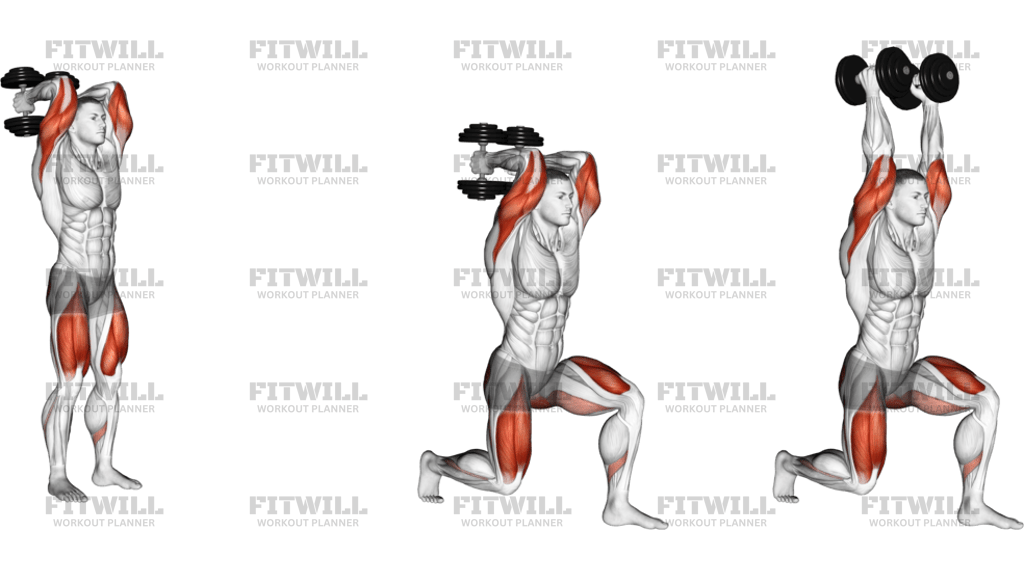
Dumbbell Forward Lunge Triceps Extension combines a forward lunge with an overhead triceps extension, so the legs and arms have to stay coordinated instead of working as separate pieces. The exercise is usually performed with a pair of dumbbells held overhead while the elbows bend and extend, making it a useful choice for building triceps strength, shoulder stability, and lower-body control in the same rep.
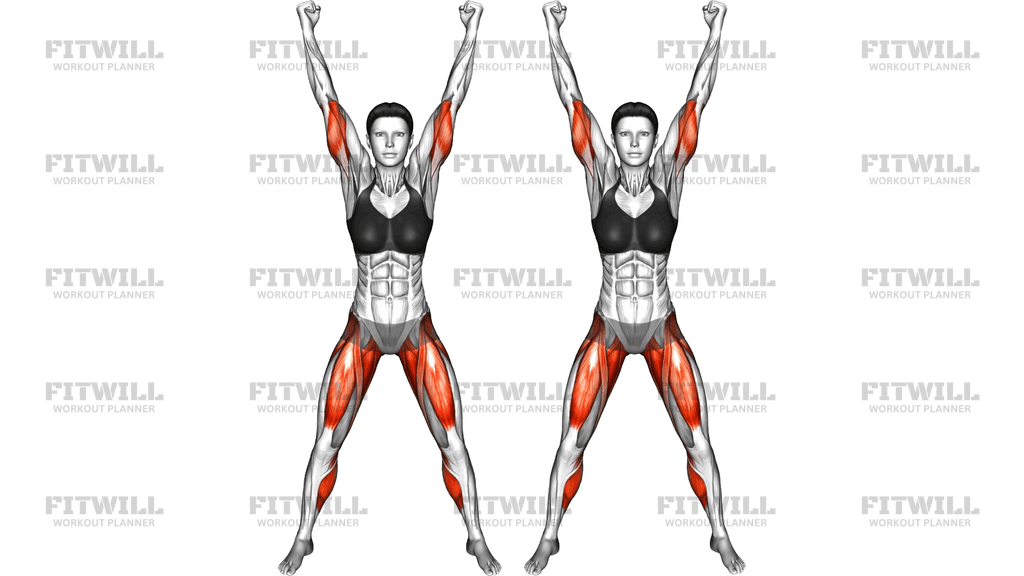
The image shows a tall stance, a long forward step, and the dumbbells finishing overhead as the elbows straighten. That setup matters because the trunk has to stay upright while the front foot accepts bodyweight and the arms stay stacked over the shoulders. When the torso leans too far forward or the weights drift behind the head, the lunge gets sloppy and the triceps lose the clean line of tension the movement is meant to create.
This is not a fast lunge. Each repetition should feel deliberate: step forward, lower into the lunge, keep the front knee tracking over the foot, and extend the elbows without flaring the upper arms. The rear knee should move toward the floor with control, and the dumbbells should stay close to the head path rather than swinging. On the way out of the bottom, press through the front foot, reverse the lunge, and bring the dumbbells back under control.
Because the arms are loaded overhead, the exercise also asks a lot from the shoulders, upper back, and trunk. That makes it a solid accessory drill for athletes or lifters who want more coordination and overhead stability, but it also means the weight needs to stay modest enough that the elbows can extend smoothly and the ribs do not pop upward to fake the lockout.
Use it when you want a compound accessory movement that challenges balance, arm strength, and posture at the same time. It works best with clean reps, a steady tempo, and a range of motion you can own on both sides. If the front foot wobbles, the elbows drift wide, or the low back arches to finish the extension, the load is too heavy or the step is too long for the current set.
[ Workout Log & Planner ]
Put your next workout in Fitwill
Keep your plan and training log ready when you are.


Instructions
- Stand tall with a dumbbell in each hand and bring the weights overhead, elbows bent so the dumbbells sit just behind or above the head.
- Set your feet hip-width apart, ribs down, and chest tall before you start the step.
- Step one foot forward into a long lunge while keeping your torso upright and your back heel lifted.
- As you descend, extend the elbows so the dumbbells travel up to a straight overhead lockout.
- Keep the upper arms mostly vertical and close to your ears instead of letting them drift wide.
- Lower the rear knee toward the floor until both knees are bent and the front shin stays controlled over the foot.
- Press through the front heel to rise out of the lunge while maintaining the dumbbells overhead.
- Bend the elbows again with control as you return to the top, then step the front foot back to the starting stance.
- Repeat on the same side or alternate legs if that is how your program is written.
Tips & Tricks
- Choose a weight that lets you extend the elbows without arching the lower back to cheat the lockout.
- Keep the dumbbells stacked over the shoulders at the top; if they drift forward, the triceps lose leverage and the shoulders take over.
- Take a long enough step that the front knee can bend without collapsing inward, but not so long that the hips tip and you lose balance.
- Think about lowering the rear knee straight down instead of lunging onto a tightrope.
- Do not let the elbows flare out wide behind the head; that turns the extension into a shoulder-dominant press.
- A controlled pause at the bottom helps keep the lunge honest and prevents bouncing out of the stretch.
- Exhale as you extend the elbows and drive back to standing so the ribs stay down.
- If your upper back cannot keep the dumbbells overhead, reduce the load before you shorten the range of motion.
Frequently Asked Questions
What muscle does Dumbbell Forward Lunge Triceps Extension target most?
The triceps are the main target, especially as you straighten the elbows overhead.
Why combine a lunge with an overhead triceps extension?
The lunge challenges balance and leg control while the overhead extension loads the triceps and shoulders at the same time.
Where should the dumbbells be during the rep?
Keep them overhead with the upper arms close to the ears, then let the elbows bend and straighten without swinging the weights around.
Should my torso lean forward in the lunge?
A slight natural lean is fine, but the chest should stay mostly tall. Too much forward lean usually means the step is too long or the load is too heavy.
Can beginners do this exercise?
Yes, but only with light dumbbells and a controlled step. If overhead stability is weak, practice the lunge and triceps extension separately first.
What is a common form mistake?
Letting the elbows flare wide or arching the low back to force the overhead lockout are the biggest problems.
Which leg should I step with?
You can step with either leg, but many lifters alternate sides so the lunge and overhead control stay even.
What should I do if the dumbbells feel unstable overhead?
Reduce the weight and shorten the lunge depth until you can keep the weights stacked over the shoulders without wobbling.