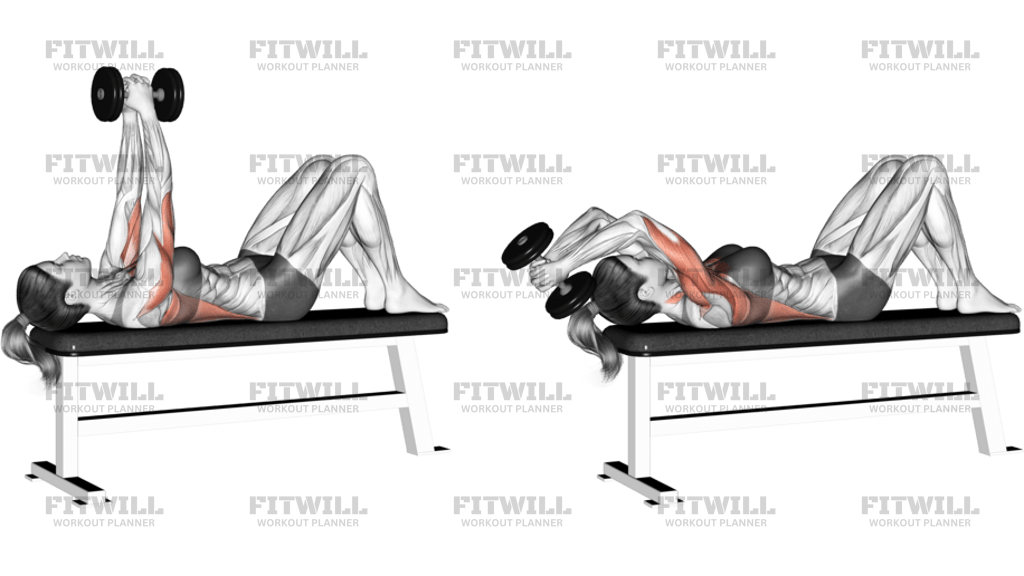
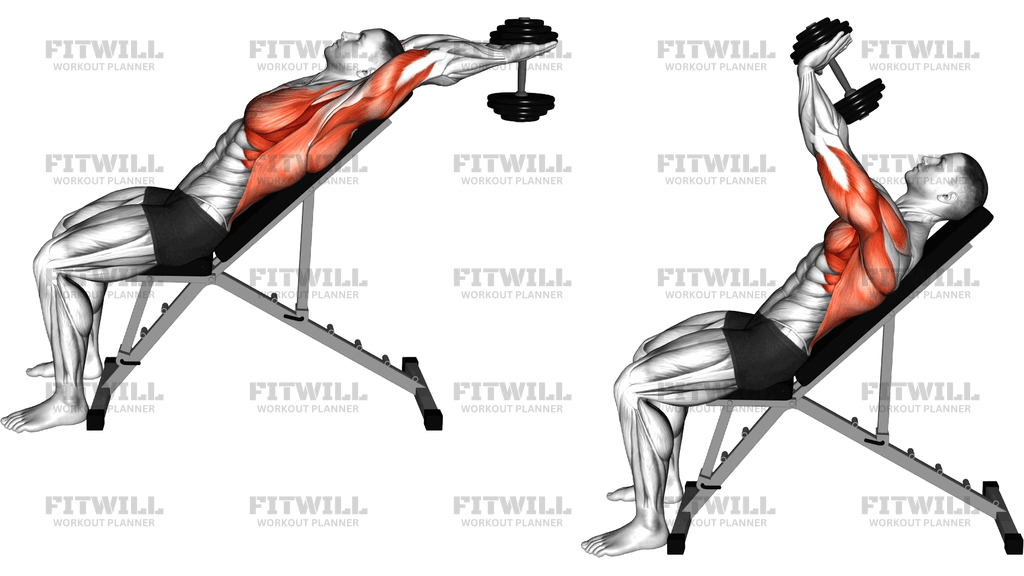
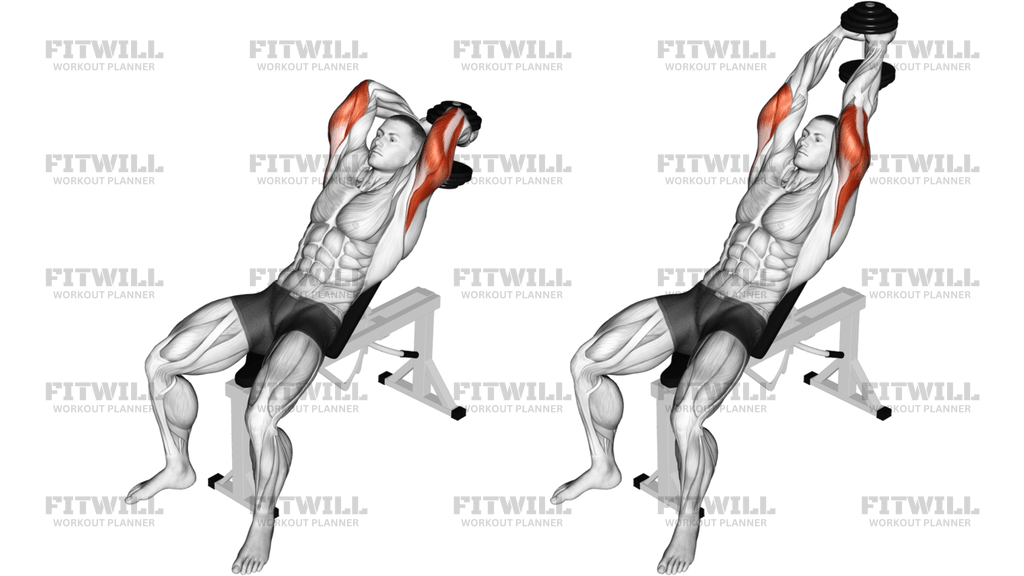
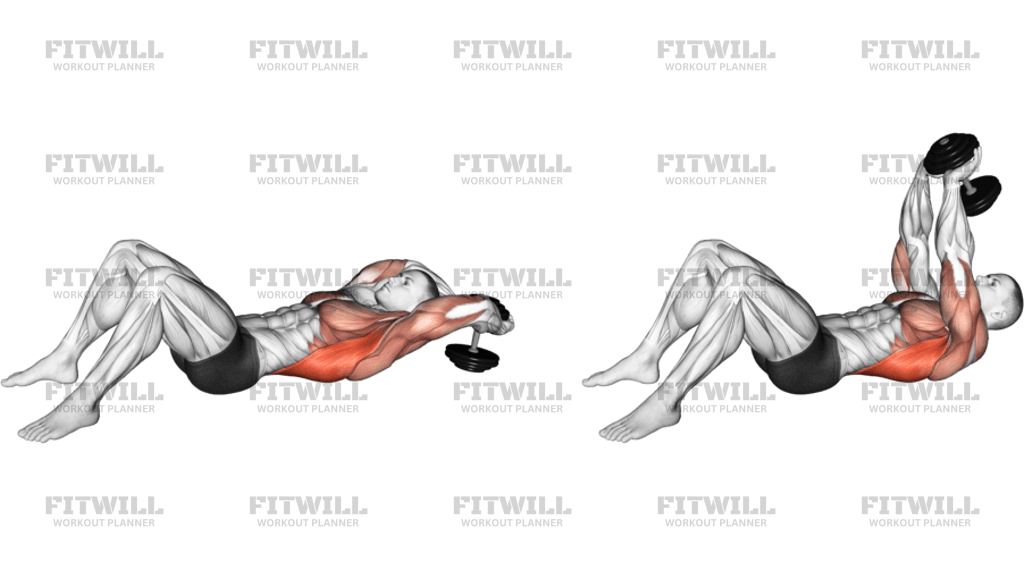
Dumbbell Standing Bent-Over One-Arm Triceps Extension
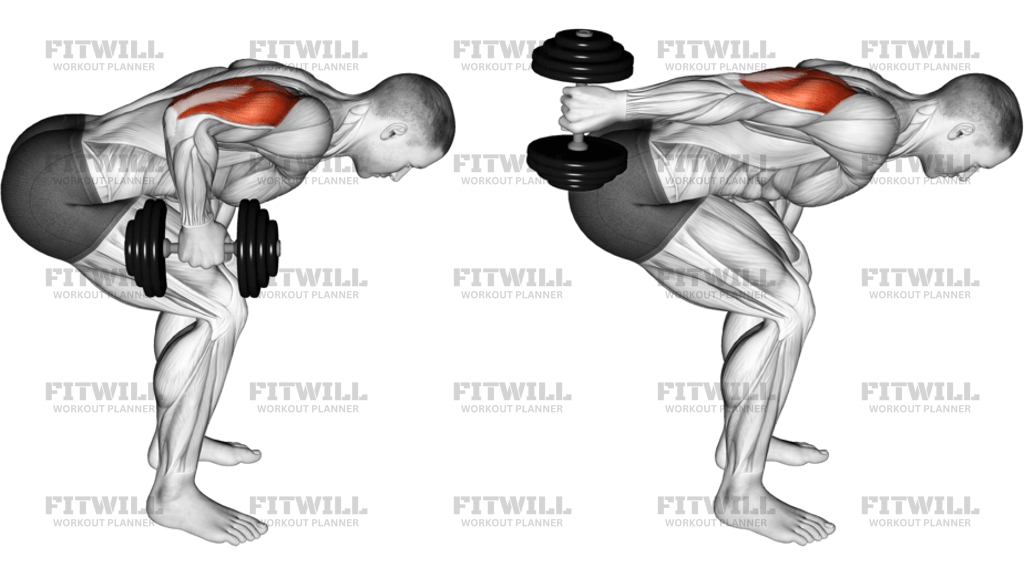
Dumbbell Standing Bent-Over One-Arm Triceps Extension is a single-arm isolation exercise that trains the back of the upper arm by straightening the elbow against resistance while the torso stays hinged forward. It is useful when you want focused triceps work without needing a bench or cable station, and it also teaches you how to keep the shoulder quiet while the elbow does the work.
The main job belongs to the triceps, with the forearms helping you keep the dumbbell steady and the core working to hold the torso in position. The bent-over stance matters because it creates space for the arm to extend behind the body while keeping tension on the triceps instead of turning the movement into a shoulder swing. When the hinge is solid, the exercise feels strict and controlled rather than loose and momentum driven.
A good set starts with a stable hip hinge, soft knees, and a flat back. In Dumbbell Standing Bent-Over One-Arm Triceps Extension, the working upper arm should stay close to your side or slightly behind it while the elbow opens and closes like a hinge. That setup keeps the movement honest: if the shoulder starts drifting or the torso keeps rising, the load is probably too heavy or the rep tempo is too fast.
The best repetitions finish with a firm elbow lockout and a brief squeeze in the straight-arm position, then a slow return until the forearm is back under control. Because the torso is supported only by your own posture, breathing and bracing matter just as much as arm strength. Exhale as you extend, inhale as you lower, and reset your hinge before the next rep so every side stays symmetrical.
Dumbbell Standing Bent-Over One-Arm Triceps Extension works well as accessory work after pressing, arm training, or any session where you want more triceps volume without heavy joint stress. It is also a practical choice for beginners who need a simple elbow-extension pattern with a clear line of motion, provided they start light and keep the upper arm still. If the low back, shoulder, or wrist starts taking over, shorten the range and clean up the setup before adding weight.
Fitwill
Log Workouts, Track Progress & Build Strength.
Achieve more with Fitwill: explore over 9600 exercises with images and videos, access built-in and custom workouts, perfect for both gym and home sessions, and see real results.
Start your journey. Download today!




Instructions
- Stand with feet about hip-width apart and hinge forward until your torso is nearly parallel to the floor, then place your free hand on the front of your thigh for balance.
- Hold a dumbbell in the working hand with your palm facing inward and let the upper arm hang close to your side, elbow bent about 90 degrees.
- Set your shoulder blade down and back, keep your neck long, and brace your midsection before the first rep.
- Keep the upper arm still and extend the dumbbell straight behind you by opening only the elbow.
- Finish with the arm nearly straight and the triceps fully squeezed without letting the shoulder roll or the ribs flare.
- Pause briefly at lockout, then lower the dumbbell slowly until the forearm returns to the start position.
- Keep the torso fixed in the hinge as you lower and lift, and avoid twisting toward the working arm.
- Exhale as you extend and inhale as you return, then reset your hinge before the next repetition.
- Complete all reps on one side, set the dumbbell down safely, and repeat on the other side.
Tips & Tricks
- If your torso keeps popping up, the dumbbell is too heavy for a strict bent-over triceps extension.
- Think about pinning the upper arm in place; the forearm should swing like a door while the shoulder stays quiet.
- A slightly staggered stance can make the hinge steadier if your balance shifts during the set.
- Keep the wrist neutral so the dumbbell stays lined up with the forearm instead of bending the hand back.
- Use a short pause at the top to stop momentum from stealing tension from the triceps.
- Lower the dumbbell under control until the elbow is comfortably bent, but do not let the shoulder drift forward.
- If your lower back starts working harder than your arm, bend the knees a little more and reduce the hinge angle slightly.
- Lighter weight and cleaner lockout usually build better triceps tension here than chasing a big dumbbell.
Frequently Asked Questions
What muscle does Dumbbell Standing Bent-Over One-Arm Triceps Extension target most?
It mainly targets the triceps, especially the long and lateral heads, while the forearms and core help you hold the position.
Can beginners perform this exercise?
Yes. Beginners usually do best with a very light dumbbell and a slower tempo so they can keep the upper arm still.
Should my upper arm move during Dumbbell Standing Bent-Over One-Arm Triceps Extension?
No, the upper arm should stay close to your torso while the elbow opens and closes. If the shoulder swings, the load is too heavy or the hinge is losing position.
Where should I feel Dumbbell Standing Bent-Over One-Arm Triceps Extension?
You should feel the work in the back of the upper arm. A little forearm effort is normal, but the shoulder and low back should not be doing most of the work.
How heavy should I use for this movement?
Use a load that lets you reach full elbow extension without twisting your torso or shrugging the shoulder. This exercise usually works better with lighter weights than people expect.
Is Dumbbell Standing Bent-Over One-Arm Triceps Extension the same as a triceps kickback?
Yes, it is essentially a standing bent-over version of a one-arm triceps kickback. The key is the same: keep the upper arm fixed and extend only at the elbow.
What can I do if my lower back gets tired first?
Reduce the hinge slightly, soften the knees, and brace harder through the midsection. A staggered stance or a hand on a thigh can also make the position easier to hold.
Can I do Dumbbell Standing Bent-Over One-Arm Triceps Extension on both arms at once?
You can, but the single-arm version usually gives better control because it is easier to keep the torso square and the elbow path clean.