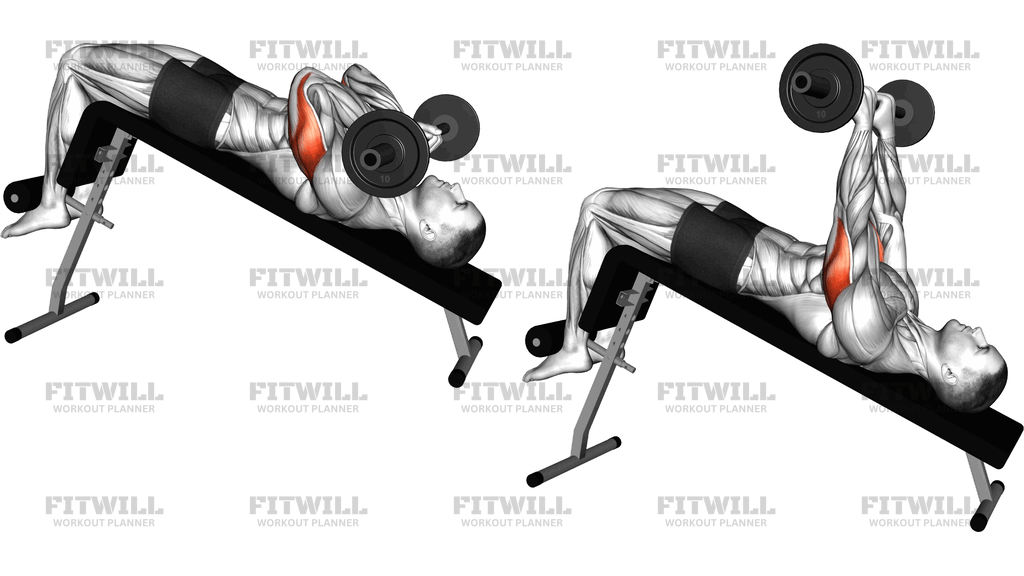
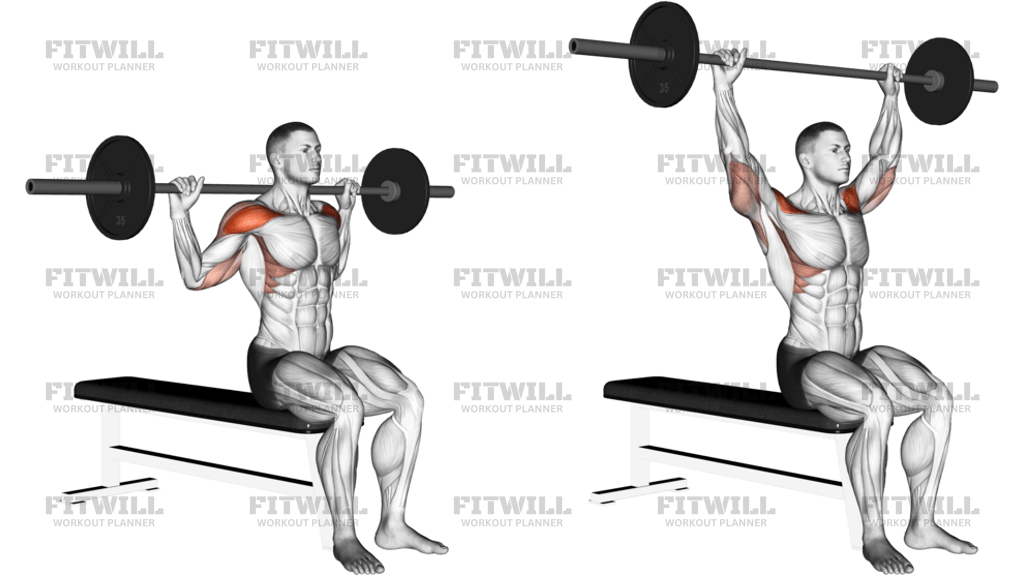
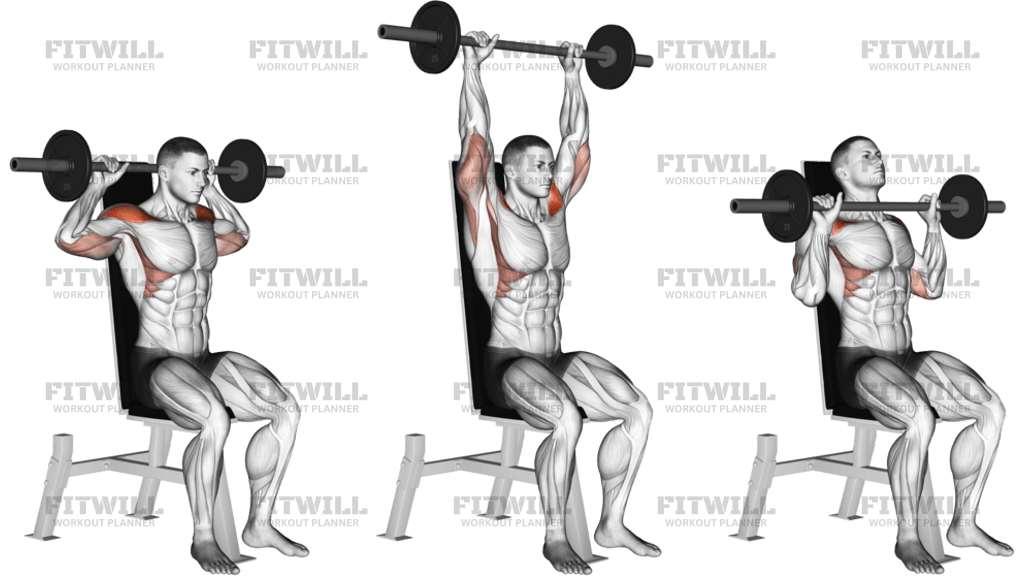
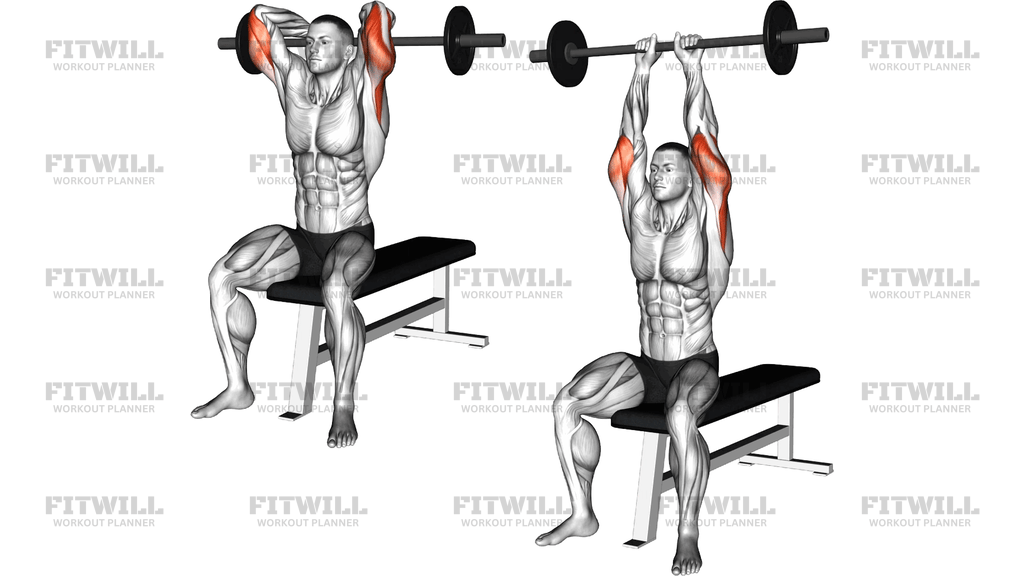
Barbell Pin Presses
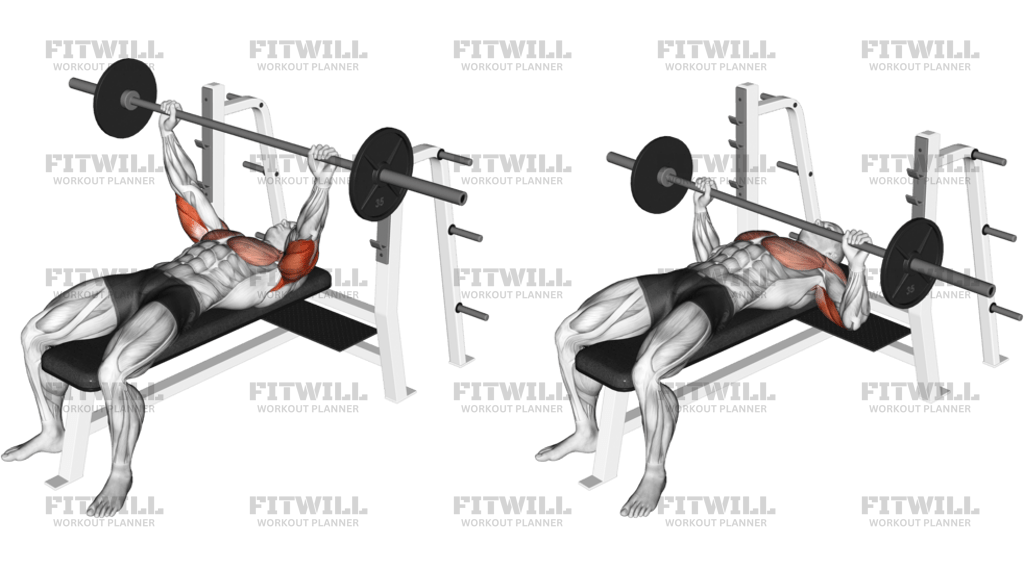
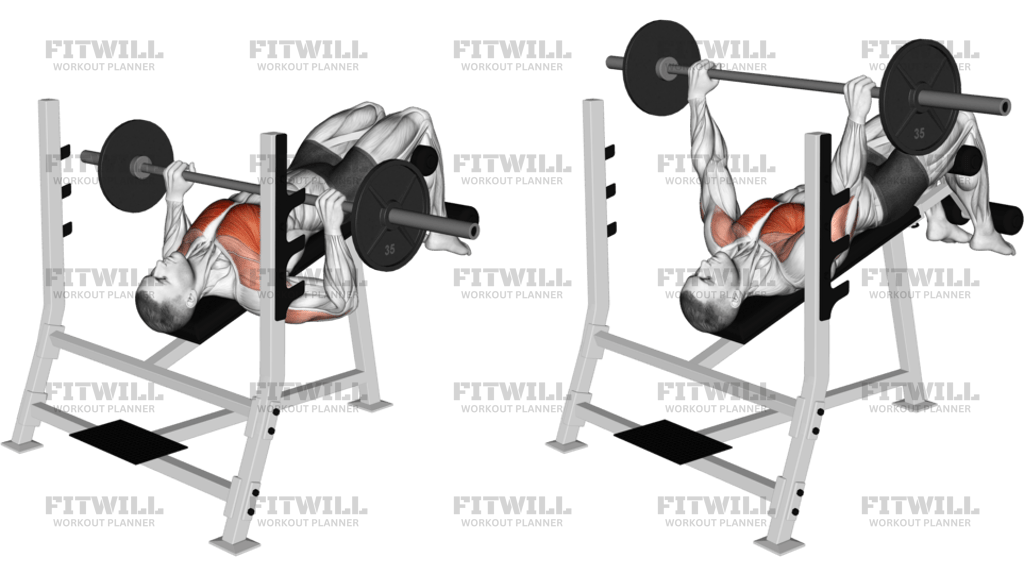
Barbell Pin Presses are a dead-stop bench press variation performed from safety pins or rack bars set at the bottom of the press path. The bar starts on the pins, not on your chest, so every rep begins from a fully reset position. That makes the movement especially useful for building pressing strength off the bottom, improving bar control, and teaching you to create force without relying on a bounce.
The main emphasis is on the triceps, with the chest, front delts, and upper back contributing to the press and to shoulder stability. In practice, the exercise challenges the triceps brachii to extend the elbows while the scapular stabilizers and grip keep the bar steady on a fixed line. Because the bar has to leave the pins cleanly, the setup matters more than it does in a touch-and-go bench press.
A good pin press starts with the pins placed consistently and the bench centered so the bar lands at the same height every rep. Lie with your eyes under the bar, plant your feet, set your shoulder blades back and down, and grip the bar evenly. Once the bar is settled on the pins, take your breath, brace, and press from a dead stop with a controlled bar path instead of jerking the weight off the supports.
This variation is commonly used as an accessory lift for lifters who want stronger lockout mechanics, more triceps involvement, or a stricter pause from the bottom. It can fit into upper-body strength work, overload blocks, or technique work, but it is not the place to chase sloppy reps. Use a load you can control from a motionless start, keep your wrists stacked over your elbows, and lower the bar back to the pins under control before each reset.
[ Workout Log & Planner ]
Put your next workout in Fitwill
Keep your plan and training log ready when you are.


Instructions
- Set the bench under the bar so the safety pins are even and positioned at the bottom of your press range, then lie down with your eyes under the bar.
- Plant your feet firmly on the floor, keep a small arch in your upper back, and pull your shoulder blades back and down into the bench.
- Take a slightly wider-than-shoulder grip and stack your wrists over your elbows before you unrack or settle the bar onto the pins.
- Lower the bar under control until it rests fully on the pins at the bottom position.
- Pause long enough to remove any bounce, then take a breath and brace before each press.
- Drive the bar upward from the dead stop until your elbows are straight and the bar finishes over the shoulder line.
- Keep the bar path smooth and slightly back toward the rack as you press, instead of letting it drift forward.
- Lower the bar back to the pins with control and fully reset your breath and shoulder position before the next rep.
- Repeat for the planned number of reps, then re-rack the bar carefully once the set is complete.
Tips & Tricks
- Set the pins at the same height every time; if they are too high, the movement becomes a partial press, and if they are too low, you lose the point of the exercise.
- Treat each rep as a dead stop. Let the bar settle on the pins before you drive it up instead of bouncing or unloading the bar early.
- Keep your wrists stacked over the forearms so the bar stays balanced and the triceps can extend the elbows efficiently.
- A slightly narrower grip usually shifts more work to the triceps, while an excessively wide grip can turn the lift into an awkward chest press.
- Keep your shoulder blades pinned to the bench; if they slide forward, the bar path gets shaky and the front of the shoulder takes more stress.
- Use leg drive to keep your torso tight, but do not let your hips lift or your chest collapse when the bar leaves the pins.
- Pause long enough on the pins to remove momentum, especially on heavier sets where a rebound would hide weak bottom-end strength.
- If the bar stalls midway, reduce the load before you start cutting range or losing position at the pins.
Frequently Asked Questions
What does Barbell Pin Presses train most?
It mainly trains the triceps, with the chest, front delts, and upper back helping stabilize and drive the press.
How is a pin press different from a regular bench press?
The bar starts from a dead stop on the pins instead of bouncing off the chest, so you have to generate force from the bottom without stretch reflex.
Where should the pins be set?
Set them at the bottom of your bench press range, usually just below the point where the bar would touch your chest in a normal rep.
Should I bounce the bar off the pins?
No. Let the bar come to a full stop on the pins, reset your brace, and then press again.
Is this exercise good for lockout strength?
Yes. The dead-stop start and triceps-heavy press make it useful for building stronger lockout mechanics.
Can beginners use Barbell Pin Presses?
Yes, but only with light loading and careful setup, since the fixed start position makes sloppy bar path obvious.
What is the most common mistake with this lift?
Most mistakes come from losing upper-back tightness, letting the wrists collapse, or pushing the bar off the pins with a bounce.
Do I need a spotter?
A spotter is a good idea for heavier sets, especially because the bar starts from a motionless position and can be harder to rescue if the rep stalls.