Dumbbell Tate Press
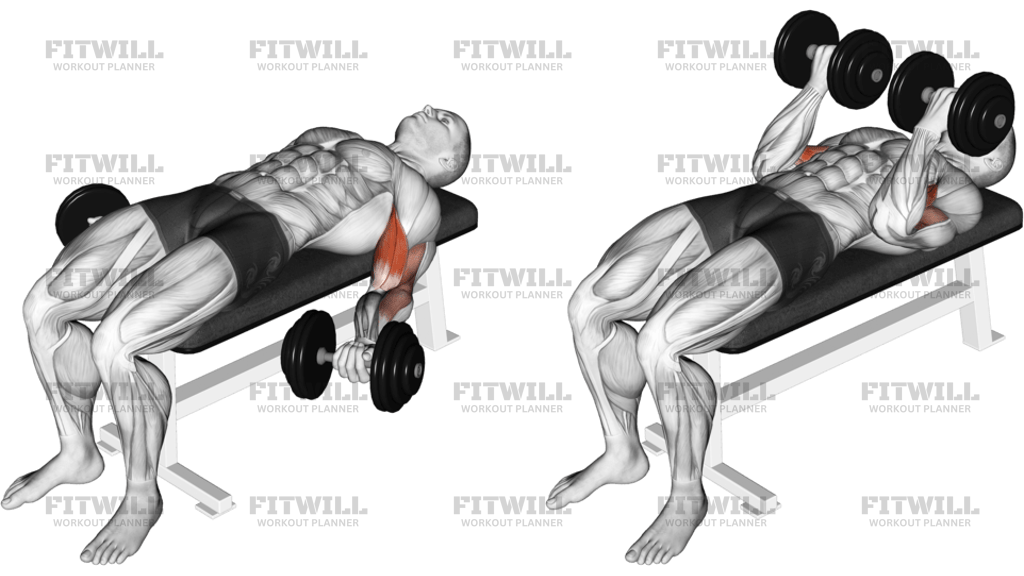
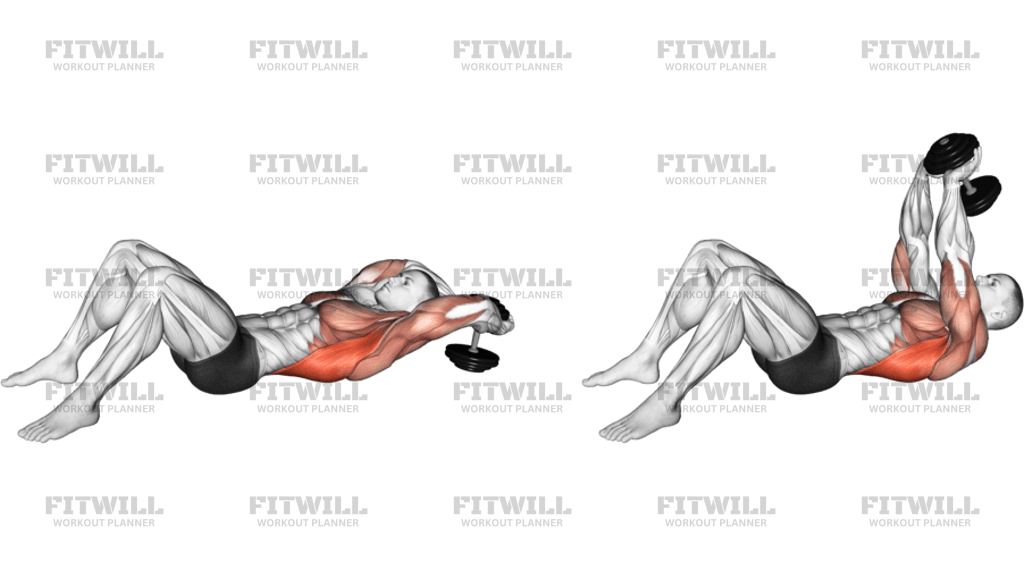
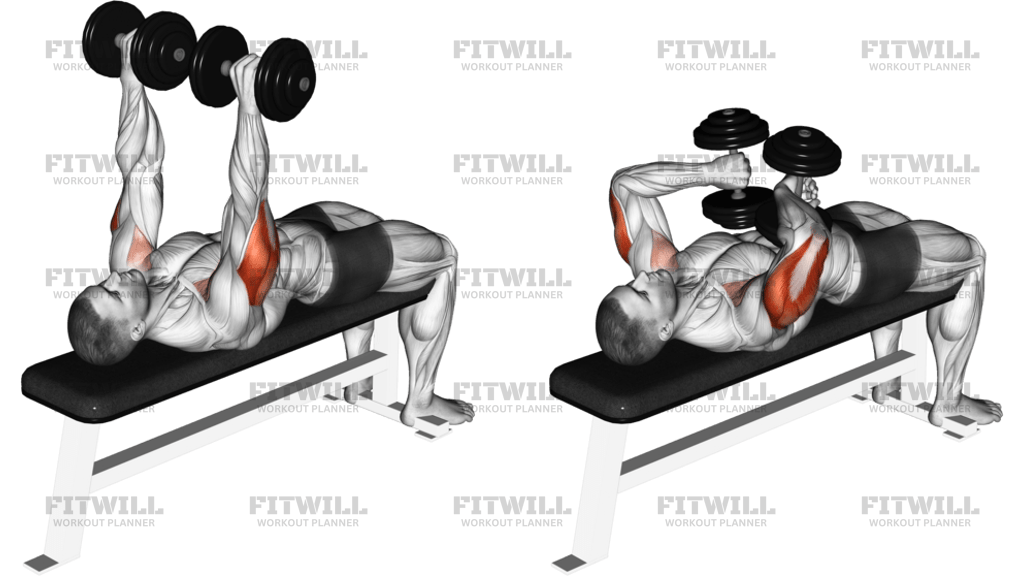
Dumbbell Tate Press is a dumbbell triceps isolation exercise that uses a short, controlled elbow bend to challenge the triceps in a position many lifters do not train often. The dumbbells start above the chest with the palms facing each other, then travel inward and downward as the elbows flare out to the sides. That unusual arm path is what makes the exercise different from a standard dumbbell press or skull crusher.
The movement is useful when you want direct triceps work without needing a cable stack or barbell setup. Because the upper arms stay angled out while the elbows flex and extend, the exercise asks the triceps to control both the lowering phase and the press back up. The forearms and shoulder stabilizers still help, but the main job is to keep the elbow joint moving smoothly while the upper arm stays organized.
Set up on a flat bench with your head and upper back supported, feet planted, and a dumbbell in each hand above the chest. Keep the wrists stacked over the elbows, let the elbows drift outward, and keep the dumbbells close enough that they can travel toward the center of the chest without banging together. That setup matters because if the shoulders roll forward or the dumbbells start too far apart, the exercise turns into a sloppy press instead of a clean triceps movement.
Lower the bells under control until the dumbbells approach the lower chest or upper ribcage area, depending on your arm length and shoulder comfort. Then straighten the elbows and bring the weights back to the starting position without popping the shoulders or snapping the lockout. The best reps feel smooth, compact, and deliberate, with the triceps doing the work instead of momentum, arching, or a big shoulder swing.
Use Dumbbell Tate Press as an accessory lift after heavier pressing, or as a focused arm builder when you want a joint-friendly triceps variation with a strong contraction. Keep the load modest, because the range is small and the exercise gets difficult fast once the elbows start losing position. If your elbows ache or the dumbbells drift all over the place, shorten the range slightly and clean up the path before adding weight.
[ Workout Log & Planner ]
Put your next workout in Fitwill
Keep your plan and training log ready when you are.


Instructions
- Lie on a flat bench with your head, upper back, and hips supported, and plant both feet on the floor.
- Hold a dumbbell in each hand above the chest with your palms facing each other and your wrists stacked over your elbows.
- Let your elbows angle outward so the upper arms form a wide V shape instead of pinning them tight to your sides.
- Brace your torso and keep the dumbbells steady above the sternum before you begin the first rep.
- Bend only at the elbows and lower the dumbbells inward toward the lower chest or upper ribcage.
- Keep the dumbbells close enough to control the path, but do not let them crash together at the bottom.
- Press the dumbbells back up by straightening the elbows, keeping the shoulders quiet and the wrists neutral.
- Stop just short of a hard elbow snap at the top, then begin the next rep with the same controlled arc.
- Lower the weights to the start with the same tempo you used on the way up.
- Set the dumbbells down carefully once the set is finished.
Tips & Tricks
- Choose a load that lets you keep the elbows flared without the dumbbells wobbling side to side.
- Think about bending and straightening the elbows, not pressing the weight like a chest exercise.
- If the dumbbells touch aggressively at the bottom, shorten the range until the path stays smooth.
- Keep the upper arms angled out, but do not let the shoulders roll forward off the bench.
- A neutral wrist position helps the dumbbells track cleanly and keeps pressure out of the hands and forearms.
- Use a slower lowering phase if the triceps stop controlling the descent near the bottom.
- If your elbows feel irritated, reduce the range and stop the rep before the weights sink too deep.
- Keep your chest from puffing up to finish the rep; the triceps should extend the elbows, not the rib cage.
- This variation usually works best with lighter dumbbells and higher control, not maximal loading.
Frequently Asked Questions
What muscles does Dumbbell Tate Press target?
Dumbbell Tate Press mainly targets the triceps. The forearms and shoulder stabilizers help control the dumbbells, especially as the elbows flare and the weights lower toward the chest.
Why do the elbows flare out in Dumbbell Tate Press?
The flared elbow position creates the signature Tate press path and keeps the movement focused on elbow extension. If you tuck the elbows too much, it starts to feel more like a different triceps press.
How low should the dumbbells go?
Lower them until they approach the lower chest or upper ribcage, but stop earlier if the shoulders roll forward or the elbows lose control. Range should stay smooth, not forced.
Is Dumbbell Tate Press beginner-friendly?
Yes, if you start light and keep the range short and controlled. It is less technical than many triceps movements, but the elbow path still needs attention.
What is the biggest mistake on Dumbbell Tate Press?
The most common mistake is turning it into a loose press by dropping the shoulders or bouncing the dumbbells together. Keep the movement compact and let the elbows do the work.
Should I use heavy weights for Dumbbell Tate Press?
Usually no. This exercise works best with moderate or lighter dumbbells because the lever arm is awkward and the triceps lose tension when the weights get too heavy.
Can I do Dumbbell Tate Press if my elbows are sensitive?
You can try a smaller range and slower tempo, but stop if the elbows feel sharp or cranky. If the bottom position bothers you, a cable pressdown or neutral-grip extension may be easier.
How is Dumbbell Tate Press different from a skull crusher?
A Tate press keeps the elbows flared and lowers the dumbbells inward toward the chest, while a skull crusher usually sends the forearms more directly toward the forehead. The setup changes where the tension feels strongest.