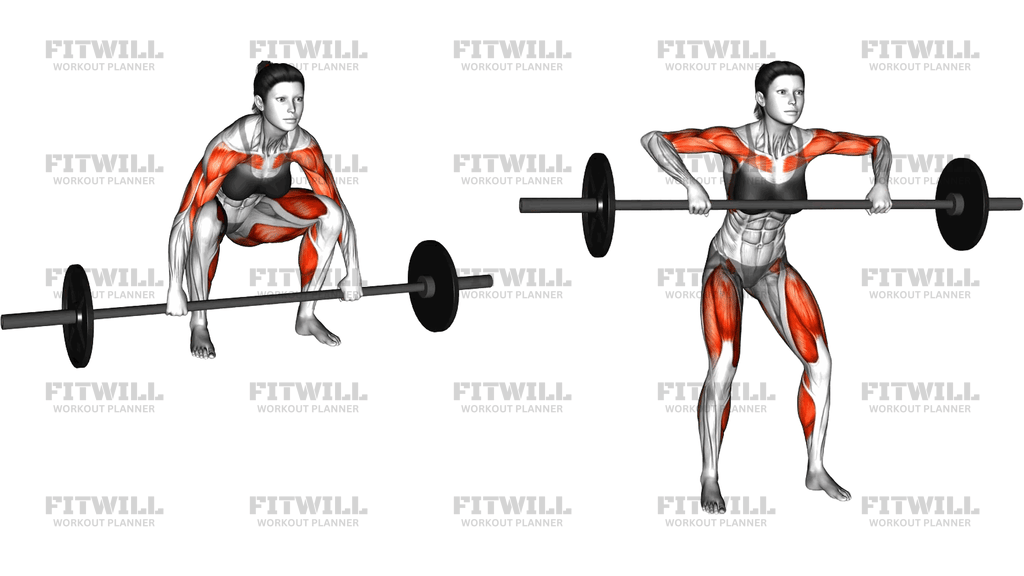
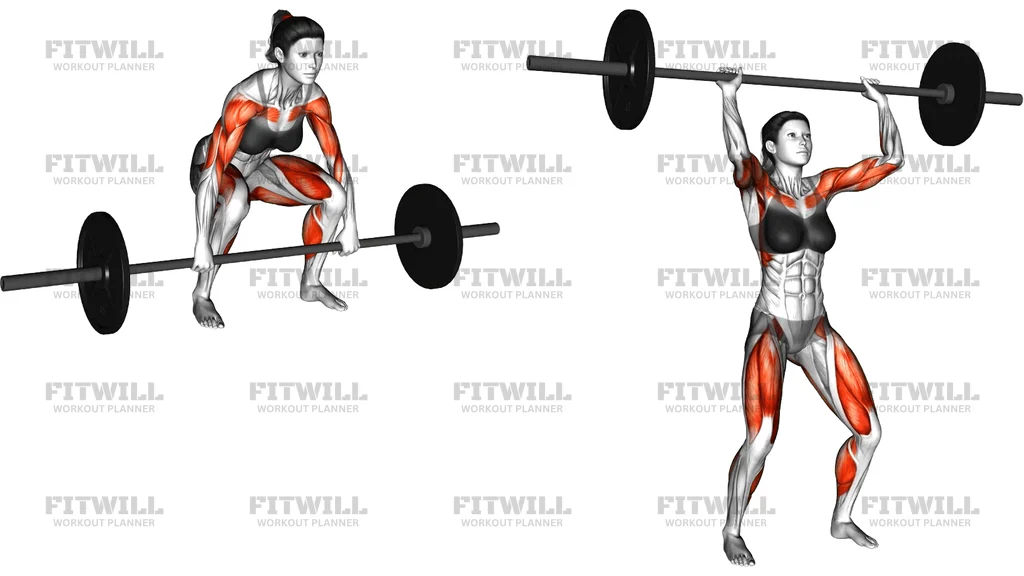
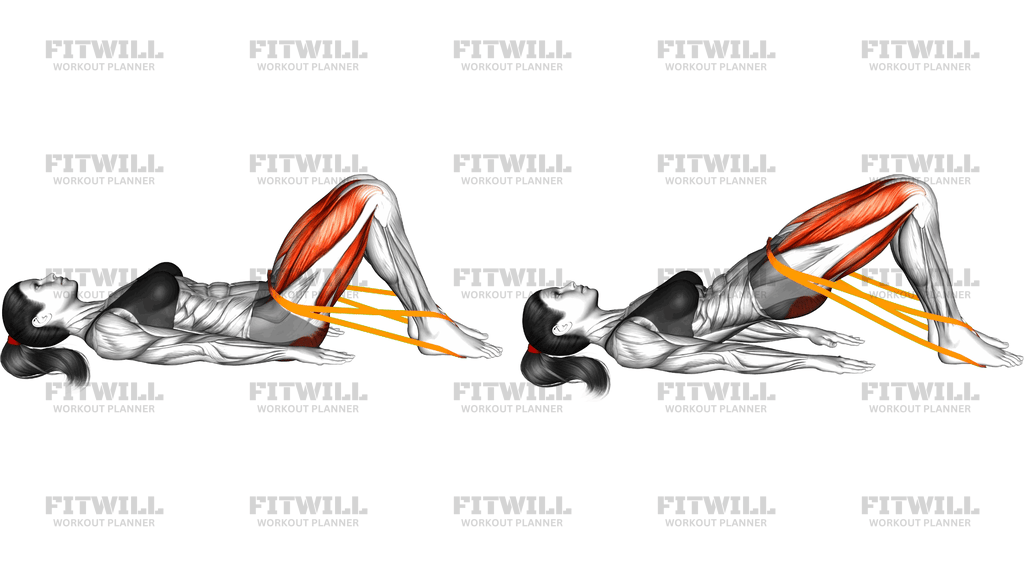
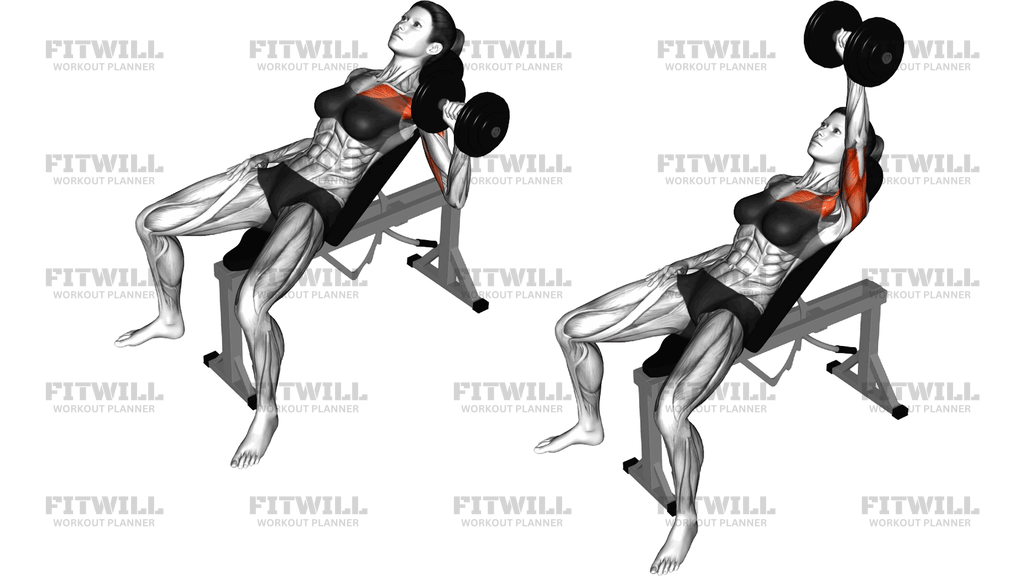
Barbell Single Leg Deadlift
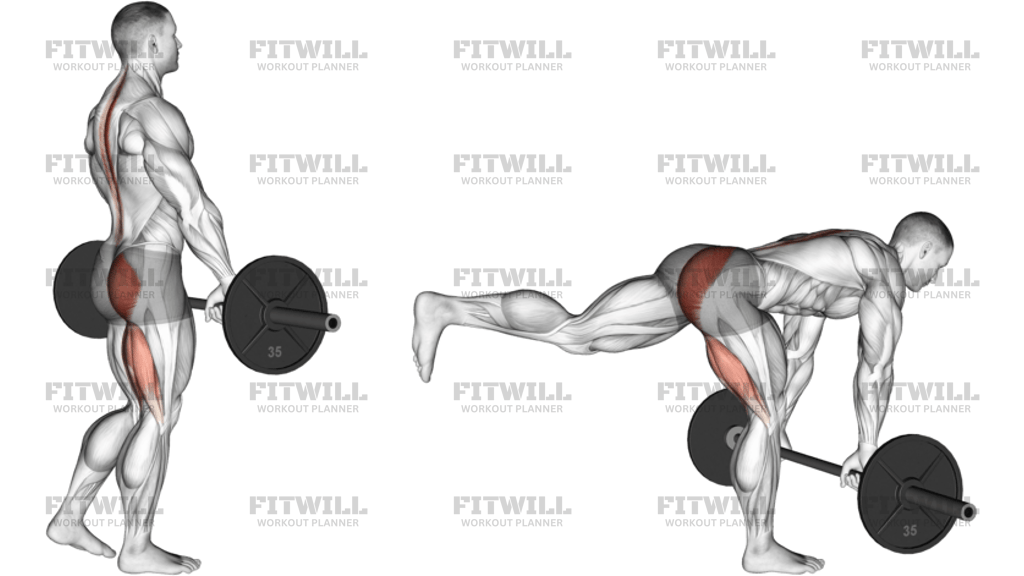
Barbell Single Leg Deadlift is a unilateral hip hinge that trains the glutes, hamstrings, and trunk to work while one leg supports the body. Because the bar stays in front of you and the free leg reaches behind as a counterbalance, the exercise also exposes side-to-side differences in balance, hip control, and hinge mechanics that a two-leg deadlift can hide. It is useful when you want strength work that also challenges coordination and single-leg stability.
The setup matters more here than in a bilateral hinge. Stand tall with the barbell held in both hands, then shift into one working leg with the knee softly unlocked and the other leg reaching long behind you. Keep the pelvis level and the chest long so the bar can travel close to the standing leg instead of swinging away from the body. If you rush the start, you usually lose balance before the hamstrings have a chance to load.
Each repetition should be a clean hip hinge, not a fold through the lower back. Lower the bar along the front of the standing thigh and shin while the lifted leg stays in line with the torso as a straight counterweight. At the bottom, you should feel a strong stretch through the back of the standing leg and tension around the glute on that side, but the torso should still look organized. Drive the floor away with the standing foot, squeeze the glute to stand tall, and keep the bar close on the way up.
Barbell Single Leg Deadlift fits well in lower-body strength sessions, accessory blocks, warm-ups, and athletic programs where single-leg control matters. It is especially useful for runners, field-sport athletes, and lifters who want to improve hip stability without loading the spine the way a heavier bilateral pull can. Because balance often limits the load before muscle strength does, moderate reps and strict tempo usually produce the best result.
Keep the range honest and stop the descent when the pelvis starts to open or the bar drifts forward. A smaller, controlled hinge is better than reaching for the floor and losing the line of force. If grip, balance, or low-back position begins to break down, reduce the load and slow the lowering phase. The goal is a repeatable single-leg hinge with steady tension, not a wobbling touch-and-go rep.
[ Workout Log & Planner ]
Put your next workout in Fitwill
Keep your plan and training log ready when you are.


Instructions
- Stand with the barbell in both hands in front of your thighs, feet about hip-width apart, and shift your weight onto one standing leg.
- Let the other leg hover slightly behind you, keep the standing knee softly bent, and keep your toes pointing roughly straight ahead.
- Set your shoulders down and back, brace your midsection, and keep your chest long before you start the hinge.
- Hinge at the standing hip and send the free leg straight back as the bar slides down the front of your standing thigh.
- Keep the bar close to your leg and lower it toward mid-shin while your torso tips forward under control.
- Stop when your hips begin to open, your back wants to round, or you lose the line from head to heel.
- Drive through the standing foot, squeeze the glute on the working side, and bring your torso back to tall standing along the same path.
- Reset your balance at the top before the next rep, then repeat for the planned reps before switching legs.
Tips & Tricks
- Choose a load you can control on one leg; balance usually limits this lift before strength does.
- Keep the standing knee unlocked instead of locking it out, which makes the hinge harder to control.
- Think about reaching the free heel straight back rather than lifting the leg high.
- Let the bar brush close to your thigh and shin; if it drifts forward, the low back usually takes over.
- Square your hips to the floor on every rep so the working side does the work instead of rotating open.
- Lower slowly and own the bottom position instead of dropping into it.
- Exhale as you stand up and re-brace before each descent so the torso stays organized.
- If you cannot stay balanced, reduce the range of motion before you reduce the load.
- Use a light toe tap behind you in warm-up sets if you need to learn the pattern before hovering the rear foot.
Frequently Asked Questions
What does Barbell Single Leg Deadlift work most?
It mainly trains the glutes and hamstrings of the standing leg while the core and hip stabilizers keep the pelvis from twisting.
Is Barbell Single Leg Deadlift the same as a single-leg Romanian deadlift?
The cues are almost identical. In practice, both are a single-leg hip hinge with a barbell held in front of the body.
How do I keep my balance with the barbell?
Keep the bar close to the standing leg, use a soft bend in the knee, and reach the free leg straight back as a counterweight. A lighter load will help you own the pattern.
How low should I go on Barbell Single Leg Deadlift?
Go only as low as you can while keeping the hips square, the bar close, and the back flat. Mid-shin is enough for most lifters.
Should my back foot touch the floor?
Not in the strict version shown here. The rear leg stays lifted, though a light toe tap can be used in a beginner progression.
Can beginners do Barbell Single Leg Deadlift?
Yes, but start light and treat it as a balance drill first. Most beginners do better with shorter range and a slow lowering phase.
Why do I feel Barbell Single Leg Deadlift in my lower back?
That usually means the bar drifted away or the torso rounded as you reached lower. Shorten the range and keep the bar tracking close to your shin.
What is a good substitute if I cannot balance well?
A dumbbell single-leg deadlift or a kickstand RDL is easier to control while you learn the same hip hinge pattern.