Shoulder Grip Pull-Up
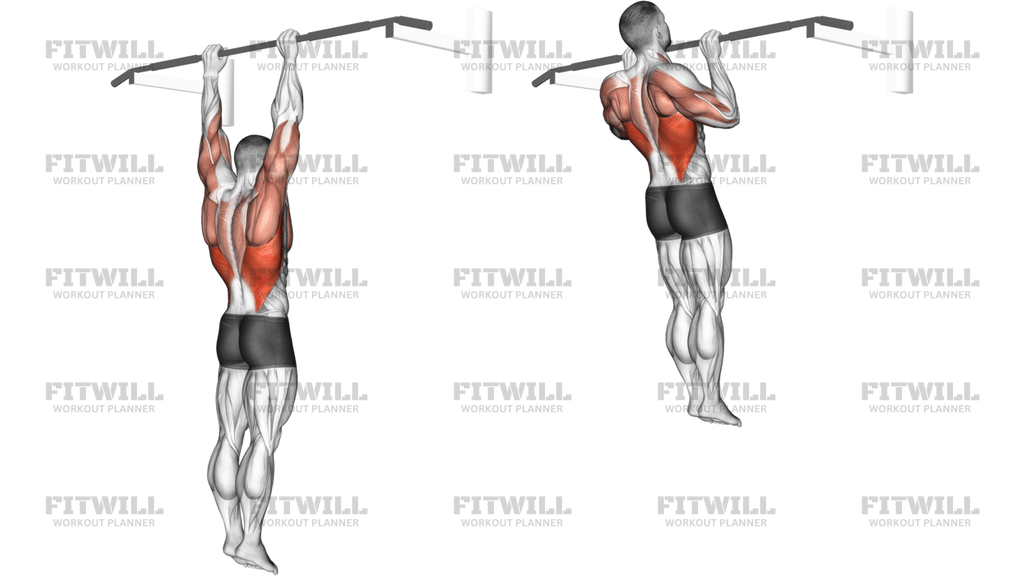
Shoulder Grip Pull-Up is a bodyweight vertical pulling exercise performed from a shoulder-width overhand grip. The image shows the hands set slightly wider than the shoulders on a fixed bar, the body hanging straight beneath the bar, and the finish brought high enough for the chin to clear the bar. That setup makes it a classic test of upper-back and arm strength while also demanding trunk control to keep the legs from swinging.
This variation trains the lats, upper back, biceps, and grip while asking the shoulder blades to move cleanly through depression and retraction. Because the hands are not excessively wide, the position usually feels more natural on the shoulders than very wide pull-ups, while still requiring a strong pull from the back. The torso stays long and controlled so the rep comes from strength instead of kicking or heaving.
Start each rep from a dead hang with the arms fully extended and the ribs stacked over the pelvis. From there, pull the shoulder blades down first, then drive the elbows down and slightly back until the chest rises toward the bar. Keep the neck neutral and avoid craning the chin. At the top, finish with the chin over the bar or as high as your shoulder position allows without shrugging. Lower under control until the elbows are straight again and the shoulders are set for the next rep.
Use this pull-up when you want a straightforward strength movement for vertical pulling capacity, upper-back development, and body control. It works well in strength blocks, accessory work, or as part of a calisthenics progression. Beginners can use assistance, band support, or machine assistance to keep the same path while reducing load. The main quality markers are a steady body, a full hang, a clean pull, and a controlled descent without swinging or cutting the range short.
[ Workout Log & Planner ]
Put your next workout in Fitwill
Keep your plan and training log ready when you are.


Instructions
- Grip the bar slightly wider than shoulder width with an overhand grip and hang with straight arms.
- Set your shoulders down away from your ears and stack your ribs over your pelvis before the first pull.
- Squeeze your legs together and keep them quiet so the body stays in one line under the bar.
- Initiate the rep by pulling the shoulder blades down, then drive the elbows toward your ribs.
- Keep your chest tall as you pull until your chin clears the bar or rises as high as possible without shrugging.
- Hold the top briefly without losing the shoulder position or kicking the legs forward.
- Lower yourself in a controlled line until the elbows are straight and the shoulders are reset.
- Reset your breath at the bottom, then repeat for the planned number of repetitions.
Tips & Tricks
- Think "shoulders down first" before the elbows bend; that keeps the rep in the back instead of turning it into a shrug.
- If your chest drifts behind the bar with a big swing, pause at the bottom and restart from a dead hang.
- Keep the grip just outside shoulder width; moving much wider usually shortens the range and makes the shoulders work harder.
- Avoid kicking the feet or crossing the legs aggressively if it pulls your hips out of line.
- Use a full downward stretch, but stop if the bottom position causes shoulder discomfort or a painful pinch.
- Lower for at least as long as the pull; a slow eccentric builds control and keeps the set honest.
- Exhale as you pass the hardest part of the pull, then inhale again before the next rep at the bottom.
- If you cannot clear the bar without swinging, use assistance instead of turning the set into a kipping pull-up.
Frequently Asked Questions
What does the shoulder-width grip change in this pull-up?
A shoulder-width overhand grip usually gives you a stronger, more natural pulling path than a very wide grip while still training the back and arms hard.
What should I feel working at the top of the rep?
You should feel the lats and upper back doing most of the work, with the biceps and grip assisting as you pull your chin over the bar.
Do I need to start from a dead hang?
Yes, if your shoulders tolerate it. A full hang gives you a consistent start point and makes each rep easier to judge for range and control.
Why do people swing on this exercise?
Swinging usually happens when the set is too hard or the core is not braced. Reduce assistance and keep the legs quiet so the pull stays strict.
Can beginners do Shoulder Grip Pull-Up?
Yes. Use a band, assisted pull-up machine, or eccentric-only reps until you can control the full path.
How high do I need to pull?
Pull until your chin clears the bar or as high as your shoulder position allows without shrugging or losing control.
What is a good substitute if I cannot do a full pull-up yet?
Assisted pull-ups and lat pulldowns are the closest substitutes because they keep the same vertical pulling pattern.
What is the biggest form mistake to avoid?
The most common mistake is turning the rep into a neck-driven shrug or a body swing instead of a controlled pull from the back.