Hanging Leg Hip Raise
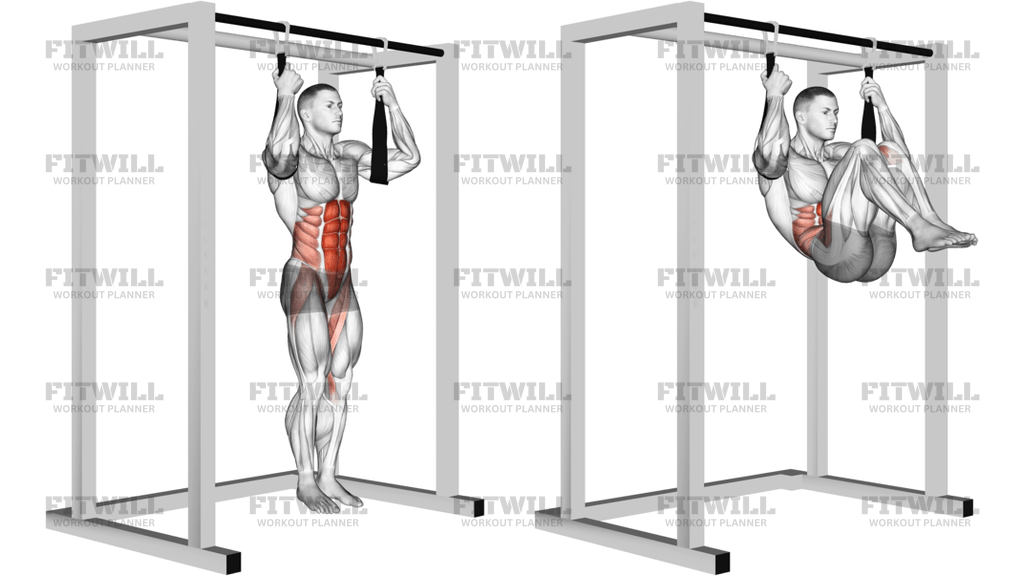
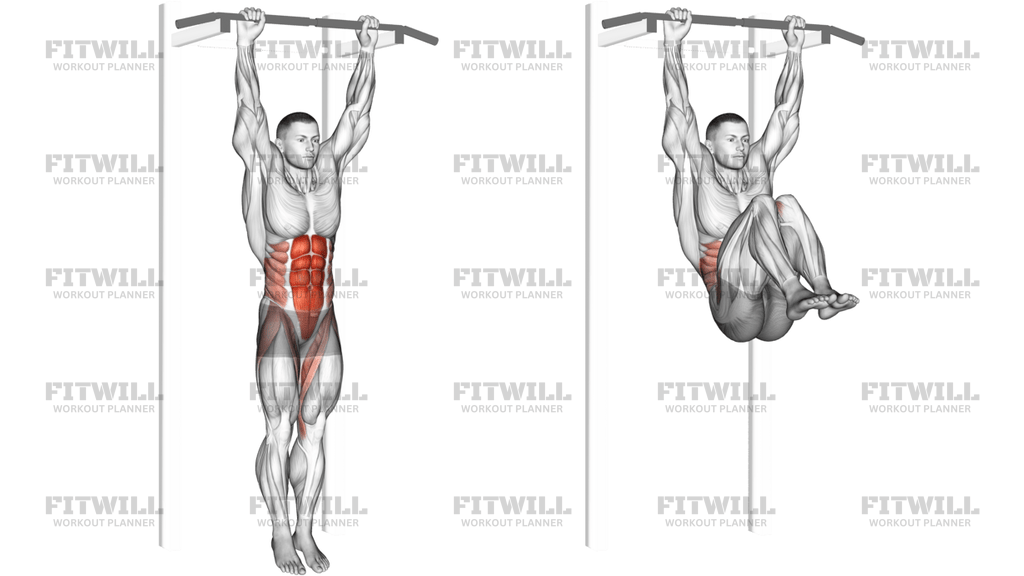
Hanging Leg Hip Raise is a bodyweight abdominal exercise performed from an overhead bar. It combines a hanging knee raise with a deliberate hip tuck at the top, so the torso stays organized while the knees travel upward and the pelvis curls toward the ribs. In the image, the lifter hangs with straight arms, then draws the knees high and finishes with a compact crunch instead of simply swinging the legs.
The movement is valuable because it trains the abs through a long hanging position while also demanding grip strength, shoulder stability, and control through the midsection. The main target is the rectus abdominis, with help from the hip flexors and obliques to lift and stabilize the legs. That mix makes it useful for athletes and lifters who want stronger trunk control without loading the spine directly.
Setup matters more here than on many floor ab exercises. If the shoulders are loose, the rib cage flares, or the body starts swinging, the hips take over and the abs lose tension. A good rep begins with a quiet hang, a slight posterior pelvic tilt, and a steady brace before the knees move. The goal is not to kick the legs up high; it is to keep the lower body controlled while the pelvis and abs do the work.
On each repetition, lift the knees toward the chest, then curl the pelvis up at the top so the tailbone comes forward slightly. Pause briefly in that tucked position, then lower under control until the body is still again. If straight-leg raises are too hard, keep the knees bent and use the same hip tuck. If grip or shoulder endurance fails first, shorten the set before the torso starts swinging.
This exercise fits well in a core block, gymnastic-style accessory work, or any session where you want focused abdominal strength and better hanging control. It is best treated as a strict skill exercise: smooth reps, no momentum, and a controlled descent. Done well, Hanging Leg Hip Raise builds stronger abs, cleaner pelvic control, and better body awareness from the shoulders down through the hips.
Fitwill
Log Workouts, Track Progress & Build Strength.
Achieve more with Fitwill: explore over 9600 exercises with images and videos, access built-in and custom workouts, perfect for both gym and home sessions, and see real results.
Start your journey. Download today!




Instructions
- Grip the overhead bar with both hands, hang with straight arms, and let the legs hang long beneath you.
- Set the shoulders down away from the ears and keep the ribs stacked over the pelvis before you start.
- Brace your abs, then begin the rep without swinging or kicking the legs.
- Drive the knees upward toward the chest in a smooth arc while keeping the torso as still as possible.
- As the knees reach the top, curl the pelvis upward so the tailbone rolls slightly forward and the lower abs finish the rep.
- Pause briefly in the tucked position without losing your grip or letting the shoulders shrug.
- Lower the knees and hips slowly until the body is quiet again and the legs are under control.
- Reset your brace before the next rep and repeat for the planned number of repetitions.
Tips & Tricks
- Keep the bar hang quiet; if your body is swinging, start each rep after the motion settles.
- Think of the top position as a crunch, not just a knee lift, so the abs finish the rep.
- Do not let the shoulders creep toward the ears, because that usually shortens the set before the abs do.
- Exhale as the knees rise and the pelvis tucks, then inhale on the controlled descent.
- Use bent knees if straight legs pull you into a hip-swinging pattern or strain the lower back.
- Stop the set when you can no longer control the lowering phase, even if your hands still feel strong.
- Keep the rib cage from flaring open; stacked ribs make the abdominal curl much cleaner.
- A smaller, strict range is better than a high kick that turns the movement into momentum.
Frequently Asked Questions
What does Hanging Leg Hip Raise train most?
It primarily trains the rectus abdominis, with the obliques and hip flexors helping to lift and stabilize the legs.
Is this more of a knee raise or a hip raise?
It starts like a knee raise, but the hip tuck at the top is what turns it into a true abdominal curl from the hang.
Why do I need to curl my pelvis at the top?
The pelvic curl finishes the rep with the lower abs instead of leaving the movement to the hip flexors and momentum.
What is the most common mistake on the bar?
Swinging the legs and shrugging the shoulders usually take over before the abs get a proper contraction.
Can I keep my knees bent?
Yes. Bent knees are often the best starting version because they make it easier to keep the rep strict and controlled.
Where should I feel the effort during the rep?
You should feel the abs working hardest as the knees come up and the pelvis curls, with the grip and shoulders supporting the hang.
Is this safe for beginners?
Yes, if the hang is comfortable and you keep the movement small, bent-knee, and free of swinging.
How do I make Hanging Leg Hip Raise harder?
Use straighter legs, slower lowering, longer pauses at the top, or more strict repetitions without any body swing.