Side Lat Stretch
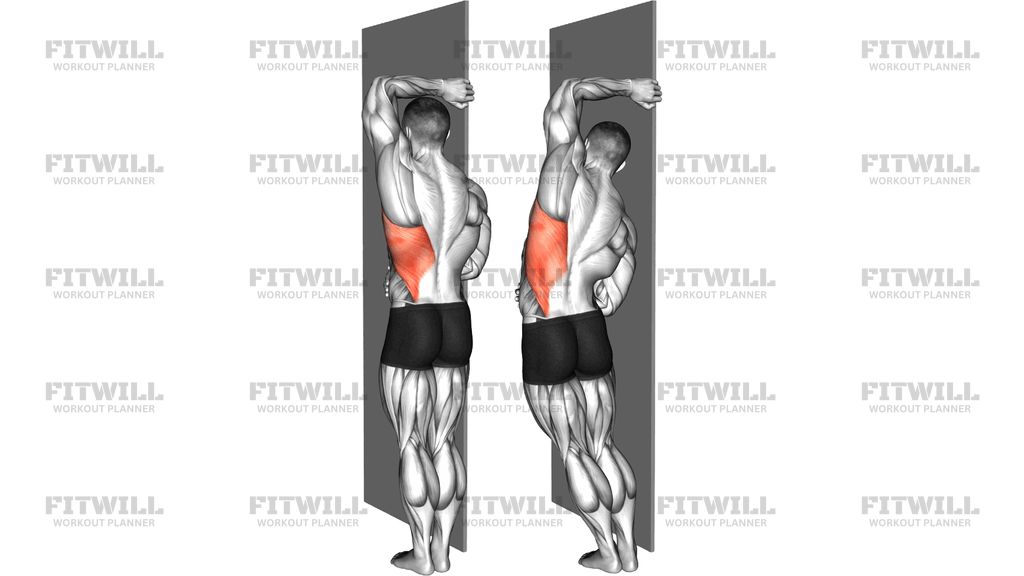
Side Lat Stretch is a standing overhead side stretch that opens the lats, the side of the ribcage, and the tissue around the shoulder blade. It is useful after rows, pull-ups, pressing, or any session where the upper body feels compressed and the overhead position has gone stale. Because the stretch uses a wall or upright support, it gives you a clear anchor while you lengthen one side at a time.
Set up by standing sideways to a wall, post, or rack upright and reaching both hands overhead to hold the edge or vertical surface. Keep the arms long, stack the hands one above the other if needed, and walk the feet just far enough away that your torso already feels a light stretch before you start leaning. The goal is to create a long line from your hands through your ribcage and down the outside of the hip, not to fold sharply at the waist.
Once you are set, exhale and let the hips drift away from the wall while the chest stays mostly facing forward. Keep the shoulders away from your ears and allow the stretched side of the ribcage to expand as you breathe. You should feel the lengthening mainly through the lat, armpit, obliques, and the outside of the trunk, with the supporting arm and shoulder staying active enough to keep the position organized.
This stretch is useful as a warm-up between upper-body sets or as a cool-down when you want to restore overhead range without aggressive bouncing. It can also help if one side feels tighter than the other, since the wall gives you a reference for how far you can lean before the shoulder starts to pinch or the low back takes over.
Keep the stretch smooth and controlled. If the shoulder feels jammed, bring the hands lower, bend the knees slightly, or step closer to the wall. If the lower back starts to arch, shorten the range and think about lifting the ribs up and away instead of collapsing sideways. The best version of Side Lat Stretch feels long, calm, and specific to the side body, not forced through the joint.
Fitwill
Log Workouts, Track Progress & Build Strength.
Achieve more with Fitwill: explore over 9600 exercises with images and videos, access built-in and custom workouts, perfect for both gym and home sessions, and see real results.
Start your journey. Download today!




Instructions
- Stand sideways next to a wall, post, or rack upright and place both hands overhead on the edge or vertical surface.
- Stack the hands one above the other if needed and keep the elbows straight without locking them hard.
- Step the feet a small distance away from the wall so the side of your torso is already lightly loaded.
- Keep your chest mostly facing forward and your shoulders down as you prepare to lean.
- Exhale and shift your hips away from the wall to lengthen the lat and side ribcage on the working side.
- Hold the stretch without twisting, letting the upper arm stay long while the ribs open on the stretch side.
- Breathe slowly into the stretched side for the hold, then ease a little deeper only if the shoulder stays comfortable.
- Step the hips back toward the wall, release the hands, and repeat on the other side.
Tips & Tricks
- Keep the stretch in the side ribcage and armpit; if you feel it mostly in the front of the shoulder, lower the hand position.
- A small forward step of the outside foot can keep you from rotating away from the wall and stealing tension from the lat.
- Let the hips travel away from the wall instead of bending sharply at the waist.
- If your shoulder shrugs up, reset and actively pull it down before leaning farther.
- Bending the knees a little often helps the low back stay quiet and puts the stretch where it belongs.
- Use slow exhalations to help the ribs drop away from the arm and deepen the side-body stretch.
- Stop short of numbness, tingling, or a pinchy feeling in the shoulder.
- Match both sides carefully; the tighter side may need a shorter hold and a smaller step away from the wall.
- For post-workout cooldown, hold the end range longer instead of bouncing or pulsing.
- This is a stretch, not a strength move, so control comes from position and breathing rather than effort.
Frequently Asked Questions
What does Side Lat Stretch work most?
It mainly targets the latissimus dorsi and the side of the ribcage, with help from the obliques, shoulder, and tissue around the shoulder blade.
Do I need a wall or can I use a rack upright?
A wall, rack upright, pole, or other sturdy vertical support works well as long as you can hold it overhead and lean away without slipping.
Should both arms stay straight during Side Lat Stretch?
Yes, keep the arms long so the stretch moves through the side body instead of turning into an elbow bend or a press.
Where should I feel the stretch?
You should feel it along the outer ribcage, under the armpit, and down the side of the trunk on the stretched side.
Why does my shoulder feel pinched in this stretch?
The hands are probably too high, you are shrugging, or you are leaning too far. Lower the grip, pull the shoulder down, and shorten the range.
Can beginners do Side Lat Stretch?
Yes. It is beginner-friendly because you are using body position and breathing rather than external load.
How long should I hold each side?
A 15-30 second hold usually works well, especially if you breathe slowly and keep the ribcage from flaring.
How do I make the stretch deeper without forcing it?
Step a little farther from the wall, exhale fully, and let the hips drift away while keeping the chest mostly forward.
What is the most common mistake with Side Lat Stretch?
People usually twist away from the wall or collapse at the low back instead of lengthening the side of the torso.
Can I use Side Lat Stretch after upper-body training?
Yes, it fits well after pulling or pressing work when the shoulders and lats need a calm overhead reset.