Sitting Lower Trunk Extensor Stretch
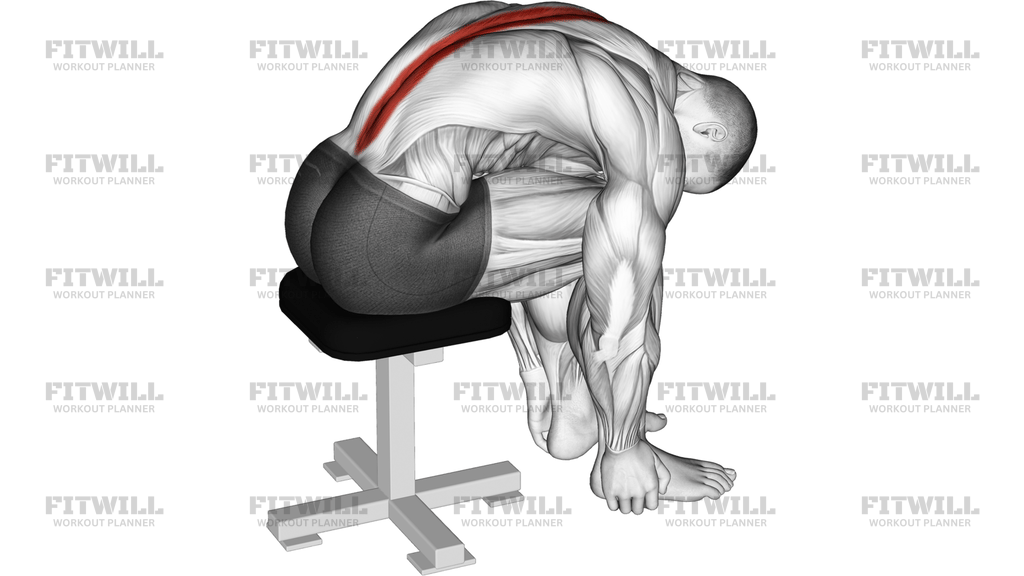
Sitting Lower Trunk Extensor Stretch is a seated spinal flexion stretch done on the edge of a bench or sturdy box. The body folds forward over bent legs so the low back rounds and the muscles that keep the trunk extended can lengthen under control. The image shows a compact seated setup with the torso draped over the thighs, which makes this more of a mobility drill than a strength movement.
The main purpose of the stretch is to reduce stiffness through the lumbar extensors and the tissues that run along the back of the spine. Depending on your body and setup, you may also feel the stretch through the mid-back, glutes, and the back of the hips as the pelvis tips backward and the ribcage moves closer to the thighs. That is normal as long as the sensation stays like a controlled stretch rather than a sharp pull.
Setup matters because the stretch comes from the position of the pelvis and spine, not from yanking harder with the arms. Sitting near the front edge of the bench gives your torso room to fold, while keeping the feet planted helps you stay grounded and avoid sliding. A calm exhale helps the ribs soften down toward the thighs and lets the back round more naturally.
Use slow, deliberate breathing and let the neck hang relaxed instead of forcing your head down. The goal is a steady fold, a brief hold, and a controlled return to upright before repeating. If the stretch feels too intense, reduce the depth of the fold, widen the feet, or stay higher on the thighs. If you feel pain, tingling, or a pinching sensation, back off immediately and choose a gentler mobility option.
This stretch fits well in a warm-up, cool-down, recovery session, or between heavier lifts that leave the low back feeling tight. It is especially useful when you want to open the spine without load, sharpen body awareness, or restore comfortable flexion after a lot of standing, hinging, or extension work. Keep the movement smooth and repeatable so the low back relaxes rather than braces against the stretch.
[ Workout Log & Planner ]
Put your next workout in Fitwill
Keep your plan and training log ready when you are.


Instructions
- Sit on the front edge of a bench or sturdy box with both feet flat, about hip-width apart.
- Let your knees bend comfortably and place your hands between your shins or beside your feet for support.
- Brace lightly, then hinge the pelvis backward so your low back can round as your chest moves toward your thighs.
- Exhale as you fold deeper and let your head and neck relax with the rest of the spine.
- Stop when you feel a strong but manageable stretch through the lower back and back of the trunk.
- Hold the stretched position without bouncing or pulling hard with the arms.
- Keep breathing slowly and let each exhale soften the ribs and lower back a little more.
- Return to the seated position by rolling the spine up gradually, one section at a time.
- Reset your feet and posture before repeating the hold for the next rep.
Tips & Tricks
- Think about tipping the pelvis back first; the stretch should come from spinal flexion, not from cranking the shoulders down.
- A bench that is too high can make the fold awkward; if needed, use a lower box or sit slightly farther forward.
- Keep the feet planted so you can relax into the stretch without sliding off the seat.
- Let the hands act as light supports, not levers that force the torso lower.
- If the low back feels cramped, widen the stance a little and keep the knees looser.
- Hold the deepest comfortable position only after a full exhale, when the trunk usually softens best.
- Do not bounce at the bottom; a still hold is safer and usually gives a better stretch.
- Reduce range immediately if you feel pinching, tingling, or a sharp pull instead of a broad stretch.
Frequently Asked Questions
What does Sitting Lower Trunk Extensor Stretch target?
It mainly stretches the muscles that keep the low back extended, especially the lumbar spinal extensors and nearby back tissues.
Why sit on the edge of a bench for this stretch?
Sitting near the edge gives your torso room to fold forward while keeping the hips grounded and the feet stable.
Should I feel this in my hamstrings too?
You may feel some hamstring or glute tension, but the main sensation should come from the low back and the back of the trunk.
How far should I fold forward?
Fold only until you feel a strong stretch that you can breathe through comfortably; forcing the chest to the thighs is not the goal.
Is it better to keep my back straight?
No. This movement is meant to round the spine gently, so a flat-back hinge misses the main stretch.
What are common mistakes with this stretch?
The biggest mistakes are bouncing, yanking with the arms, and collapsing so hard that the stretch turns into pain.
Can beginners do this exercise?
Yes. Beginners usually do well with a smaller range, slower breathing, and a very short hold at first.
How can I make the stretch easier or harder?
Make it easier by sitting higher and folding less; make it harder by staying taller, hinging deeper, or holding the end position a little longer.
When should I avoid this stretch?
Skip it or use a gentler option if spinal flexion increases pain, numbness, or tingling in the back or legs.