Elbow Flexor Stretch
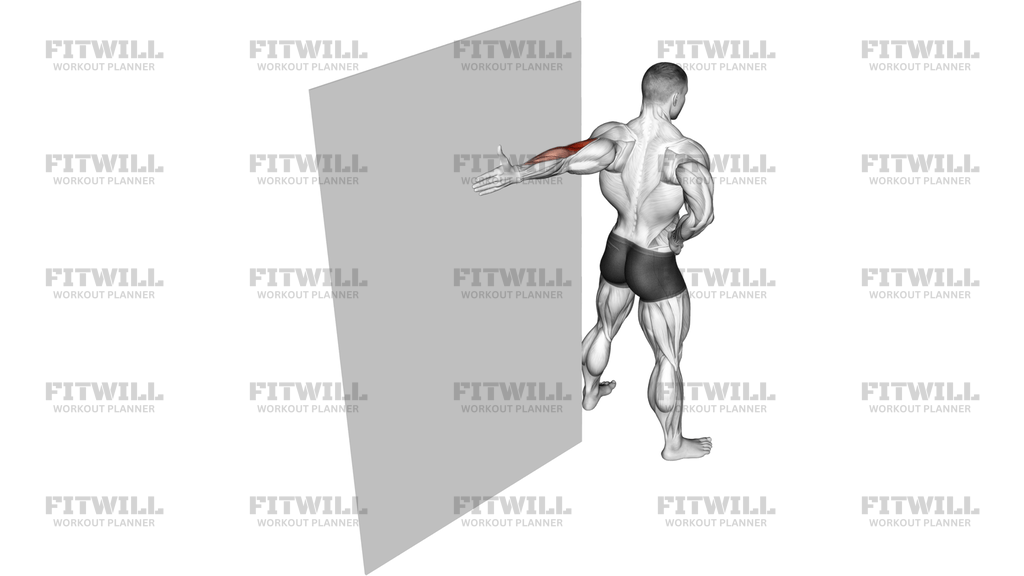
Elbow Flexor Stretch is a wall-assisted mobility drill for the front of the upper arm and the tissues that cross the elbow and forearm. In the setup shown here, one hand is planted on a wall with the arm straight and slightly behind the body while the torso turns away to lengthen the biceps line. The stretch also asks the shoulder to open up, so the quality of the setup matters more than trying to chase a bigger range.
This movement is useful when the elbow flexors feel tight after pulling work, climbing, racquet sports, or long periods of gripping and carrying. The main target is the biceps, with help from the brachialis and forearm flexors. Depending on how high the hand is placed and how far the chest rotates away, you may also feel a mild stretch across the front of the shoulder and upper chest. The goal is not to force the arm back as far as possible, but to create a steady line of tension from the palm through the elbow to the upper arm.
A clean repetition starts with the hand fixed on the wall, the elbow long but not aggressively locked out, and the shoulder relaxed away from the ear. From there, the body rotates away from the planted arm while the rib cage stays stacked over the pelvis. That combination is what increases the stretch in the elbow flexors without turning the motion into a low-back twist or a shoulder pinch. If the wrist or front of the shoulder complains, reduce the angle, lower the hand, or step less far away from the wall.
Use Elbow Flexor Stretch as a controlled hold or a brief mobility reset during warm-ups, cooldowns, or between upper-body sets when you want to restore extension and supination tolerance. Breathing should stay easy and unforced, with a smooth exhale helping the upper arm relax into the stretch. The most productive version is the one you can repeat evenly on both sides without shrugging, bouncing, or turning the pose into pain. It is especially useful after curls, rows, carrying work, or any session that leaves the biceps and forearms feeling shortened, because the wall gives you a repeatable anchor for each side.
[ Workout Log & Planner ]
Put your next workout in Fitwill
Keep your plan and training log ready when you are.


Instructions
- Stand beside a wall and place the palm flat on it at about shoulder height, with the arm straight and the elbow soft rather than jammed shut.
- Keep the shoulder down and slightly away from the ear, then step the same-side foot back a little so the arm sits just behind the line of the torso.
- Brace the ribs over the pelvis and keep the planted hand still while you rotate the chest away from the wall.
- Let the arm stay long as the body turns; the stretch should build from the palm through the elbow into the biceps and forearm, not through a shrug.
- Pause at the first strong but tolerable stretch and breathe slowly through the hold for 15 to 30 seconds.
- Keep the wrist comfortable and avoid letting the elbow bend as you settle deeper into the stretch.
- Return the chest toward the wall with control before removing the hand.
- Repeat on the other side, matching the body angle and hold time so both sides get the same tension.
Tips & Tricks
- A small turn away from the wall is usually enough; forcing a huge rotation often turns the stretch into a shoulder pinch.
- If the wrist feels strained, lower the hand a little or angle the fingers slightly outward instead of pushing harder.
- Keep the elbow long but not aggressively locked; the goal is length through the elbow flexors, not joint hyperextension.
- The best stretch should live in the front of the upper arm and forearm, not deep in the shoulder socket.
- Keep the lower back quiet; if the ribs flare, reset and rotate from the torso instead of arching to fake more range.
- Use a slow exhale to let the biceps and forearm relax into the wall position.
- If you do a lot of pulling work, use this after training rather than forcing it cold at the start of the session.
- Match the hold time on both sides so one arm does not get all the mobility work while the other stays stiff.
Frequently Asked Questions
What does Elbow Flexor Stretch target most directly?
It mainly targets the biceps, with additional stretch through the brachialis and forearm flexors.
Why is the hand placed on the wall behind the body?
That setup puts the shoulder in extension while the elbow stays long, which is what lengthens the front of the upper arm.
Where should I feel this stretch?
You should feel it along the front of the upper arm, sometimes into the inner forearm, with only mild work in the front of the shoulder.
Is it normal to feel the wrist during this stretch?
A mild wrist stretch can happen, but sharp or jointy wrist pain means the hand is too high or the angle is too aggressive.
Can beginners use this stretch?
Yes. Beginners should keep the torso rotation small and stop well before the shoulder starts to pinch.
What is the most common form mistake?
People usually over-rotate the torso and arch the lower back instead of keeping the ribs stacked and the movement controlled.
Should the elbow be locked straight?
Keep it long, but do not slam it into hyperextension. A soft, controlled straight arm is enough to create the stretch.
When is this stretch most useful?
It works well after pulling sessions, climbing, or any workout that leaves the elbow flexors and forearms feeling tight.