Kneeling Assisted Sliding Chin-Up
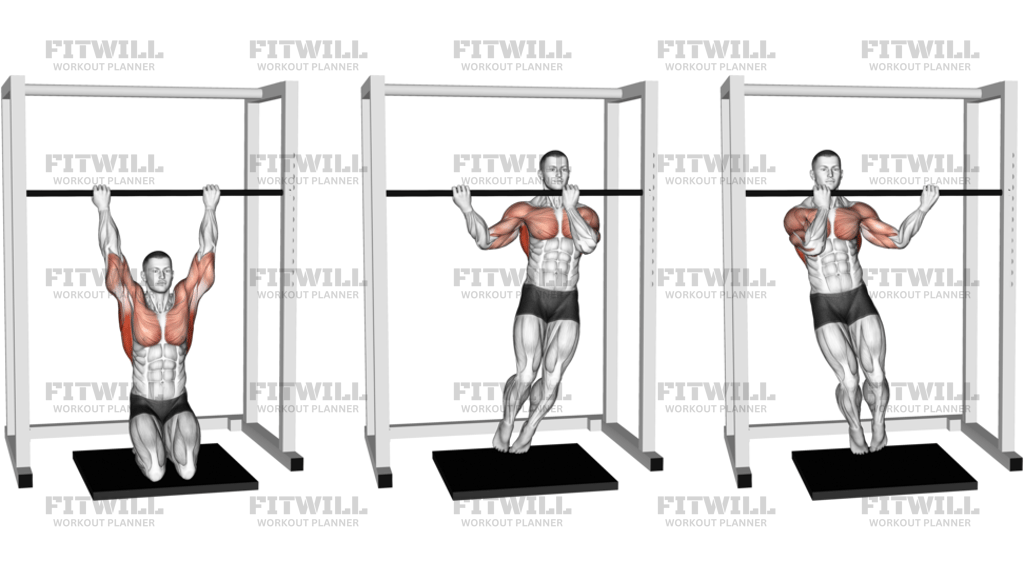
Kneeling Assisted Sliding Chin-Up is a bodyweight pulling exercise that teaches the chin-up pattern with less load than a full hanging rep. It is especially useful when you want to build vertical pulling strength, improve control in the upper back and arms, or practice the path of a chin-up before moving to stricter bodyweight versions.
The kneeling setup changes how much of your bodyweight you have to lift, which makes the exercise easier to learn and easier to keep technically clean. With the knees supported on the floor, the lats, biceps, forearms, rear shoulders, and mid-back can do the work without the set turning into a swing or a jump. That makes the movement a practical bridge between assisted pulling drills and unassisted chin-ups.
A good setup matters here because the line from the knees to the hands determines how much help you get. Kneel on a pad under a fixed bar, grip it underhand slightly inside shoulder width, and let the arms straighten before the first rep. Keep the ribs stacked over the pelvis, the neck long, and the shoulders set down enough that you are not hanging into the joints before you start pulling.
From there, pull the elbows down and back while bringing the chest toward the bar and the chin over it. The torso should rise as one controlled unit instead of snapping upward, and the knees should stay planted quietly on the mat rather than sliding or bouncing for extra help. Pause briefly at the top, then lower under control until the elbows straighten again and the shoulder blades open without losing position.
Kneeling Assisted Sliding Chin-Up works well as technique practice, accessory volume, or a regression when full chin-ups are still too demanding. It can also be used to groove a stronger finish for the lats and arms without the grip and core fatigue that often comes from repeated hanging sets. Keep the reps smooth, stop before the shoulders shrug or the lower back takes over, and make the assistance level low enough that each pull still feels like a real chin-up pattern.
Fitwill
Log Workouts, Track Progress & Build Strength.
Achieve more with Fitwill: explore over 9600 exercises with images and videos, access built-in and custom workouts, perfect for both gym and home sessions, and see real results.
Start your journey. Download today!




Instructions
- Place a pad on the floor under a fixed chin-up bar and kneel so your hands can reach the bar with your arms fully extended.
- Grip the bar underhand, slightly narrower than shoulder width, and keep your knees planted on the pad behind you.
- Stack your ribs over your pelvis, lift your chest, and set your shoulders down away from your ears before you pull.
- Take a breath, then pull your elbows down and back while driving your chest toward the bar.
- Keep your knees light and quiet on the floor so they do not bounce or slide to help the rep.
- Bring your chin over the bar and squeeze your upper back for a brief pause at the top.
- Lower yourself slowly until your arms are straight again and your shoulders open under control.
- Reset your brace and breathing before starting the next repetition.
Tips & Tricks
- Move your knees farther back if you want less assistance; bring them closer to the bar if the pull is too heavy.
- Think about pulling your chest to the bar instead of jutting your chin forward to finish the rep.
- Keep the elbows tracking down beside the torso rather than flaring wide like a high row.
- If your shoulders climb toward your ears, reset and start the pull with a stronger shoulder depression.
- Use a slow two- to three-second lower to build strength when the top position is still hard to control.
- Keep your ribs from popping up; a hard lower-back arch usually means the knees are giving too much help.
- A small pause at the top makes it easier to feel the lats and upper back instead of rushing through the rep.
- Stop the set if the knees start sliding or bouncing, because that usually means the assistance has turned into momentum.
Frequently Asked Questions
What muscles does Kneeling Assisted Sliding Chin-Up work most?
It mainly trains the lats and biceps, with the upper back, rear shoulders, forearms, and core helping keep the pull controlled.
Is Kneeling Assisted Sliding Chin-Up good for beginners?
Yes. The kneeling support reduces the load enough to practice the chin-up path before moving to a full hanging version.
How should I set up the bar for Kneeling Assisted Sliding Chin-Up?
Set the bar high enough that you can kneel underneath it with straight arms, then grip underhand slightly inside shoulder width.
Why do my shoulders shrug during the pull?
That usually means you started the rep without setting the shoulders down. Reset with the chest tall and pull the elbows down before the chin climbs.
Should my knees stay planted the whole time?
Yes. The knees should stay lightly on the pad and only provide support, not a bounce or push to finish the rep.
How do I make Kneeling Assisted Sliding Chin-Up harder?
Move your knees farther back, slow the lowering phase, and pause briefly with your chin over the bar before coming down.
What is the biggest mistake to avoid with this exercise?
Avoid swinging, jerking the torso upward, or letting the lower back take over just to get the chin above the bar.
Can I use Kneeling Assisted Sliding Chin-Up instead of chin-ups?
Yes, it is a good regression for building the same vertical pulling pattern when full chin-ups are not yet clean or strong enough.