Exercise Ball Lat Stretch
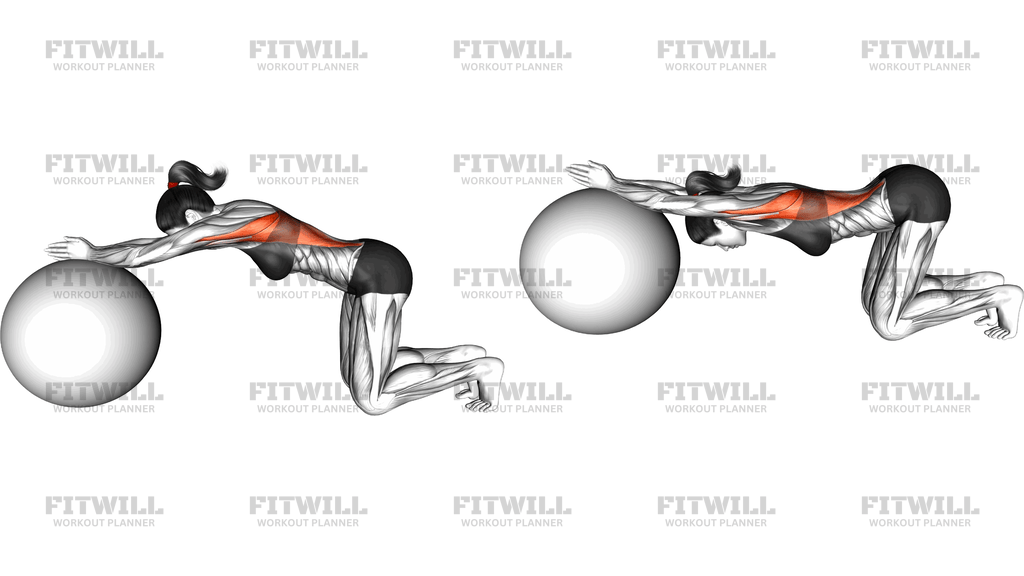
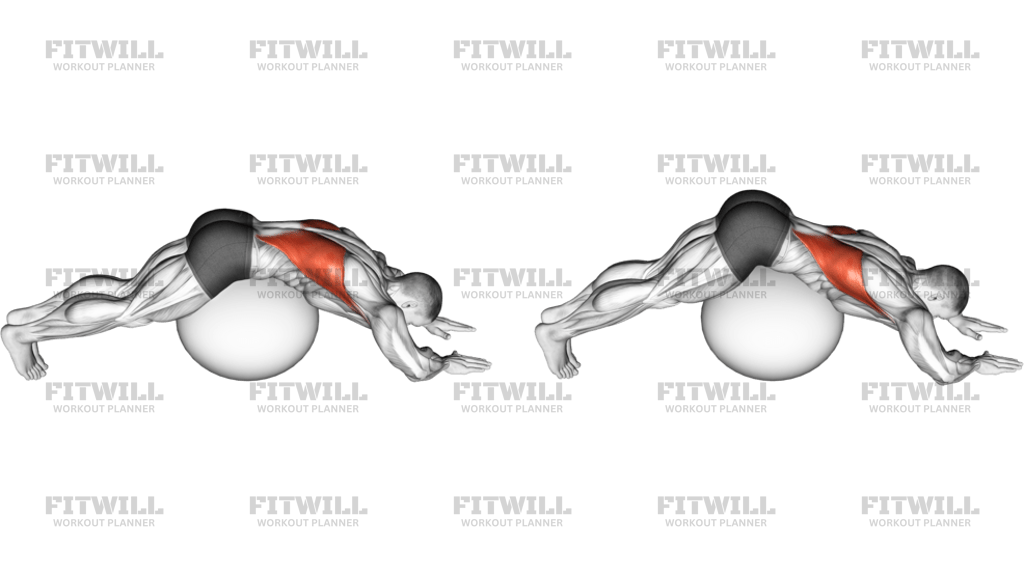
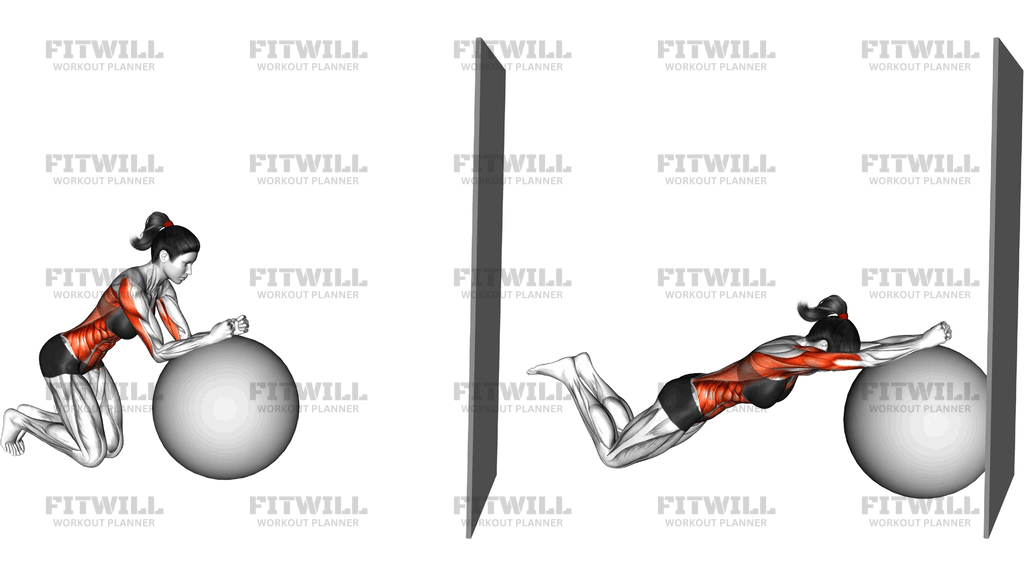
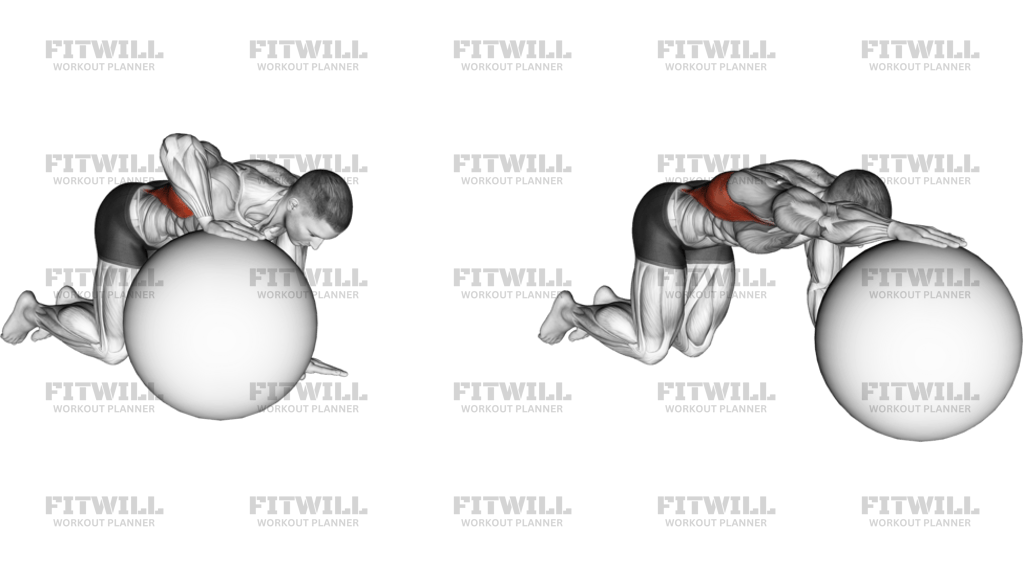
Exercise Ball Lat Stretch is a kneeling mobility drill that opens the sides of the back, the upper ribs, and the shoulder girdle while letting you breathe into a long, supported position. With your hands or forearms on a stability ball, the ball gives you a movable surface that can be rolled farther away for more reach or drawn closer for a softer stretch. It is especially useful after pulldowns, rows, pull-ups, pressing sessions, or any workout that leaves the lats feeling tight and the shoulders a little forward.
The main target is the latissimus dorsi, with help from the upper back, biceps, and forearms as you stabilize on the ball. Because the arms are extended overhead and the torso is supported by the ball, the stretch changes as you shift your hips back and let the chest drop. That makes Exercise Ball Lat Stretch more specific than a basic floor child’s-pose stretch: the ball lets you fine-tune how much of the stretch lands in the lats versus the shoulders.
Set the stretch up so the knees are cushioned on a mat, the shins are on the floor, and the ball is far enough in front of you that your arms can lengthen without collapsing the chest. From there, send the hips back toward the heels and let the rib cage lower toward the floor while the shoulders stay away from the ears. The goal is a long line from the fingertips through the sides of the torso, not a forced arch or a dumped lower back.
Once you are in position, breathe slowly and use each exhale to soften the side body a little more. Keep the neck relaxed, the elbows soft if needed, and the shoulders controlled so the stretch stays in the lats instead of turning into a pinching sensation at the front of the shoulders. If the range feels too aggressive, move the ball closer, shorten the reach, or keep a slight bend in the elbows until the position feels manageable.
Exercise Ball Lat Stretch fits well in a warm-up, cooldown, recovery session, or accessory block when overhead motion needs to feel smoother. It is also a practical choice for people who spend time at a desk or in sports that demand repeated pulling or reaching overhead. Used consistently, it can help the upper body feel less compressed and make overhead positions easier to access without forcing them.
[ Workout Log & Planner ]
Put your next workout in Fitwill
Keep your plan and training log ready when you are.


Instructions
- Kneel on a mat behind a stability ball with your knees hip-width apart, shins on the floor, and your hands or forearms resting on top of the ball.
- Walk the ball forward until your arms are long and your shoulders are in line with, or slightly behind, the ball.
- Keep your chest facing down toward the ball, tuck your ribs gently, and set your head in line with your spine.
- Shift your hips back toward your heels until you feel a stretch along the sides of your back and through the armpit area.
- Let your elbows stay soft if needed, but keep reaching forward so the lats stay lengthened.
- Take a slow inhale through the nose, then exhale and let the chest sink a little deeper without bouncing.
- Hold the stretch for 20 to 30 seconds or for 3 to 5 calm breaths while keeping pressure even through both arms.
- If you want more stretch, roll the ball slightly farther away; if it feels too strong, bring the ball closer and reduce the reach.
- Come out slowly by shifting your hips forward, walking the ball back, and sitting up without snapping the shoulders upright.
Tips & Tricks
- Roll the ball farther away only if your lower back stays quiet; the stretch should lengthen the side ribs, not dump into the lumbar spine.
- Keep the ribs slightly tucked so the movement comes from hip shift and shoulder flexion instead of an exaggerated arch.
- If your wrists get cranky, switch more of your weight to your forearms instead of pressing flat through the hands.
- A small bend in the elbows is fine, but do not let the elbows collapse all the way if you want the lat stretch to stay active.
- Breathe into the back and sides of the rib cage on each inhale, then use the exhale to soften a little deeper.
- Stop short of any sharp pinching at the front of the shoulder; that usually means the ball is too far away or the reach is too long.
- Keep the knees on a mat or towel so you can stay relaxed and avoid sliding as the ball moves.
- For a stronger stretch, slide the hips back and reach the arms longer; for a milder one, keep the chest higher and the ball closer.
Frequently Asked Questions
What does Exercise Ball Lat Stretch target most?
It primarily stretches the lats, with a secondary stretch through the upper back, triceps area, and the sides of the rib cage.
Should I use my hands or forearms on the ball?
Either works, but forearms usually feel easier on the wrists and make it simpler to keep the shoulders relaxed. Hands give you a little more reach if you want a stronger stretch.
How long should I hold Exercise Ball Lat Stretch?
A 20 to 30 second hold or 3 to 5 slow breaths is a good starting point. Repeat it a few times if the back of your shoulders and lats feel especially tight.
Can beginners do Exercise Ball Lat Stretch?
Yes. Beginners should keep the ball closer, stay on the forearms if needed, and stop before the shoulders start to pinch.
Where should I feel the stretch?
You should feel it along the sides of the back, under the armpits, and sometimes across the triceps and upper back. If you feel it mostly in the low back, bring the ball closer and tuck the ribs more.
What is the most common mistake with the ball position?
People often roll the ball too far forward and force the chest down. That usually shifts the stretch into the shoulders and low back instead of the lats.
Can I use Exercise Ball Lat Stretch before lifting?
Yes, especially before pull-ups, rows, pulldowns, or overhead pressing. Keep the hold short and easy so you open the shoulders without tiring them out.
What should I do if my shoulders feel pinched?
Shorten the reach, move the ball closer, and keep a slight bend in the elbows. A pinch usually means the range is too aggressive for the front of the shoulder.