Supination Bar Suspension Stretch
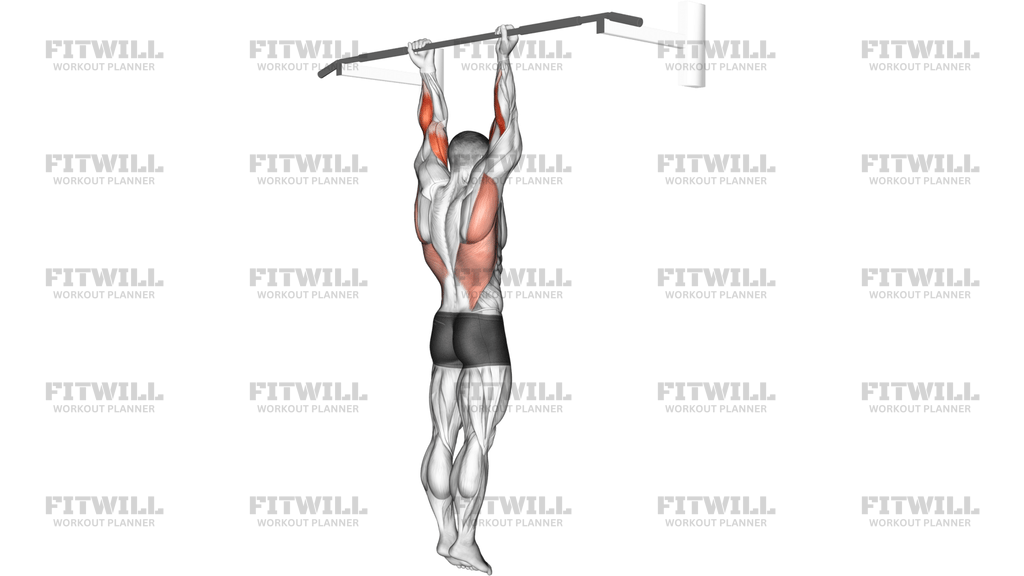
Supination Bar Suspension Stretch is a hanging underhand bar stretch that opens the biceps, forearms, and front of the shoulders while the body stays suspended from a fixed bar. The palms face you, the elbows stay straight, and the shoulder girdle accepts most of the tension as you settle into a controlled overhead hang. It is useful after pulling work, climbing, or any session where the biceps and forearm flexors feel short and tight.
The setup matters because the difference between a productive stretch and an irritated shoulder is usually in the first seconds. A stable grip, a quiet trunk, and a smooth transition into the hang let the long head of the biceps and the anterior shoulder tissues lengthen without forcing the joint forward. If the bar is too high, you lose control; if the grip is sloppy, the stretch shifts into the wrists and elbows instead of the upper arms.
This movement is not about cranking for maximum range. The goal is to let your body weight create a steady traction effect while you keep the ribs from flaring and the neck from collapsing. That keeps the stretch focused through the front of the upper arms and the inner elbow line, with the shoulders staying organized rather than hanging loose and compressed.
Use a shorter, supported hang if you are new to the position or if your shoulders are sensitive. A light toe touch, a low bar, or a brief set can make the exercise accessible while still giving the biceps a meaningful lengthening stimulus. Over time, the position is usually best used as a mobility reset after upper-body training rather than as a strength exercise.
Treat the hold as controlled tissue work: breathe steadily, ease deeper only as the shoulders settle, and step away before the stretch turns into joint pain or numbness. The best version of this drill leaves the arms feeling opened up, not pinched, and it should never require swinging, kicking, or aggressive bouncing to stay in position.
[ Workout Log & Planner ]
Put your next workout in Fitwill
Keep your plan and training log ready when you are.


Instructions
- Stand under a fixed pull-up bar and grip it with a supinated, palms-facing-you grip about shoulder width apart.
- Wrap your fingers fully around the bar, then step or hop into a dead hang so your arms are straight and your feet are clear or only lightly assisting.
- Set your ribs down and lengthen through the crown of your head so the hang stays organized instead of sagging through the low back.
- Let the shoulders rise only as far as you can tolerate, keeping the elbows extended and the grip even on both sides.
- Shift into the stretch slowly and hold the position without swinging, kicking, or twisting the torso.
- Breathe out through the nose or pursed lips and let the biceps and forearms soften as the hold settles.
- Keep the neck long and the shoulders out of your ears while you maintain the stretch for the chosen time.
- Step back to the floor under control, or use a light toe touch to unload before releasing the bar.
- Rest briefly and repeat with the same grip width and body position if you are doing multiple holds.
Tips & Tricks
- A shoulder-width underhand grip usually gives a cleaner biceps stretch than an extremely narrow or wide hand position.
- If your elbows feel stressed, shorten the hold and keep a small toe assist so the stretch stays in the muscle, not the joint.
- Keep the wrists stacked and avoid letting them fold back hard over the bar, since that often turns the stretch into forearm irritation.
- Do not force the shoulders into a painful overhead position; a mild opening sensation is enough for this drill.
- A controlled exhale often lets the upper arms relax more than trying to pull yourself deeper.
- If one arm feels tighter, resist the urge to twist toward that side; keep the torso square and even.
- This works best after rows, pull-downs, or curls when the biceps and forearms are already warm.
- Stop immediately if you feel sharp front-shoulder pain, tingling, or numbness in the hands.
Frequently Asked Questions
What does the supinated grip change in this stretch?
Palms-facing-you grip increases the lengthening demand on the biceps and forearm flexors compared with a pronated hang.
Why are my elbows straight the whole time?
Straight elbows keep the stretch focused on the biceps and front of the shoulder instead of turning it into an arm-bend exercise.
Is this a strength exercise or a mobility drill?
It is primarily a mobility and tissue-loading drill, although it also builds hanging tolerance and grip endurance.
How can I make the bar suspension stretch easier?
Use a lower bar, keep one or both toes on the floor, or shorten the hold until your shoulders adapt.
Where should I feel the stretch most?
You should feel it along the biceps, inner elbow line, forearms, and front of the shoulder, not as a pinch in the joint.
Can I swing a little to get into position?
No. Swinging or kicking usually unloads the target tissues and makes the hang less safe and less effective.
When is the best time to do this stretch?
It fits well after pulling work, arm training, climbing, or any session where the biceps and forearms are already warm.
What should I do if my shoulders feel pinched overhead?
Reduce the hang depth, widen the grip slightly, or switch to a supported variation that keeps some weight off the shoulders.