Neck Extensor Stretch
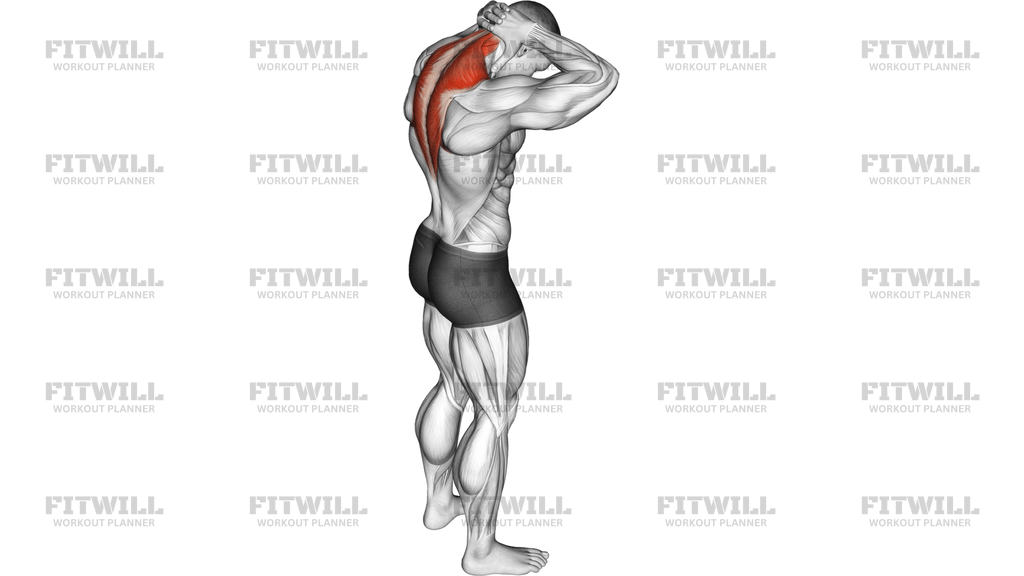
Neck Extensor Stretch is a self-assisted mobility drill for the muscles along the back of the neck, especially the cervical extensors and upper trapezius area. The stretch is created by using the hands to support the head while the chin gently travels toward the chest. It is most useful when the back of the neck feels tight from desk posture, overhead work, pulling volume, or repeated head-forward positions.
The setup matters because this stretch should feel organized, not forced. Stand tall with the ribs stacked over the pelvis, keep the feet grounded, and place the hands on the back of the head without yanking the neck forward. The elbows can drift in front of the body, but the shoulders should stay relaxed so the stretch is directed into the back of the neck instead of being swallowed by the upper traps.
During the hold, the goal is a smooth stretch through the cervical extensors, not a hard fold through the whole spine. A small chin tuck usually creates a better line of tension than a big pull. Breathe slowly, let the jaw stay loose, and allow the stretch to build gradually across the base of the skull and down into the upper neck. If one side feels tighter, you can slightly angle the head toward that side, but keep the motion subtle and pain-free.
This stretch fits well after upper-body training, between work sessions, or as part of a warmup when the neck feels guarded. It should calm stiffness, not provoke it. Stop short of any sharp pain, dizziness, tingling, or radiating symptoms, and keep the pressure from the hands light enough that the neck muscles do the lengthening work. Used well, it is a simple reset for posture and neck comfort rather than a forceful range-of-motion test.
[ Workout Log & Planner ]
Put your next workout in Fitwill
Keep your plan and training log ready when you are.


Instructions
- Stand tall with your feet about hip-width apart and your knees soft.
- Interlace your fingers or place both hands on the back of your head just above the skull.
- Keep your elbows slightly forward and your shoulders relaxed instead of flaring them wide.
- Exhale and gently tuck your chin toward your chest to lengthen the back of the neck.
- Let the hands add only light support; do not pull hard or jerk the head forward.
- Hold the stretch where you feel a broad pull through the base of the skull and upper neck.
- Breathe slowly for 15 to 30 seconds while keeping the jaw loose and the ribs stacked.
- To come out, release the hands first, then lift the head back to neutral in a smooth motion.
Tips & Tricks
- Think about making a small double chin instead of folding your whole upper back forward.
- Keep the hands passive so the neck does the stretching work, not the arms.
- A gentle chin tuck usually gives a better stretch than a big pull on the head.
- Let the elbows drift slightly forward to keep the stretch focused high in the neck.
- Relax the jaw and tongue; clenching them often makes the neck guard harder.
- Use a long exhale to reduce the urge to brace through the upper traps.
- If the stretch shifts into the shoulders, reduce the pull and make the motion smaller.
- Stop immediately if you feel dizziness, tingling, or sharp pain at the base of the skull.
Frequently Asked Questions
What does the Neck Extensor Stretch target?
It mainly targets the cervical extensor muscles along the back of the neck, with a strong stretch into the upper trapezius and the area near the base of the skull.
Why are my hands on the back of my head?
The hands are there to support the head lightly so you can control the chin tuck. They should guide the stretch, not yank the neck forward.
Should I pull my elbows down hard?
No. Let the elbows stay slightly forward and relaxed. Forcing them down usually turns the stretch into a shoulder strain instead of a neck stretch.
How long should I hold this stretch?
A 15 to 30 second hold is usually enough. Repeat for a few rounds if you want more relief, but keep every hold gentle.
Can beginners do this stretch?
Yes. It is beginner-friendly as long as the pull stays light and the chin moves only a small distance toward the chest.
What is the most common mistake with this stretch?
The biggest mistake is yanking the head forward or rounding the whole upper body. The stretch should come from the neck, not a hard fold through the spine.
Can I do this seated instead of standing?
Yes. A seated version works well if you want less balance demand. Keep the same posture cues: tall spine, soft shoulders, and a gentle chin tuck.
Who should be careful with this movement?
Anyone with recent neck injury, dizziness, numbness, tingling, or pain that travels into the arm should get checked before using this stretch.