Assisted Rotating Neck Stretch
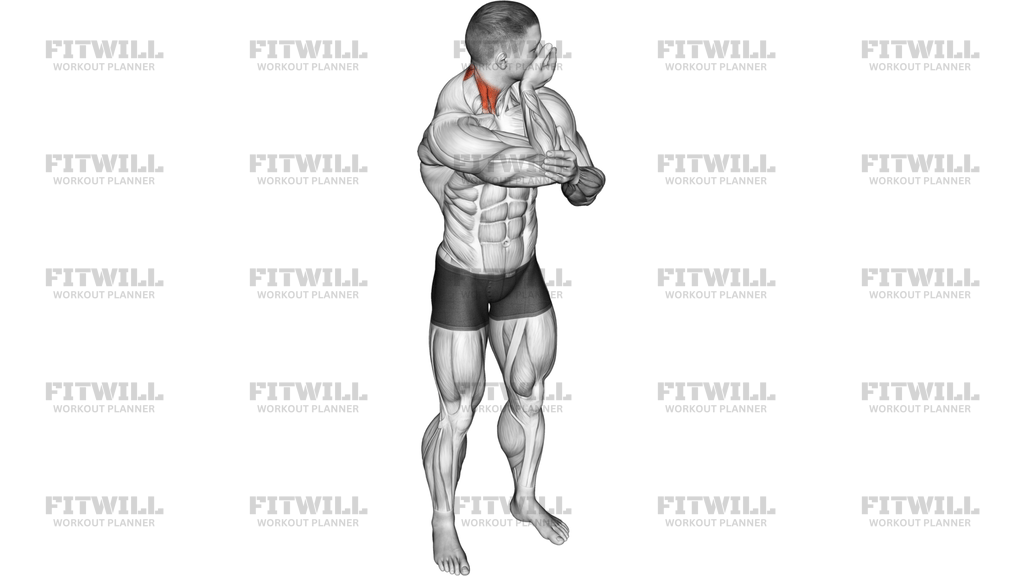
Assisted Rotating Neck Stretch is a standing neck mobility drill that uses one hand to guide the head through a gentle diagonal turn. It is meant to lengthen the side and back of the neck rather than build load-bearing strength, so the pressure should stay light and the motion should feel smooth from start to finish.
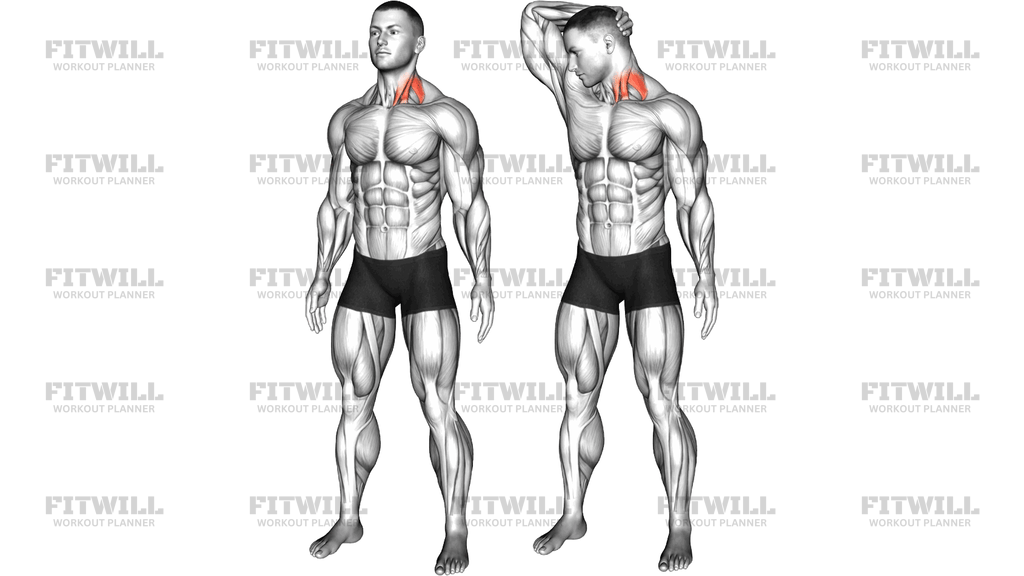
The image shows the stretch being performed upright with the torso quiet and the shoulders relaxed. That setup matters because the cervical spine moves best when the ribs stay stacked over the pelvis and the shoulder on the stretching side does not creep upward. If the body twists to create extra range, the stretch quickly stops targeting the neck and turns into a whole-body compensation.
Assisted Rotating Neck Stretch is useful when the upper neck feels stiff after desk work, long drives, pressing sessions, or general training volume that leaves the traps and levator scapulae feeling tight. The hand should act like a guide rail, helping the head move into a comfortable end range without yanking or cranking on the jaw. A small amount of rotation combined with a slight side-bend is usually enough to create a clear stretch along the side of the neck.
Because the neck is sensitive, this exercise should stay in a pain-free range. The goal is to lengthen the tissue, not to force a bigger angle every rep. If you feel pinching, dizziness, tingling, or a headache-like response, back off immediately and shorten the range or skip the stretch for the day.
Used well, Assisted Rotating Neck Stretch is a simple reset that can fit in a warm-up, between sets, or at the end of a workout. It works best when you hold the position calmly, breathe normally, and release the head back to neutral under control before switching sides. The most effective version is not the deepest one; it is the version you can repeat evenly on both sides without shrugging, straining, or bracing your jaw.
[ Workout Log & Planner ]
Put your next workout in Fitwill
Keep your plan and training log ready when you are.


Instructions
- Stand tall with your feet about hip-width apart and keep both knees soft so you can balance without swaying.
- Lift one hand to the side of your head, temple, or jawline and let the elbow point down instead of flaring out.
- Set the opposite shoulder low and lengthen the back of your neck before you start the stretch.
- Exhale and slowly guide your head into a gentle diagonal turn toward the stretching side until you feel tension along the side and back of the neck.
- Use only light hand pressure so the head moves with you instead of being pulled hard into place.
- Hold the end position for the prescribed time while keeping the jaw relaxed and the ribs still.
- Ease the pressure off first, then bring the head back to neutral in a smooth, controlled path.
- Repeat on the other side so both sides of the neck receive the same amount of work.
Tips & Tricks
- Let the stretching-side shoulder stay heavy; if it rises toward your ear, the neck is no longer taking the stretch cleanly.
- Keep the pressure light enough that your hand feels like a guide, not a lever.
- If the stretch lands too high near the jaw, reduce the amount of rotation and keep the side-bend smaller.
- Do not chase extra range by lifting the chin; that shifts tension to the front of the neck.
- Exhale as you settle into the end range to help the upper neck soften without forcing it.
- Shorter holds are better if you tend to clench your jaw or tense the traps during neck stretches.
- Keep your chest quiet and avoid turning this into a torso twist to fake more rotation.
- Stop immediately if the stretch creates tingling, dizziness, or a sharp pinch instead of a mild pull.
Frequently Asked Questions
What does Assisted Rotating Neck Stretch actually stretch?
It mainly targets the upper trapezius, levator scapulae, sternocleidomastoid, and nearby neck tissues on the side that feels tight.
Do I need a mat for Assisted Rotating Neck Stretch?
No. The stretch is shown standing, so the key requirement is just enough space to keep your feet planted and your torso upright.
How hard should I pull on my head?
Very lightly. The hand should only help the neck rotate and side-bend into position, not force the stretch deeper.
Should my shoulder stay down during Assisted Rotating Neck Stretch?
Yes. If the stretching-side shoulder hikes upward, reduce the range and reset before holding the stretch again.
How long should I hold each side?
A 15-30 second hold is usually enough. Use the shorter end of that range if your neck gets irritated easily or you are warming up before lifting.
Is Assisted Rotating Neck Stretch beginner friendly?
Yes, as long as the movement stays small and the pressure stays gentle. Beginners should never push into pain or chase a big end range.
Why do I feel this more on one side of my neck?
That side is usually tighter, so it takes more of the stretch. The feeling should be a mild, lengthening pull rather than a pinch.
When should I avoid Assisted Rotating Neck Stretch?
Skip it if neck motion causes sharp pain, numbness, tingling, dizziness, or a headache-like response, and get checked if those symptoms keep showing up.