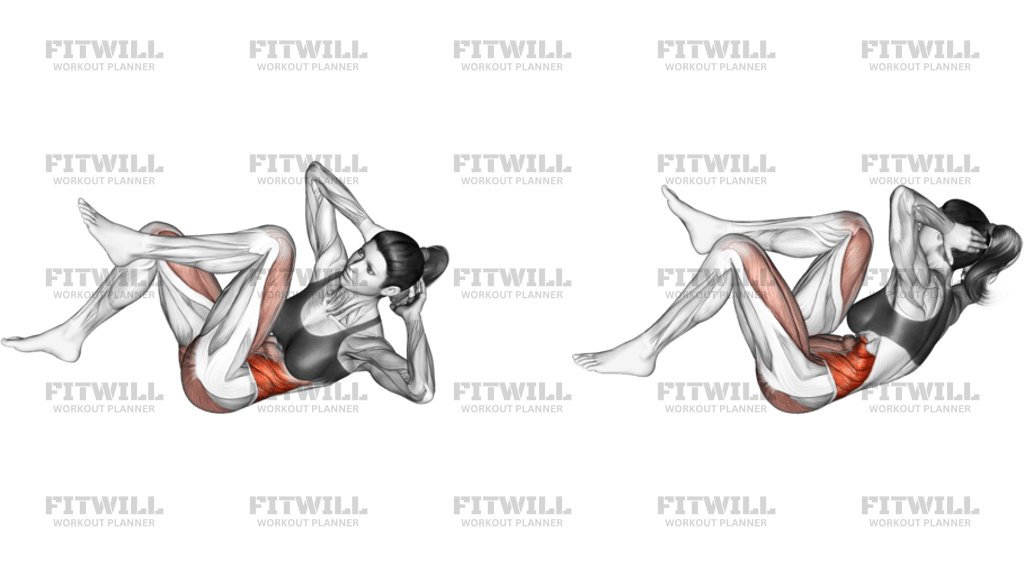
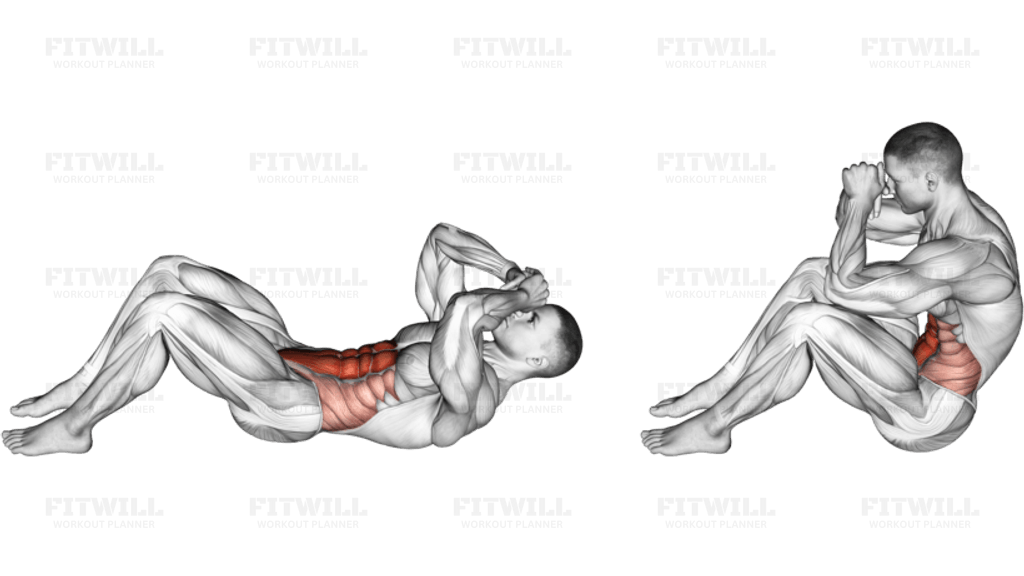
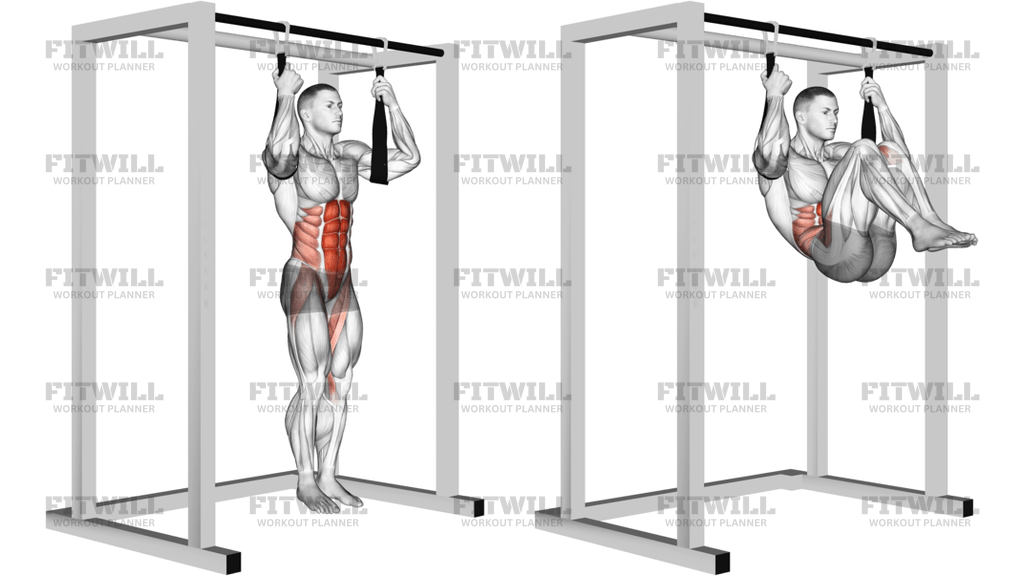
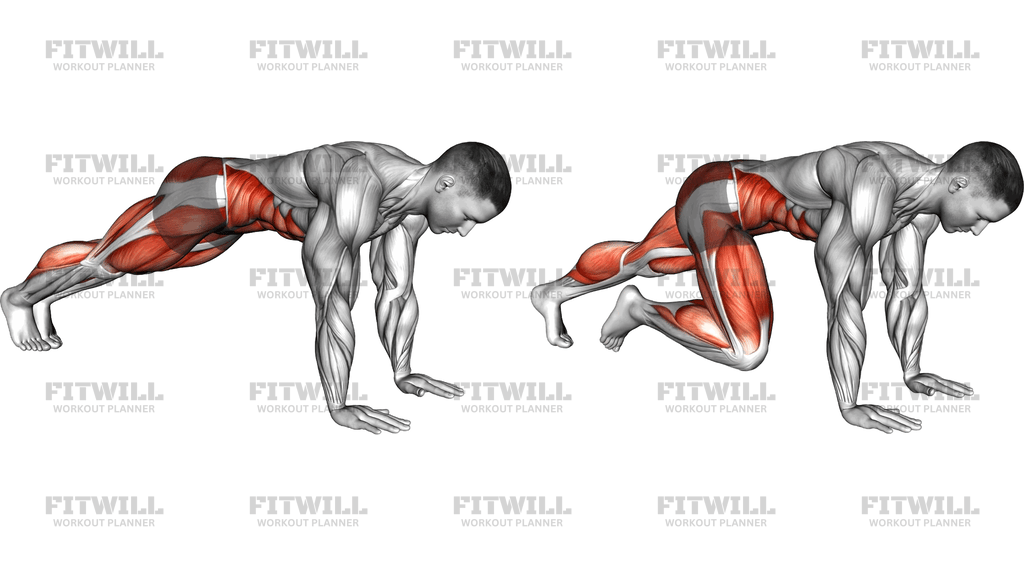
Decline Bent Leg Reverse Crunch
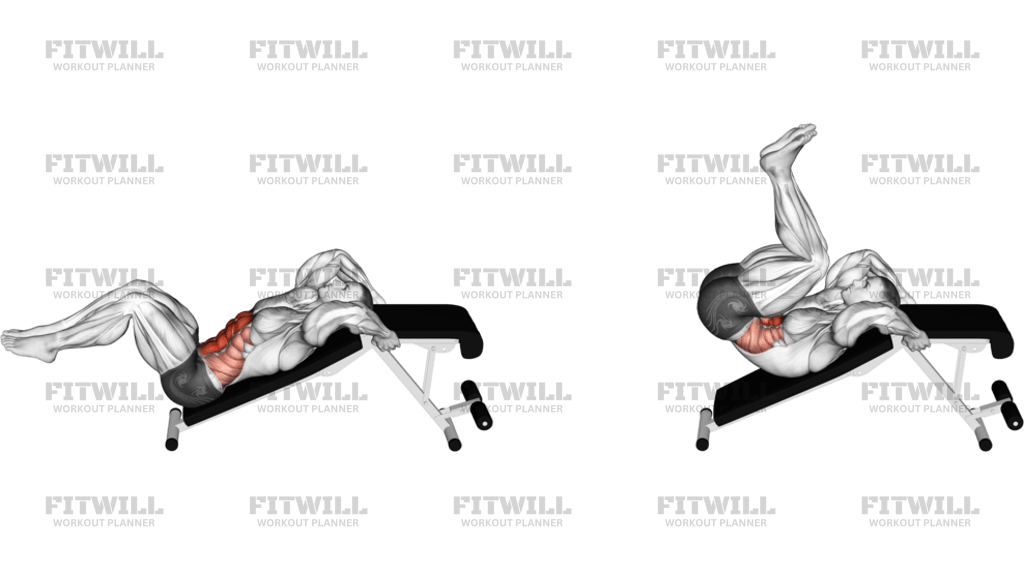
Decline Bent Leg Reverse Crunch is a bodyweight abdominal exercise performed on a decline bench with the torso secured high on the pad and the knees bent so the legs can curl in a compact arc. The movement is built around posterior pelvic tilt: instead of swinging the legs, you use the lower abs to tuck the pelvis and lift the hips toward the ribs. That makes it a useful choice when you want direct trunk flexion work with less room for cheating than a loose floor crunch.
The decline angle increases the challenge because gravity pulls the legs and pelvis toward extension. That means setup matters. If your shoulders, upper back, and grip on the bench are not stable, the rep turns into a hip-swinging drill instead of a controlled abdominal contraction. A good repetition starts with the pelvis set, ribs pulled down, and the knees already bent enough that the lower back can stay organized while the curl begins.
The main target is the rectus abdominis, with the obliques and deep core helping control rotation and keep the trunk from twisting as the hips lift. The hip flexors contribute during the leg position, but they should not take over the rep. When the movement is done well, the abs shorten to bring the pelvis up, then resist the return as the legs lower back under control.
This exercise fits well in core-focused sessions, accessory work, or as a higher-rep abdominal movement after heavier compound lifts. It is especially useful when you want a strict, bodyweight pattern that teaches pelvic control and trunk bracing without loading the spine externally. Because the bench angle makes cheating easier to spot, it is also a good diagnostic exercise for people who tend to arch, swing, or yank through reverse crunches.
Safety is mostly about control. Keep the chin slightly tucked, avoid pulling on the neck, and lower the hips with the same precision you use to raise them. If the low back comes off the bench only by forceful swinging or if the hip flexors dominate every rep, shorten the range and slow the tempo. Clean repetitions on the decline bench are more valuable than big, fast ones.
Fitwill
Log Workouts, Track Progress & Build Strength.
Achieve more with Fitwill: explore over 9600 exercises with images and videos, access built-in and custom workouts, perfect for both gym and home sessions, and see real results.
Start your journey. Download today!




Instructions
- Lie on the decline bench with your shoulders and upper back supported, and grip the bench or side handles so your torso stays anchored.
- Bend your knees to about 90 degrees and lift your thighs so your shins stay roughly parallel to the floor.
- Set your ribs down, brace your abs, and keep your lower back lightly pressed into the bench before you start.
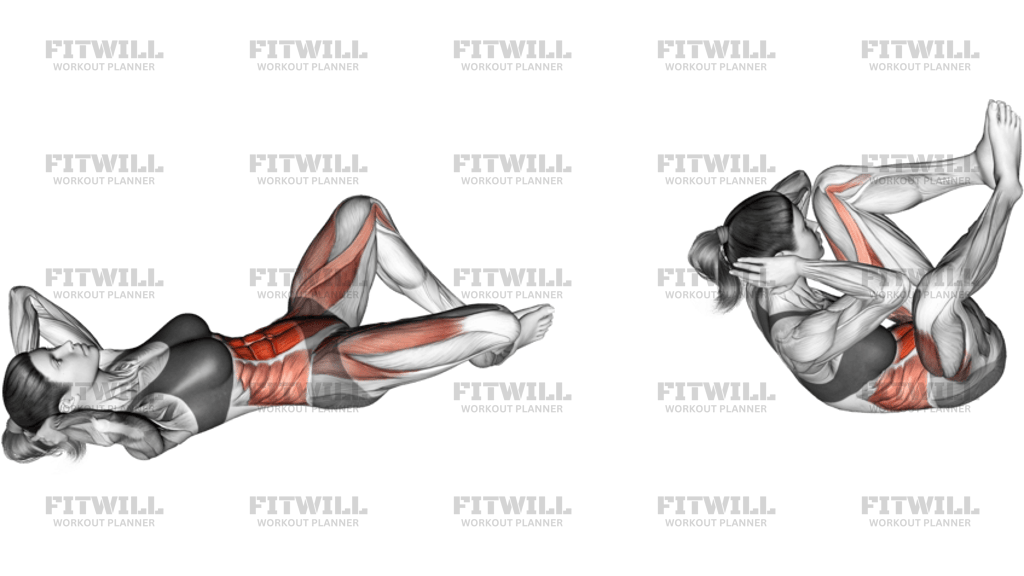
- Exhale as you curl your pelvis up toward your ribs, letting the hips leave the pad without swinging the legs.
- Keep the knees bent while the hips travel upward, and use your lower abs to finish the curl instead of kicking.
- Squeeze briefly at the top when your pelvis is fully tucked and your hips are highest.
- Lower your hips back to the bench under control until your torso returns to the starting angle.
- Reset the brace and repeat for the planned number of reps without losing the bench contact or knee angle.
Tips & Tricks
- Think about rolling your tailbone up, not lifting your feet higher; the pelvis should move first.
- If your legs swing, shorten the range and slow the lowering phase until the curl stays strict.
- Keep your knees bent at the same angle on every rep so the hip flexors do not turn the set into a leg raise.
- Hold the bench firmly enough that your torso does not slide as the hips come off the pad.
- Exhale as the hips curl up; that helps the ribs stay down and keeps the abdominal brace honest.
- Pause for a beat at the top instead of bouncing off the bench or using momentum from the decline angle.
- Let the low back return to the pad under control; do not drop into extension between reps.
- If your neck tightens, keep your gaze fixed upward and avoid chin jutting or head-tossing.
- Stop the set when you can no longer lift the pelvis without arching or kicking.
Frequently Asked Questions
What muscle does Decline Bent Leg Reverse Crunch target most?
The rectus abdominis does most of the work, with the obliques and deep core helping control the curl.
Can beginners perform this exercise?
Yes, if they can keep the hips moving without swinging the legs. A shorter range and slower tempo make it much easier to learn.
Where should my hands go on the decline bench?
Grip the bench or side handles high enough to keep your torso anchored, but not so hard that your shoulders shrug toward your ears.
What should move first on each rep?
The pelvis should tuck first. If the feet or knees start the motion, you are probably turning it into a swing.
Why is the decline bench harder than a floor reverse crunch?
Gravity increases the leverage on your hips and trunk, so you need more abdominal control to lift and lower cleanly.
Why do my hip flexors take over?
Usually the knees are opening too much or the lowering phase is too fast. Keep the bend fixed and curl the pelvis instead of reaching with the legs.
How far should I lift my hips?
Lift until the pelvis is fully tucked and the hips come off the pad slightly. You do not need a huge range to make the abs work.
What is the most common form mistake?
Swinging the legs and arching the low back on the way down. Both usually mean the set is too fast or too long for your current control.