Leg Raise Slightly Bent Knee
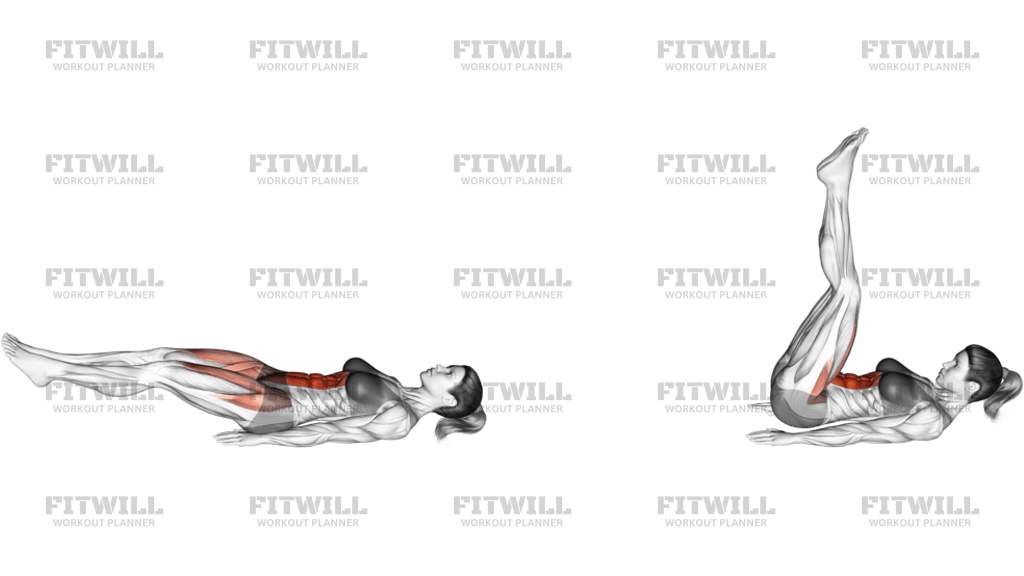
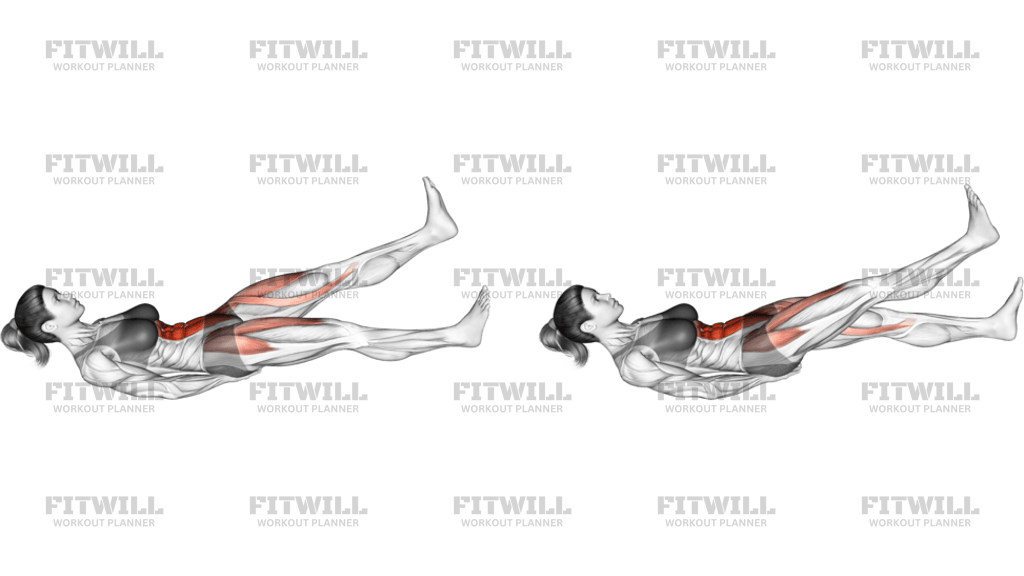
Leg Raise Slightly Bent Knee is a floor core exercise where you lie on your back and raise both legs with a small bend in the knees. The slight knee flexion shortens the lever a little, which makes the movement easier to control than a straight-leg raise while still demanding strong lower-abdominal tension. The exercise is bodyweight only and is usually performed on a mat or flat floor with the hands braced beside the hips.
The main job here is not to swing the legs upward, but to keep the pelvis controlled while the legs move. In practice, that means pressing the lower back into the floor, keeping the ribs down, and lifting the legs only as high as you can without the lumbar spine peeling off the mat. When done correctly, the work shifts toward the rectus abdominis, with the hip flexors assisting during the lift and the deeper core muscles helping stabilize the torso.
The setup matters because the starting position determines whether the rep is driven by the abs or stolen by momentum. Lie flat, keep the neck relaxed, and begin with the legs hovering low enough that you can still hold the back against the floor. If the knees are bent a little more, the movement becomes more beginner-friendly; if the knees straighten too much or the legs drop too low, the lower back usually arches and the hip flexors take over.
A good repetition is smooth on the way up and even slower on the way down. Lift until the thighs are close to vertical or until the pelvis starts to tip forward, then lower under control to the point where you can keep tension without losing contact through the low back. This makes the exercise useful for core strength work, warmups, or accessory abdominal training, especially when you want a strict movement that rewards patience and position more than load.
Because this is a small-range core exercise, quality matters more than volume. Stop the set when the lower back starts to arch, the legs start to swing, or the neck and hip flexors start doing more work than the abs. That keeps the exercise focused, safe, and repeatable from the first rep to the last.
[ Workout Log & Planner ]
Put your next workout in Fitwill
Keep your plan and training log ready when you are.


Instructions
- Lie on a mat or flat floor on your back with your legs extended and only slightly bent at the knees, and place your hands beside your hips with your palms down for support.
- Set your head and shoulders down, keep your neck long, and press your lower back gently into the floor before you start the first rep.
- Bring both legs together and keep the knees soft rather than locked straight so the movement stays controlled.
- Inhale to prepare, then brace your midsection as if you are flattening your ribs toward the floor.
- Lift both legs together until they reach about vertical or as high as you can without your low back arching.
- Keep the bend in the knees nearly the same as the legs rise so you do not turn the rep into a swing.
- Pause briefly at the top with the abs still tight and the pelvis tucked under, not tilted forward.
- Exhale as you lower the legs slowly back down, stopping before the heels touch the floor if that helps you keep tension.
- Reset the low back against the mat before the next rep and repeat for the planned number of repetitions.
Tips & Tricks
- A slightly bigger knee bend shortens the lever and makes the lift easier; straighter legs increase the challenge quickly.
- Keep the low back pressed down the whole time. If it arches, shorten the range before you try to lift higher.
- Do not let the legs drift behind the hips on the way down, because that usually pulls the pelvis off the floor.
- The rep should start from the abs, not from a kick or a fast leg swing.
- Use a slow descent to keep tension on the lower abs instead of dropping the legs back to the floor.
- If your hip flexors cramp, reduce the height of the lift and make the lowering phase more deliberate.
- Keep the chin slightly tucked so the neck stays relaxed instead of straining upward.
- Stopping a few inches above the floor often gives better abdominal tension than chasing a bigger range with a loose back.
- If you need more stability, place your palms under your hips for a little extra support without changing the leg path.
Frequently Asked Questions
What does Leg Raise Slightly Bent Knee train most?
It mainly trains the rectus abdominis, with the hip flexors and deeper core muscles helping stabilize the pelvis.
Is the slight knee bend there to make the exercise easier?
Yes. A small bend shortens the lever and usually makes it easier to keep the low back on the floor.
Where should I feel this exercise working?
You should feel the lower abs working hard, with some tension in the hip flexors. You should not feel strain in the lower back.
How low should I lower my legs?
Lower only until you can still keep the lower back pressed into the mat. If the back arches, stop higher.
Should my knees stay bent the whole time?
Yes, keep the bend consistent. Letting the knees straighten or bend more as you move usually turns the rep into momentum.
What is the most common mistake with this leg raise?
The biggest mistake is letting the pelvis tip forward and the lower back arch while trying to lower the legs too far.
Can beginners use this movement?
Yes. It is beginner-friendly when the knees stay slightly bent and the range stays small enough to control.
How do I make the movement harder without adding weight?
Straighten the knees a little more, slow the lowering phase, or reduce the amount of floor contact at the bottom while still keeping the back flat.