Lying Abductor Stretch
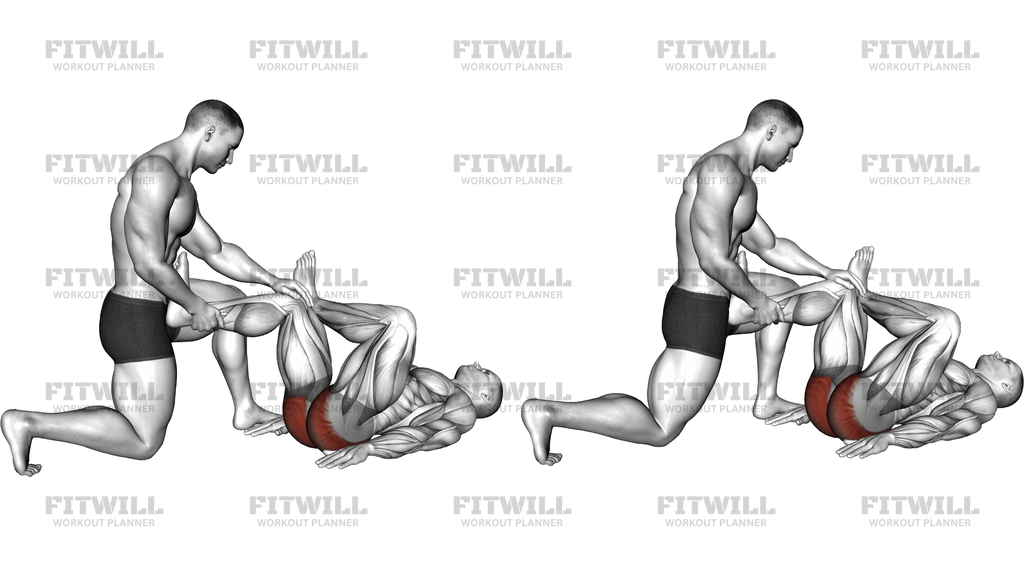
Lying Abductor Stretch is a floor-based hip stretch for the outer hip, glute medius, glute minimus, and the tissues along the side of the thigh. In this variation, the body stays low to the mat while one leg remains long and the other leg is brought across and opened until the outer hip takes on a strong but controlled stretch. The goal is not to force the knee down; it is to create a clear lengthening sensation around the side of the hip while the torso stays relaxed and supported.
The setup matters because the outer hip reacts quickly to small changes in pelvis angle and trunk rotation. If you roll too far, the stretch shifts away from the abductors and into the low back or groin. If you stay too square, the target area can feel muted. A good position keeps the pelvis steady, the supporting hand or forearm quiet, and the bent leg placed so the hip can open without strain.
This exercise is useful when the hips feel stiff from sitting, running, squatting, or repeated side-to-side work. It can be used as a warmup stretch, a cool-down drill, or a mobility reset between strength sets. Because the movement is passive and low-load, the quality of the position and the breathing pattern matter more than how far you can push the leg.
The best reps are slow, smooth, and easy to repeat. Move into the stretch until you feel a strong outer-hip pull, then pause and breathe into the position instead of bouncing or driving deeper. If the knee, low back, or groin takes over, adjust the angle of the crossed leg or reduce the reach. Done well, this stretch should leave the hip feeling open, not irritated.
Fitwill
Log Workouts, Track Progress & Build Strength.
Achieve more with Fitwill: explore over 9600 exercises with images and videos, access built-in and custom workouts, perfect for both gym and home sessions, and see real results.
Start your journey. Download today!




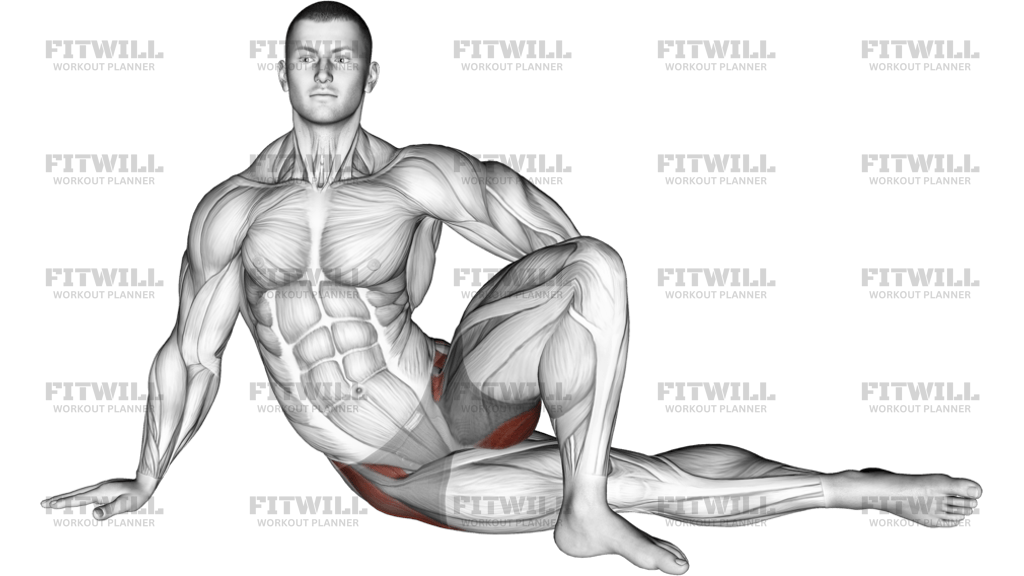
Instructions
- Sit on the exercise mat and support your torso with one hand or forearm behind you.
- Keep one leg extended on the floor and bend the other leg so the foot can plant near the opposite side of the body.
- Set the pelvis tall and square before you rotate or lean into the stretch.
- Let the bent knee travel inward or across only until you feel a clear pull along the outer hip.
- Keep the long leg relaxed and pointed straight so the stretch stays on the hip, not the knee.
- Hold the position without bouncing and breathe slowly through the ribs.
- If the low back starts to pinch, reduce the lean or bring the bent knee less far across.
- Return to the start slowly, then repeat on the other side if the stretch is being done bilaterally.
Tips & Tricks
- Treat the stretch like a position drill: once you find the outer-hip pull, stay there and breathe instead of chasing more range.
- Keep the supporting hand light so you are not dumping body weight into the shoulder and twisting the torso too hard.
- If the bent knee feels jammed, slide the foot a little closer to the body and recheck the hip angle.
- A small forward lean often increases the outer-hip stretch more cleanly than forcing the knee downward.
- Keep the extended leg long but not locked aggressively; tension in the hamstring can mask the hip stretch.
- The target sensation should stay on the outside of the hip and upper glute, not in the low back or groin.
- Long exhales usually let the outer hip soften without needing extra pressure.
- Use a shorter hold if the hip feels pinchy, and build time under stretch gradually.
Frequently Asked Questions
What does Lying Abductor Stretch mainly target?
It mainly targets the outer hip, especially the glute medius and glute minimus area.
Why is my low back feeling this more than my hip?
That usually means the torso is rotating or leaning too far. Re-square the pelvis and back off the range.
Should the bent knee be forced all the way down?
No. The knee should move only until the outer hip opens and the stretch stays controlled.
Can I do this if my hips feel tight from sitting?
Yes. This is a useful low-load stretch when the outside of the hip feels stiff after long periods of sitting.
What should the extended leg be doing?
Keep the long leg relaxed and straight on the mat so the stretch stays focused on the outer hip of the bent side.
What is the biggest mistake with this stretch?
Forcing the knee or torso into a bigger position than the hip can control is the most common problem.
How long should I hold each side?
A short, steady hold is usually enough at first; increase the time only if the position stays comfortable and smooth.
Can I use this between lower-body sets?
Yes, it works well as a reset between squats, lunges, running work, or side-to-side training.