Resistance Band Leg Kickback
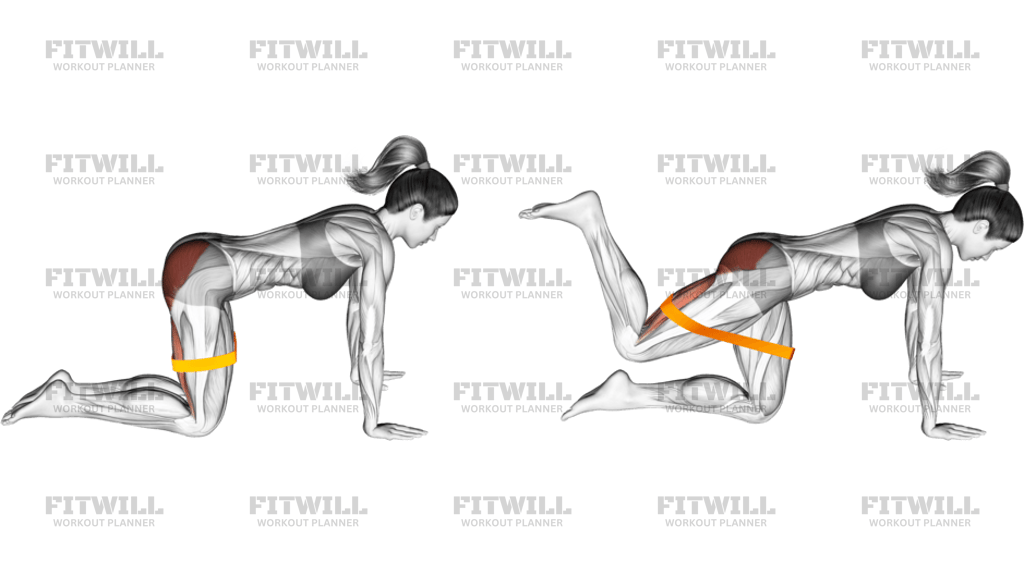
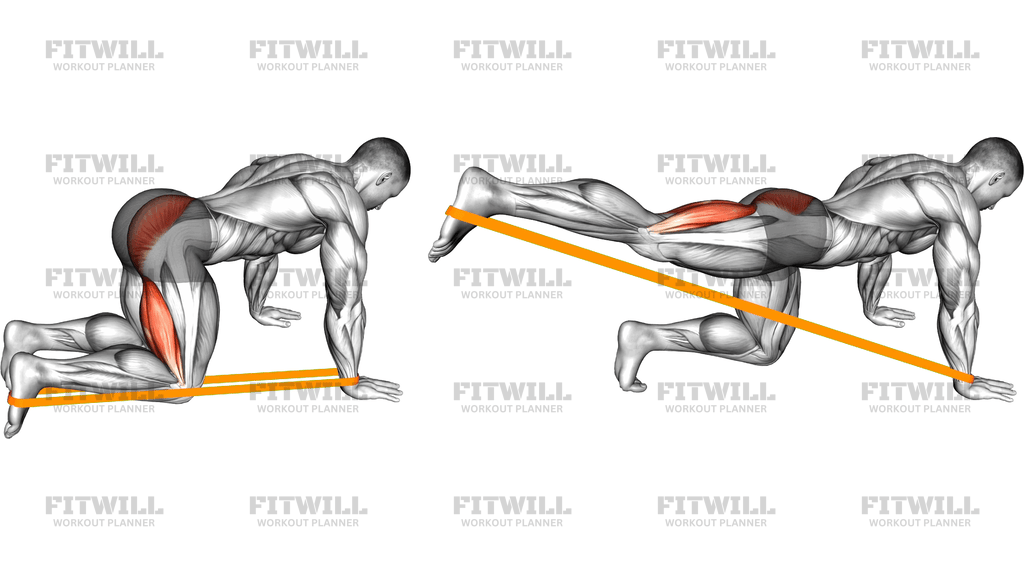
Resistance Band Leg Kickback is a quadruped glute exercise that trains hip extension with the torso held still. It is useful when you want direct tension on the glutes without loading the spine heavily, and it also asks the core and shoulders to keep the body organized while one leg moves. Because the setup is simple, the quality of the rep depends on how well you lock in your hands, knees, and pelvis before you start.
The movement should feel like the working thigh is driving back and slightly up from the hip, not like the lower back is arching to fake extra range. The bent-knee version shown here keeps tension focused on the glutes and helps most lifters keep the motion clean. A resistance band adds challenge through the whole arc, so the start position must already feel controlled rather than loose or unstable.
This exercise fits well in glute-accessory blocks, lower-body warmups, rehab-style sessions, or higher-rep circuits where you want tension without a lot of joint compression. It is also a good choice for beginners learning to extend the hip without swinging the trunk. The best reps stay smooth, deliberate, and symmetrical from one side to the other.
Set your hands directly under your shoulders and your knees under your hips on a mat or other soft surface. Keep the ribs stacked over the pelvis, the neck neutral, and the supporting leg and arm quiet while the working leg moves. If the band setup pulls your torso off line, shorten the range or choose lighter resistance until you can finish every rep without twisting.
At the top of each kickback, squeeze the glute for a brief pause and stop before your lower back takes over. The return should be slow enough that you feel the band pulling you forward again, but not so slow that you lose position through the supporting side. When the set is finished, lower the knee back under the hip, release tension carefully, and reset before switching sides.
[ Workout Log & Planner ]
Put your next workout in Fitwill
Keep your plan and training log ready when you are.


Instructions
- Kneel on a mat and come onto your hands with your wrists under your shoulders and your knees under your hips.
- Loop or secure the resistance band for the working leg so it stays tight in the start position and aligns with the foot or ankle you are kicking back.
- Set the working knee bent and slightly lifted, then keep your pelvis square to the floor and your spine long.
- Brace your abs and press evenly through both hands so your shoulders do not shift when the leg moves.
- Exhale as you drive the working thigh back and slightly up, keeping the knee bent if that is how the band setup is loaded.
- Lift only until the glute is fully squeezed and the lower back is still quiet.
- Pause briefly at the top, then inhale as you lower the leg back to the start under control and steady band tension.
- Finish the set by bringing the knee back under the hip, releasing the band carefully, and then switch sides.
Tips & Tricks
- Keep your pelvis level; if one hip opens toward the ceiling, the kickback is turning into rotation instead of pure hip extension.
- Think about sending the heel back, not the foot up, so the glute does the work instead of the lower back.
- Choose a band that lets you pause at the top without shrugging, twisting, or shifting your shoulders.
- A slightly smaller range is better than a bigger, arched-back rep that only looks higher.
- Press firmly through both palms so the supporting side stays quiet when the working leg extends.
- If the band setup feels sloppy at the start, shorten the band length or reposition it so tension is present before the first rep.
- Keep the knee softly bent if a straighter leg makes you lose glute tension or start swinging from the hip.
- Lower the leg slowly enough to feel the band pull you back, but stop before the pelvis rocks or the ribcage flares.
Frequently Asked Questions
What does Resistance Band Leg Kickback work most?
It mainly targets the glutes through hip extension, with the core and shoulders helping you stay stable on hands and knees.
Is Resistance Band Leg Kickback good for beginners?
Yes. It is a beginner-friendly way to learn glute activation as long as the band is light enough that you can keep your pelvis square.
Should my knee stay bent the whole time?
In most setups, yes. A bent knee keeps the exercise centered on the glute and makes it easier to avoid turning the rep into a low-back swing.
How high should I kick back?
Only as high as you can lift while keeping your ribs down and your lower back quiet. If the hip opens or the spine arches, the rep is too high.
Where should the band sit for Resistance Band Leg Kickback?
Use the band setup that keeps tension on the working leg from the start, usually around the foot or ankle and anchored so it does not slip as you extend.
Why do I feel this in my lower back?
That usually means you are arching to get more range. Shorten the kick, brace harder through the abs, and keep the movement coming from the hip.
Can I do this instead of cable kickbacks?
Yes. It is a solid home or warm-up alternative, though the band gives a slightly different resistance curve than a cable.
What is the biggest mistake with Resistance Band Leg Kickback?
Letting the pelvis rotate open is the most common problem. Keep both hip bones facing the floor and pause before the body starts to twist.