Open Book Stretch
Open Book Stretch is a side-lying mobility drill that opens the chest, front shoulder, and mid-back while teaching the rib cage to rotate without the hips unraveling. It is commonly used when the upper back feels stiff from sitting, pressing, overhead work, or long training sessions that leave the torso locked up. The movement is simple, but the quality of the setup matters because the stretch is meant to come from the thoracic spine and shoulder, not from throwing the lower body out of position.
Lie on your side on an exercise mat with the hips and knees bent, then stack the knees together so the bottom leg stays anchored while the top arm opens like a page in a book. That stacked lower-body position gives you a fixed base and makes it easier to feel the rib cage rotate instead of the pelvis rolling over. The head can rest on the floor or on the bottom arm, but the neck should stay relaxed so the torso can do the work.
As the top arm sweeps across the body and opens behind you, let the chest follow the hand in a smooth arc. The motion should feel like the sternum is turning open while the knees stay glued together and the breathing stays calm. Exhale as you reach the end of the rotation, then return slowly and repeat on the other side so both shoulders and both sides of the upper back get even attention.
Open Book Stretch is useful as part of a warm-up before pressing, pulling, squatting, or any session where the torso needs to rotate and extend well. It also fits well after training or on recovery days when you want a low-intensity way to reduce stiffness without loading the spine. Done well, it creates a clean opening through the chest and upper back without pinching the shoulder or forcing the low back to twist.
Keep the range smooth and controlled rather than chasing a bigger opening on every rep. If the top knee lifts away from the bottom knee, shorten the arc and keep the pelvis quieter. If the shoulder feels crowded, stop short of the floor and breathe into the stretch instead of pushing harder. Over time, the goal is a more comfortable rotation pattern, not a dramatic finish position.
[ Workout Log & Planner ]
Put your next workout in Fitwill
Keep your plan and training log ready when you are.


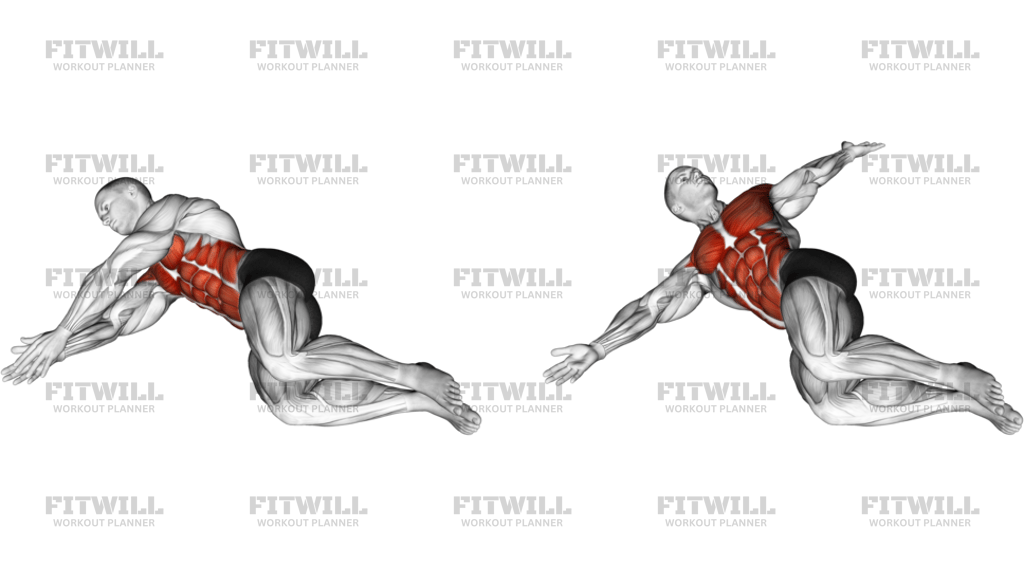
Instructions
- Lie on your side on an exercise mat with your hips and knees bent about 90 degrees, and stack both knees and ankles together.
- Extend both arms straight in front of your chest at shoulder height, then rest your head on the bottom arm or on the floor if that feels comfortable.
- Keep your knees pinned together and lightly brace your abdomen so your pelvis stays quiet before you start the rotation.
- Inhale to prepare, then sweep your top arm across your body in a wide arc as if opening a book.
- Let your chest follow the reaching hand while the top shoulder opens toward the floor behind you.
- Keep the lower body still and only rotate as far as you can without lifting the top knee or twisting the low back hard.
- Exhale as you settle into the open position, then pause briefly and feel the stretch through the chest and mid-back.
- Reverse the movement slowly, bringing the top arm back to the start with control and repeating on the other side.
Tips & Tricks
- Keep the top knee stacked on the bottom knee; if it starts drifting back, your pelvis is rotating too much.
- Let the arm lead the motion and the ribs follow, instead of forcing the shoulder blade to yank the torso open.
- Exhale into the open position to help the rib cage settle farther without a hard twist.
- If the front shoulder feels pinched, bend the top elbow slightly and shorten the sweep.
- A small range done cleanly is better than rolling all the way over and losing the stretch in the mid-back.
- Keep the head relaxed on the floor or bottom arm so you are not fighting neck tension while you rotate.
- If the low back starts to arch or the hips shift, reset and make the arc smaller.
- Hold the end position long enough to breathe, but do not force the hand to touch the floor.
- Match both sides carefully; the tighter side often needs slower reps and a shorter opening first.
Frequently Asked Questions
What does Open Book Stretch mainly target?
It mainly opens the thoracic spine, chest, and front of the shoulder while the hips stay stacked on the mat.
Should my top knee stay on the floor during Open Book Stretch?
Yes, the top knee should stay stacked on the bottom knee as much as possible so the rotation comes from the rib cage, not the pelvis.
How far should I open the top arm?
Open only as far as you can without the shoulder pinching or the low back twisting hard. A smaller, cleaner arc is usually better.
Can beginners do Open Book Stretch?
Yes. It is beginner-friendly as long as the arm sweep stays slow and the knees remain together.
What if my shoulder feels tight in the open position?
Bend the top elbow slightly, stop short of the floor, and breathe into the stretch instead of forcing more range.
Why do I feel Open Book Stretch in my lower back?
That usually means the pelvis is rolling too much. Reset the knees, shorten the rotation, and aim the stretch higher through the chest and mid-back.
When should I use Open Book Stretch in a workout?
It works well in the warm-up, between upper-body sets, or after training when you want to restore rotation without loading the spine.
How many reps per side are useful?
Six to ten slow reps per side is a practical range, especially if you pause briefly at the open position to breathe.