Kneeling Heel Down Achilles Stretch
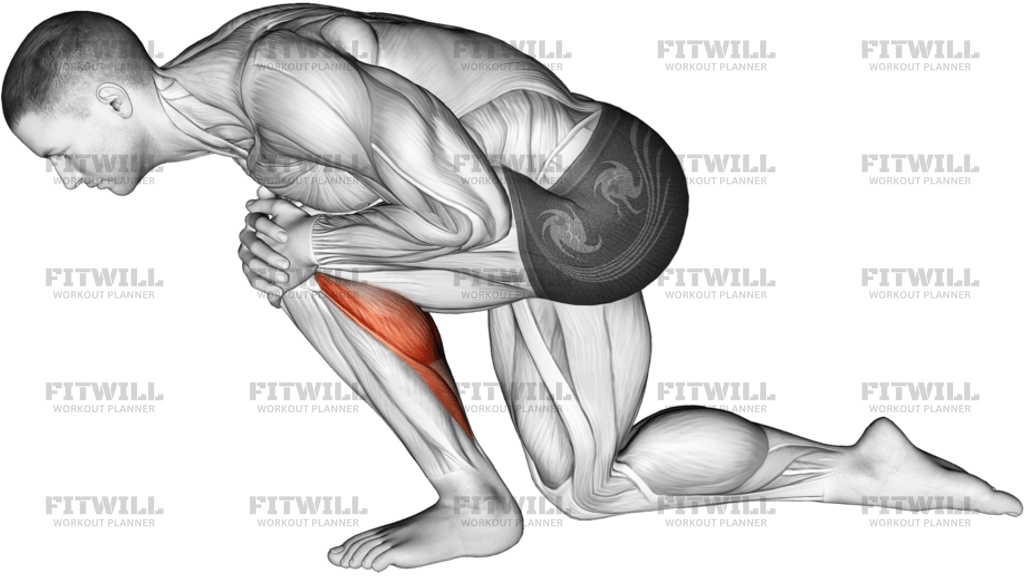
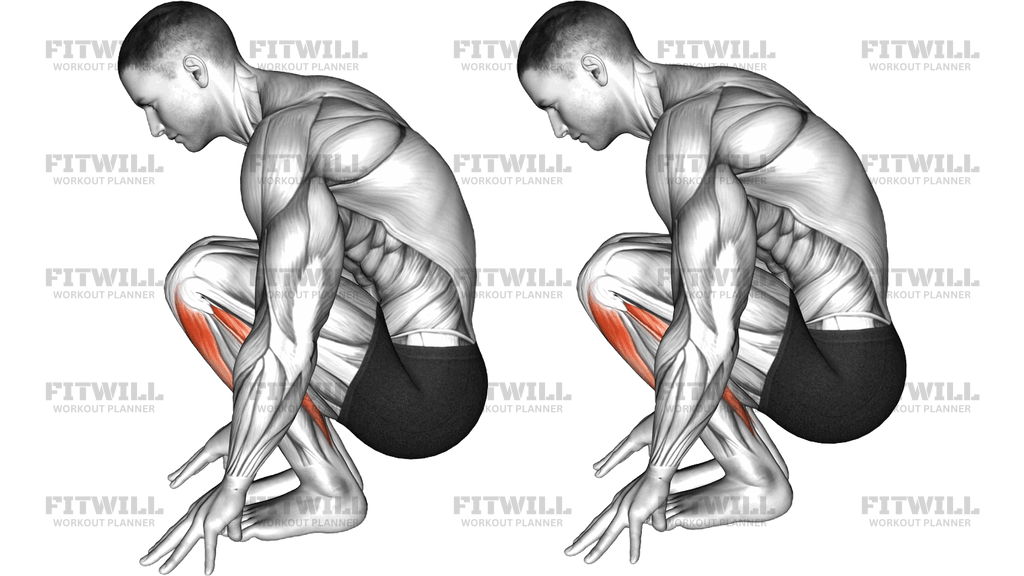
Kneeling Heel Down Achilles Stretch is a half-kneeling calf and ankle mobility drill that puts the front ankle into a controlled heel-down stretch while the back knee rests on the mat. It is most often used to open the lower calf, improve ankle dorsiflexion, and create a cleaner line through the Achilles tendon and surrounding calf tissue. The movement looks simple, but the setup matters because a small change in foot distance, knee angle, or pelvic position can change the stretch from mild and useful to sloppy and ineffective.
This exercise primarily targets the calves, with the soleus usually taking the lead when the front knee bends forward over the planted heel. The Achilles tendon is loaded indirectly through that ankle position, while the hips, trunk, and supporting leg muscles work to keep the torso steady and the pelvis square. In a technical sense, the stretch also asks the stabilizers, synergists, and core to keep the body from twisting as you sink deeper into the front side.
The best version of Kneeling Heel Down Achilles Stretch starts with a stable half-kneeling stance. The front foot stays flat, the toes point mostly forward, and the back knee rests comfortably on the mat so you can shift weight without bracing against discomfort. From there, the front knee travels forward in line with the second toe while the front heel stays glued to the floor. That forward glide should feel like a gradual lengthening through the lower calf, not a sharp pinch in the ankle or a collapse of the arch.
Because this is a stretch rather than a strength exercise, the goal is a calm and repeatable end position. Breathe out as you ease into the deeper range, hold long enough to let the calf settle, then back off slightly before repeating or switching sides. The torso can lean a little over the front thigh, but the pelvis should stay square and the spine should remain long. That keeps the stretch where it belongs instead of dumping the work into the low back or the inside of the knee.
Kneeling Heel Down Achilles Stretch is useful before squats, lunges, running, jumping, or any session where ankle range affects how well you can move. It also works well as a cooldown when the calves feel tight after lower-body training or long periods of standing. Beginners can use it safely if they keep the range modest and avoid forcing the front knee past the point where the heel starts to lift. For more advanced lifters or athletes, the value comes from patient positioning and consistent holds, not from chasing a bigger range by twisting or bouncing.
[ Workout Log & Planner ]
Put your next workout in Fitwill
Keep your plan and training log ready when you are.


Instructions
- Start in a half-kneeling position on the mat with one knee down, the front foot flat, and the front toes pointing mostly straight ahead.
- Place the back knee comfortably under the hip and keep the back shin relaxed so the mat supports your weight.
- Set the front foot far enough forward that the heel can stay down when you begin to shift your body toward it.
- Square your hips and brace lightly through your trunk before you move deeper into the stretch.
- Keep the front heel planted and drive the front knee forward over the second toe in a smooth, controlled path.
- Lean your torso slightly over the front thigh only as much as needed to keep the stretch in the lower calf and Achilles area.
- Pause at the point where you feel a strong but tolerable stretch, then breathe out slowly and hold without bouncing.
- Ease back a few centimeters to reset, then repeat on the same side or switch sides and match the hold time.
Tips & Tricks
- If the front heel starts to lift, shorten the stance instead of forcing more knee travel.
- Keep pressure spread across the front foot tripod so the arch does not collapse as the knee moves forward.
- A bent front knee emphasizes the soleus and Achilles area more than a straighter-leg calf stretch.
- Keep the front knee tracking toward the second toe; letting it drift inward usually reduces the quality of the stretch.
- Square the hips to the floor instead of rotating the front side open to chase extra range.
- Use a long exhale to let the calf relax, then hold the position steady rather than pulsing into it.
- Pad the back knee well so discomfort there does not make you cut the stretch short.
- Stop at a strong stretch, not a pinch in the ankle joint or a sharp pull behind the heel.
Frequently Asked Questions
What Does Kneeling Heel Down Achilles Stretch Target Most?
It mainly targets the calves, especially the soleus when the front knee bends forward, with the Achilles tendon and ankle joint moving through a useful stretch.
Is Kneeling Heel Down Achilles Stretch Better For The Soleus Or The Gastrocnemius?
A deeper bend in the front knee shifts more of the stretch toward the soleus and lower Achilles area. A slightly straighter knee would bias the higher calf more.
Should My Front Heel Stay Down The Whole Time?
Yes. If the heel lifts, the stance is usually too long or the stretch is too deep, so bring the foot in slightly and try again.
Where Should I Feel The Stretch In Kneeling Heel Down Achilles Stretch?
You should feel it along the lower calf and around the back of the ankle, not as a sharp pinch in the foot, knee, or low back.
Can Beginners Do This Stretch Safely?
Yes. Start with a small range, keep the front heel rooted, and hold a mild stretch instead of chasing a big forward knee drive.
How Long Should I Hold Each Side?
Hold long enough for the calf to settle, usually around 20 to 30 seconds per side, then reset or switch sides with the same control.
Why Does My Front Arch Collapse During This Stretch?
That usually means you are leaning too far forward or the stance is too long. Keep pressure through the big toe, little toe, and heel, and reduce the depth slightly.
What Is The Most Common Mistake With Kneeling Heel Down Achilles Stretch?
The biggest mistake is bouncing or twisting the hips open to get more range. A clean, square setup gives a better calf and Achilles stretch with less joint stress.