Squatting Achilles Stretch
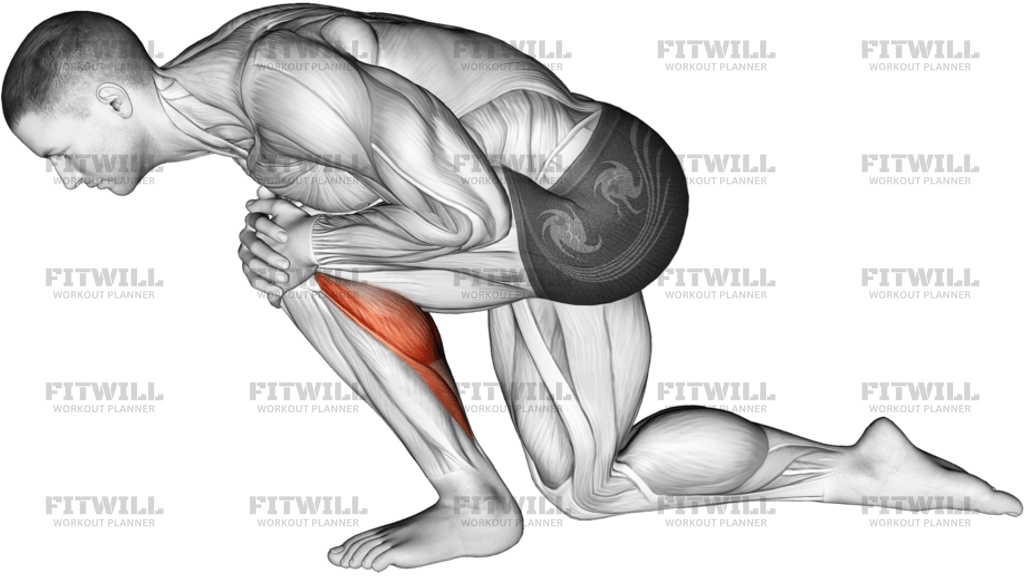
Squatting Achilles Stretch is a bodyweight ankle and calf mobility drill done from a squat position on an exercise mat. It is designed to load the calf-Achilles complex in a controlled way so the heel stays grounded while the knees travel forward and the ankle opens. The exercise is useful when you want more dorsiflexion, looser calves, and a squat position that feels less restrictive.
The setup matters because the stretch changes quickly if your feet, heel pressure, or torso angle drift. Start with both feet planted, then settle into a deep squat that keeps your weight spread through the whole foot instead of rolling onto the toes. From there, let the knees move forward only as far as you can keep the heels heavy and the arches active.
This movement is not about forcing depth. It is about finding a useful stretch in the lower calf and Achilles tendon while staying balanced and breathing normally. If you rush the drop, the stretch turns into a bounce and the ankles stop working through a clean range. A steady squat hold or small controlled rock is usually more useful than chasing a bigger position.
Use the exercise in a warm-up, ankle mobility block, or lower-body recovery session when you need better squat mechanics or a gentler calf stretch than a loaded raise. It is especially helpful for athletes who feel tight through the back of the ankle during squats, lunges, or landing positions.
Stay in a pain-free range and let the stretch build gradually. If the heels pop up, reduce depth or shorten the forward knee travel. If the knees collapse inward, reset the feet and press the knees out gently so the ankles, calves, and hips share the load instead of dumping stress into one joint.
[ Workout Log & Planner ]
Put your next workout in Fitwill
Keep your plan and training log ready when you are.


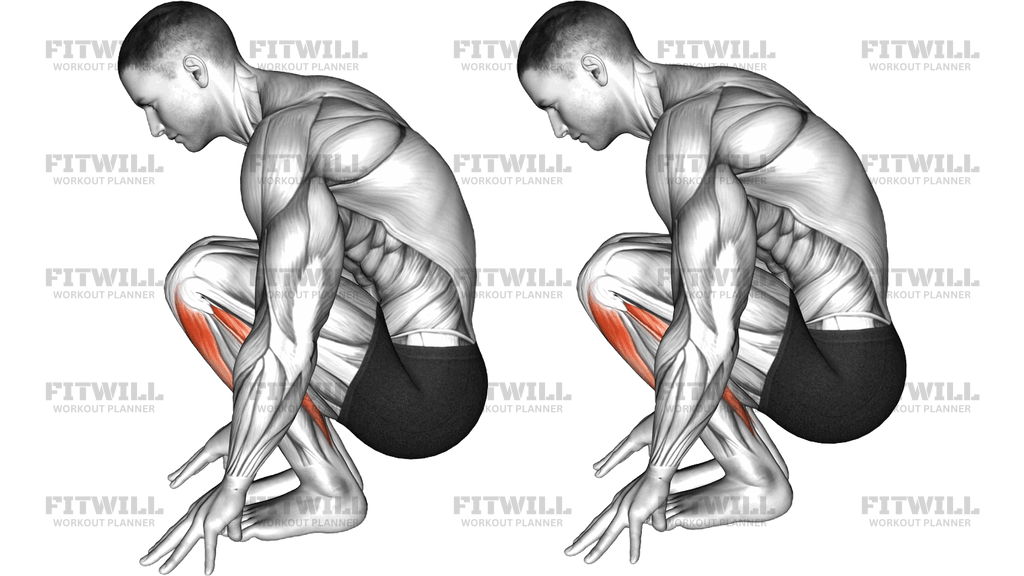
Instructions
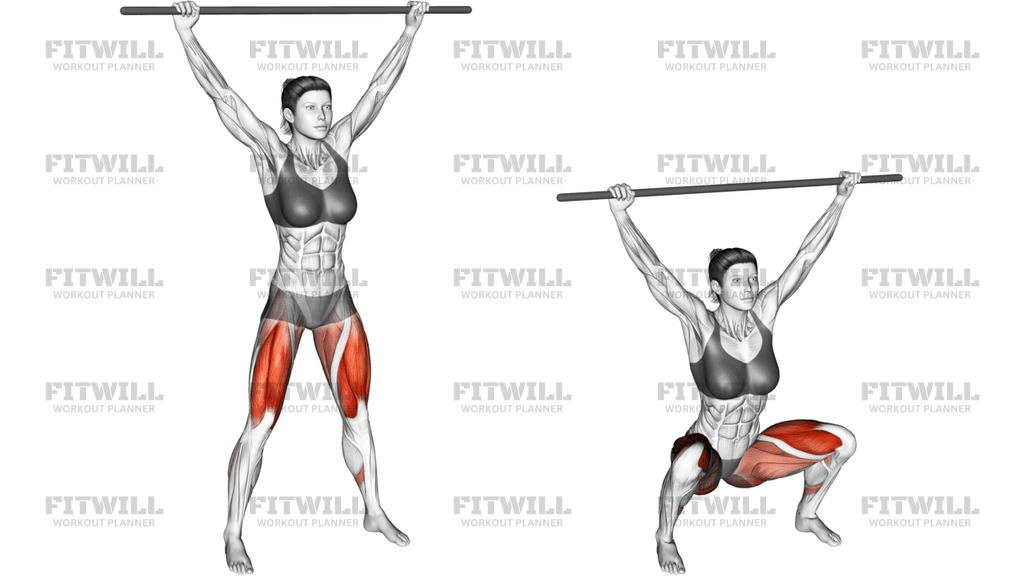
- Stand on the mat with your feet about shoulder-width apart and turn the toes slightly out.
- Lower into a deep squat while keeping both heels down and your weight spread across the whole foot.
- Set your chest tall and reach your arms forward if you need extra balance.
- Let the knees travel forward over the toes until you feel a firm stretch through the calves and Achilles area.
- Pause in the bottom position and breathe slowly without letting the heels lift.
- If the stretch feels better with motion, make small controlled rocks in and out of the bottom squat.
- Keep the arches from collapsing inward as you hold or rock in the stretch.
- Press through the whole foot to stand back up when you finish the set.
Tips & Tricks
- Drive the knees forward only as far as you can keep the heels weighted; the stretch should stay in the lower calf, not the front of the ankle.
- If the heels rise early, shorten the squat depth and build range gradually from there.
- Keep the big toe, little toe, and heel pressed into the mat so the arch does not collapse under the squat.
- A tall chest makes the ankle stretch easier to isolate; if you fold too far forward, the drill becomes more of a back-and-hip position.
- Use slow exhalations to soften the calves instead of forcing the bottom position.
- Small pulses are fine, but they should look like controlled ankle rocks, not bouncing out of the squat.
- If one ankle feels tighter, spend a little longer there rather than twisting the pelvis to fake symmetry.
- Stop the rep if you feel sharp pain at the Achilles tendon, heel, or underside of the foot.
Frequently Asked Questions
What muscle does Squatting Achilles Stretch target most?
It mainly targets the calves and the Achilles area by loading ankle dorsiflexion in a deep squat.
Do I need to keep both heels on the mat?
Yes, that is the main cue. If a heel lifts, reduce the squat depth or narrow the range until you can keep both feet grounded.
Should my knees go over my toes in this stretch?
They should travel forward, but only as far as you can keep the feet flat and the arches active.
Is this more of a hold or a moving stretch?
Both work. A steady bottom-position hold is simplest, while small controlled rocks can make the ankle stretch feel more focused.
Can beginners do Squatting Achilles Stretch?
Yes. Beginners usually do best with a shallower squat, a shorter hold, and a slower build into the stretch.
Why does my heel pop up when I sink lower?
That usually means the ankle range is not ready for that depth yet. Back off slightly and keep pressure through the whole foot.
What is the best breathing pattern for this drill?
Inhale as you settle into the squat, then exhale slowly while you hold the bottom position or make small ankle rocks.
How do I make the stretch more comfortable on the knees?
Keep the chest tall, avoid forcing depth, and let the knees travel forward smoothly instead of dropping straight down.