Kneeling Leg Out Adductor Stretch
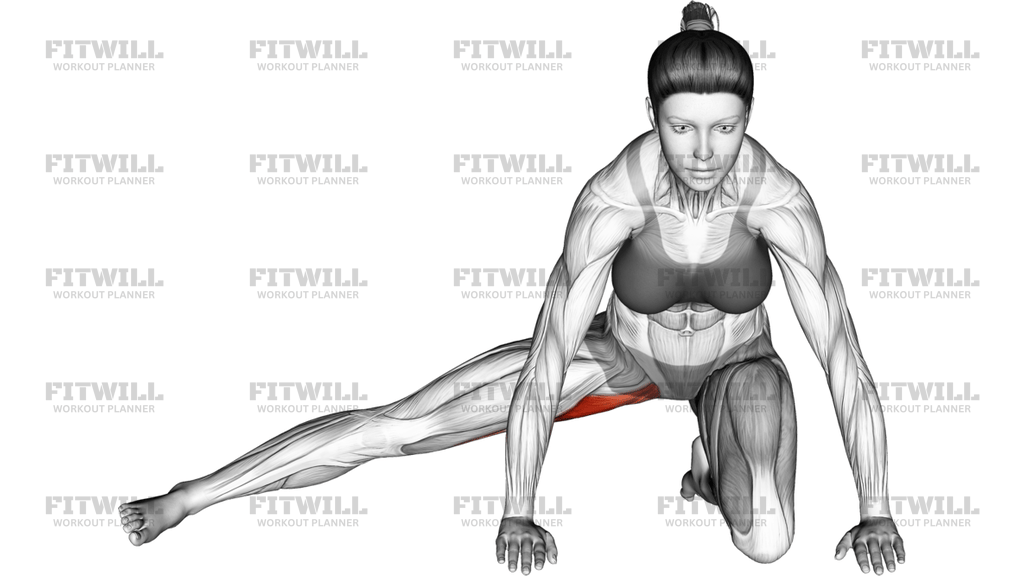
Kneeling Leg Out Adductor Stretch is a body-weight hip mobility drill that opens the inner thigh of the extended leg while the kneeling leg and the hands keep you stable on the floor. The image shows a low, side-leaning kneeling setup on a mat, with one knee down and the other leg stretched straight out to the side. That arrangement matters because it lets you target the adductors directly without having to twist the torso or force the stretch through the low back.
This stretch is most useful when the groin, inner thigh, or side of the hip feels tight after lower-body training, running, skating, lateral work, or long periods of sitting. It can also be part of a warm-up for squats, lunges, or side-to-side movements when you want the hips to feel more open before loading them. The goal is not to sink as far as possible; the goal is to create a repeatable position where the pelvis stays controlled and the stretch lands where you expect it to land.
Set the kneeling knee on padding, plant both hands on the floor, and extend the opposite leg straight to the side so the inner thigh has room to lengthen. Keep the extended foot from collapsing inward, and keep the working knee in a comfortable line under the hip. As you shift your weight back and slightly down, the stretch should build gradually along the inside of the extended leg rather than turning into a pinch in the knee or a twist through the spine.
Good reps stay calm and deliberate. Exhale as you ease deeper into the stretch, pause when the tension reaches a clear but manageable level, and then return with the same control you used to enter it. If the range changes from rep to rep, shorten the position and clean up the setup before trying to go deeper. Consistent breathing and square hips will usually improve the stretch more than forcing a bigger lean.
Use this movement as a targeted mobility piece, a cooldown drill, or a bridge between warm-up and lower-body work. It is especially helpful if one side feels noticeably tighter than the other, but the stretch should still stay symmetrical in intent: stable base, long inner thigh, and no bouncing. Beginners can use it safely as long as they keep the range mild and the knee, hip, and hand support positions comfortable.
Fitwill
Log Workouts, Track Progress & Build Strength.
Achieve more with Fitwill: explore over 9600 exercises with images and videos, access built-in and custom workouts, perfect for both gym and home sessions, and see real results.
Start your journey. Download today!




Instructions
- Place one knee on a mat and set both hands on the floor in front of you for support.
- Extend the other leg straight out to the side so the foot is grounded and the inner thigh is long.
- Keep the extended knee straight or only slightly soft, with the toes facing forward or slightly up if that feels better.
- Square your hips as much as possible and keep your chest angled down between your arms.
- Shift your hips back and slightly toward the kneeling heel until you feel a clear stretch along the inner thigh of the extended leg.
- Pause at the end range and breathe out slowly so the groin and adductor line can relax.
- Keep both hands and the kneeling knee steady instead of letting the torso twist or collapse to one side.
- Return to the start by pressing lightly through the hands and bringing the hips forward with control.
- Repeat on the other side with the same setup and the same amount of stretch.
Tips & Tricks
- Put a folded mat or towel under the kneeling knee so you can relax into the stretch instead of guarding the joint.
- The stretch should be in the inner thigh of the straight leg; if you feel a pinch in the knee, back out and reset the foot angle.
- Keep the extended foot from rolling onto the outer edge, because that usually reduces the adductor stretch and shifts stress into the ankle.
- A small backward hip shift is usually enough; forcing a big drop often rounds the lower back and turns the drill into a spine stretch.
- Exhale as you sink back, then inhale while holding the position so the rib cage does not brace against the stretch.
- If the stretch feels uneven side to side, look at the foot position first before chasing more range.
- Stop short of any sharp groin pain or pinching at the front of the hip.
- Use a shorter hold and a smaller range when you are cold, then increase the depth only after the tissue softens.
Frequently Asked Questions
What does Kneeling Leg Out Adductor Stretch target?
It mainly targets the adductors, especially the inner thigh of the leg that is extended out to the side.
Where should I feel the stretch?
You should feel it along the inside of the extended leg, not in the kneeling knee or low back.
Do I need to keep both hands on the floor?
Yes, the hands act as support and help you control how far the hips travel back and down.
Should my extended foot stay flat?
Usually yes, but a slight toe-up angle is fine if it helps you keep the adductor line long and the knee comfortable.
Can beginners use this stretch?
Yes. Start with a short range, a padded knee, and a gentle hold before trying to go deeper.
What is the most common mistake?
Most people either twist the torso or drop too far and end up feeling it in the low back instead of the inner thigh.
How long should I hold each side?
A controlled hold of about 20 to 40 seconds is usually enough for a mobility-focused set.
What should I do if I feel a pinch in my groin?
Shorten the range, adjust the extended foot, and keep the hips higher until the stretch feels smooth rather than pinchy.