Side Lunge Adductor Stretch
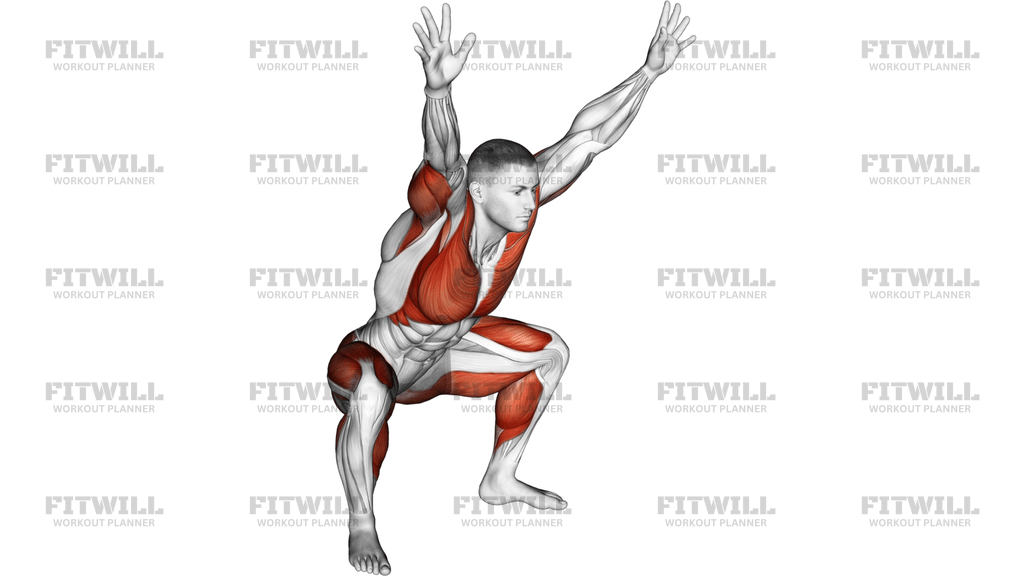
Side Lunge Adductor Stretch is a bodyweight mobility drill that opens the inner thighs while teaching you to control a lateral shift through the hips. From a wide stance, one knee bends as the opposite leg stays long, creating a clear stretch through the adductors of the straight leg and a lengthened position through the groin on the loaded side. The exercise is commonly done on an exercise mat so you can settle into the bottom position and move side to side without losing balance.
The value of this movement comes from the quality of the position, not from forcing a huge range. A good repetition keeps the feet grounded, the torso long, and the hips moving back rather than collapsing forward. When the stance is wide enough and the toes are angled with control, the inner thigh of the extended leg gets a stronger stretch while the bent-side hip stays organized. That makes the drill useful before lower-body training, after squats or lunges, or anytime the groin feels tight from sitting, running, skating, or change-of-direction work.
Because this is a stretch, the target sensation should feel strong but manageable. You want a lengthening feeling through the adductor line, not a pinching sensation in the hip joint or a rounded lower back. The supported side should remain braced enough that you can breathe steadily and shift in and out of the position without jerking. If the torso dives forward or the heel lifts, the stretch usually turns into compensation instead of useful mobility.
The most effective version uses slow transitions and short pauses at end range. Sink into the bent leg, keep the opposite leg straight, and let the hips move back until you feel the inner thigh stretch, then travel smoothly to the other side. You can hold each side for a few breaths or flow gradually between sides depending on your goal. The movement should feel controlled enough that you could repeat it cleanly several times without the position changing from rep to rep.
Side Lunge Adductor Stretch fits best in a warm-up, mobility block, or cooldown when you want to improve hip openness and lateral control. It is also a practical reset after heavy squatting or lateral training because it lengthens the groin while reinforcing a stable base. Used well, it gives you more room to sit into a side lunge, squat, or athletic change of direction without fighting stiffness in the inner thigh.
[ Workout Log & Planner ]
Put your next workout in Fitwill
Keep your plan and training log ready when you are.


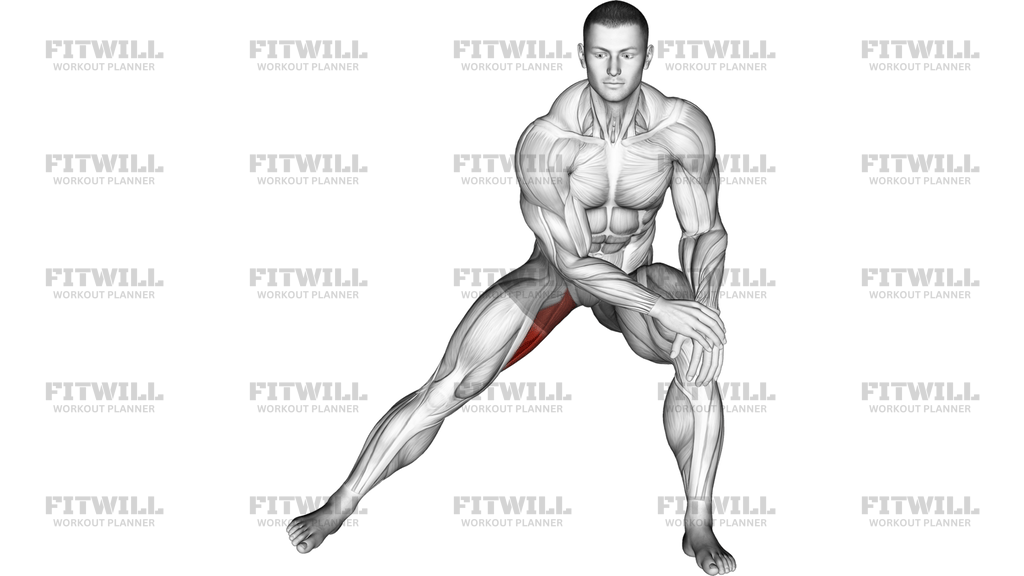
Instructions
- Stand tall on an exercise mat with your feet set wide enough that you can shift to one side without losing balance.
- Turn both feet slightly outward if needed, keep the toes grounded, and brace your torso before you move.
- Shift your hips toward one side by bending that knee while keeping the opposite leg straight and the heel down.
- Sit the hips back as the bent knee tracks over the foot and the straight-leg inner thigh lengthens.
- Lower only until you feel a strong stretch through the adductor of the straight leg and you can still keep your spine long.
- Pause for a breath or two at the bottom without bouncing or forcing deeper than your current range.
- Push through the bent foot to return to the center under control, then repeat to the other side.
- Keep the movement smooth from side to side and finish by standing tall before stepping out of the stance.
Tips & Tricks
- Keep the straight-leg foot planted so the stretch stays in the inner thigh instead of drifting into the ankle.
- Let the hips travel back as you bend the working knee; if the knee goes too far forward, the adductor stretch often disappears.
- Angle the feet only as much as you need. Too much turnout can make the groin feel compressed rather than lengthened.
- Use your hands on the floor or thigh for balance if the torso wants to tip, but do not dump your weight into the support.
- Hold the chest open and the spine long so you feel the stretch through the groin line, not a rounded low back.
- Exhale as you sink into the side lunge; that usually helps the inner thigh relax without forcing range.
- Move slowly between sides so the position stays smooth and you can find the same depth on both reps.
- Stop short of any sharp groin pain or pinching in the front of the hip, especially at the bottom position.
Frequently Asked Questions
What does the Side Lunge Adductor Stretch target?
It primarily lengthens the adductors, especially the inner thigh of the straight leg, while the hips and trunk stay active for balance.
Is this a static stretch or a moving stretch?
It can be used both ways. Hold the side-lunge position for a few breaths, or flow slowly from one side to the other if you want a dynamic warm-up.
How wide should my stance be for the side lunge?
Wide enough that the bent knee can travel over the foot while the opposite leg stays straight. If the stance is too narrow, you will not get much adductor length.
Should the straight leg stay fully locked?
Keep it long, but do not jam the knee back hard. A soft, controlled extension is usually enough to keep the stretch in the inner thigh.
Why do I feel this in my hips as well as my inner thighs?
The hip shift and foot position ask the glutes and trunk to stabilize while the adductors lengthen, so some hip effort is normal.
Can I use this before squats or lunges?
Yes. It works well in a warm-up because it opens the groin and prepares the hips for deeper side-to-side positions.
What should I avoid at the bottom of the stretch?
Avoid bouncing, collapsing the chest, or letting the bent knee cave inward. Those changes usually reduce the quality of the stretch.
What is a good sign that I have enough range?
You should feel a strong inner-thigh stretch while still breathing normally and keeping the torso controlled. If you have to brace hard or twist to go deeper, stop there.