Lying Leaning Against The Wall Stretch
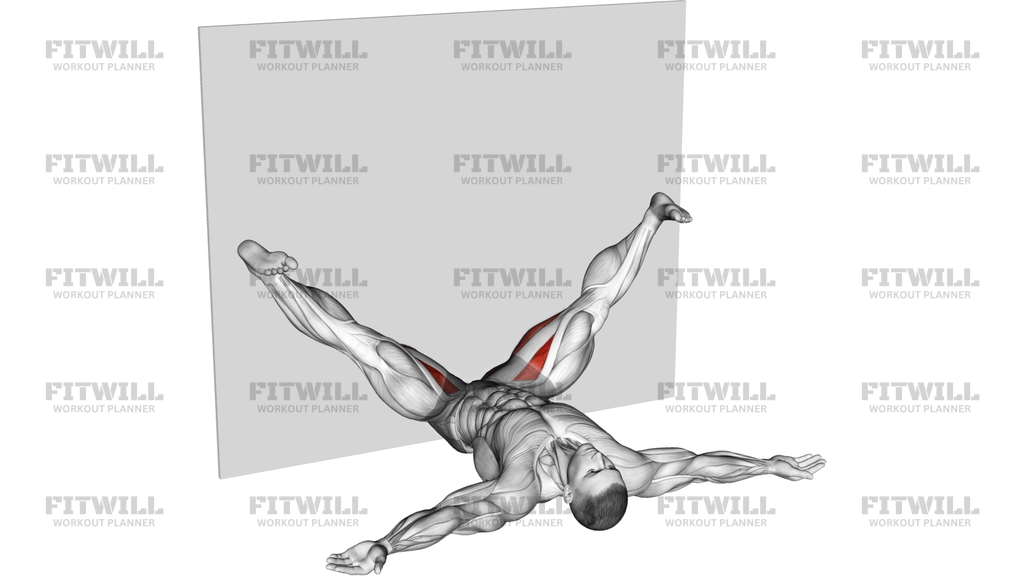
Lying Leaning Against The Wall Stretch is a supported floor-and-wall mobility drill that opens the hips, inner thighs, and groin while keeping the torso relaxed on the mat. The wall does most of the work here: it holds the legs in position so you can sink into a controlled stretch without balancing, twisting, or bracing hard through the trunk.
The position shown is a supine straddle with the legs supported by the wall. That setup matters because the wall fixes the line of the legs and lets you spend attention on how the hips feel, how far the knees open, and whether the pelvis stays level. The goal is not to force a huge range. It is to create a steady stretch through the adductors and outer hips while the low back stays quiet and comfortable.
This stretch is useful after lower-body training, on recovery days, or in a warmup when the hips feel tight and the groin needs a gentle opening. It can help lifters, runners, and field-sport athletes who spend a lot of time in a narrow stance or deep squat positions. Because the legs are elevated, many people also find it easier to relax into this variation than into a standing or seated straddle stretch.
Perform it slowly and breathe out as you ease deeper into the stretch. Small changes in distance from the wall make a big difference: moving closer usually increases the stretch, while moving farther away reduces it. If you feel pinching in the front of the hip or strain in the low back, back off immediately and shorten the range. The best version of this exercise feels open and supported, not forced.
Treat each hold as a reset for the hips rather than a test. Keep the knees turned out only as far as you can control, let the feet stay relaxed against the wall, and avoid bouncing or cranking the legs wider. When done well, this stretch leaves the hips feeling looser without creating irritation in the knees, groin, or lower back.
[ Workout Log & Planner ]
Put your next workout in Fitwill
Keep your plan and training log ready when you are.


Instructions
- Lie face up on a mat with your hips close to the wall and your lower back resting comfortably on the floor.
- Place both legs up the wall so the heels or calves are supported, then let the feet drift apart into a wide, comfortable V.
- Keep your arms relaxed out to the sides and your head and neck neutral before you settle deeper into the position.
- Slide your hips a little closer to the wall if you want more stretch, or a little farther away if the pull feels too strong.
- Let the knees open only as far as you can control without the pelvis rolling or the low back arching.
- Breathe out slowly and allow the inner thighs and hips to relax into the stretch instead of forcing the range.
- Hold the end position for a steady, pain-free stretch, keeping both legs evenly supported on the wall.
- To come out, bring the legs together with control, bend the knees if needed, and lower them away from the wall before you sit up.
Tips & Tricks
- The closer your hips are to the wall, the stronger the stretch through the inner thighs and groin.
- If your hamstrings are tight, bend the knees slightly so you can keep the pelvis down instead of tugging on the low back.
- Keep both sit bones heavy on the floor; if the pelvis starts to tip, reduce the width of the V.
- Let the feet relax on the wall rather than pressing hard through the toes.
- Think about lengthening the thighs away from the hips, not forcing the knees into the wall.
- A long exhale usually helps the adductors soften more than holding your breath.
- Stop short of any sharp groin pain, front-hip pinching, or numbness in the legs.
- Use this stretch after squats, deadlifts, runs, or field work when the hips feel compressed.
- If one side feels tighter, do not twist to chase it; keep the pelvis square and work within the more limited side.
Frequently Asked Questions
What does Lying Leaning Against The Wall Stretch target most?
It mainly targets the inner thighs, especially the adductors, while also stretching the hips and groin.
Can beginners perform this exercise?
Yes. Beginners usually do well with a smaller leg opening and more distance from the wall at first.
How far apart should my legs be on the wall?
Open them only as far as you can keep the pelvis flat and the stretch comfortable. Wider is not better if the low back starts to arch.
Should I feel this more in the groin or the hamstrings?
You should feel a controlled stretch mostly in the groin and inner thighs, with some support from the hamstrings depending on leg angle.
Why are the legs against the wall instead of just lying on the floor?
The wall supports the legs so you can relax into the stretch without holding them up or fighting for balance.
What is the most common mistake with this stretch?
Forcing the knees wider while the pelvis rolls or the low back arches is the main mistake.
Can I bend my knees if my hamstrings are tight?
Yes. A slight bend can help you keep your low back comfortable and focus the stretch on the hips and groin.
How long should I hold the stretch?
A steady hold of about 20 to 60 seconds is usually enough, as long as the stretch stays mild and controlled.
When should I use this stretch in a workout?
It works well after lower-body lifting, sprinting, or any session where the hips and adductors feel tight.