Plantar Flexor And Foot Inverter Stretch
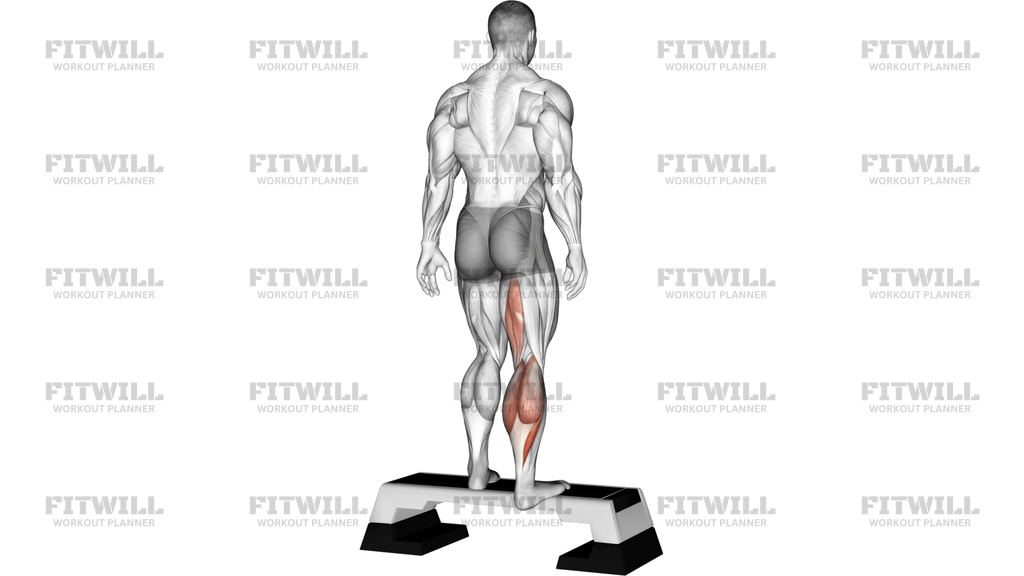
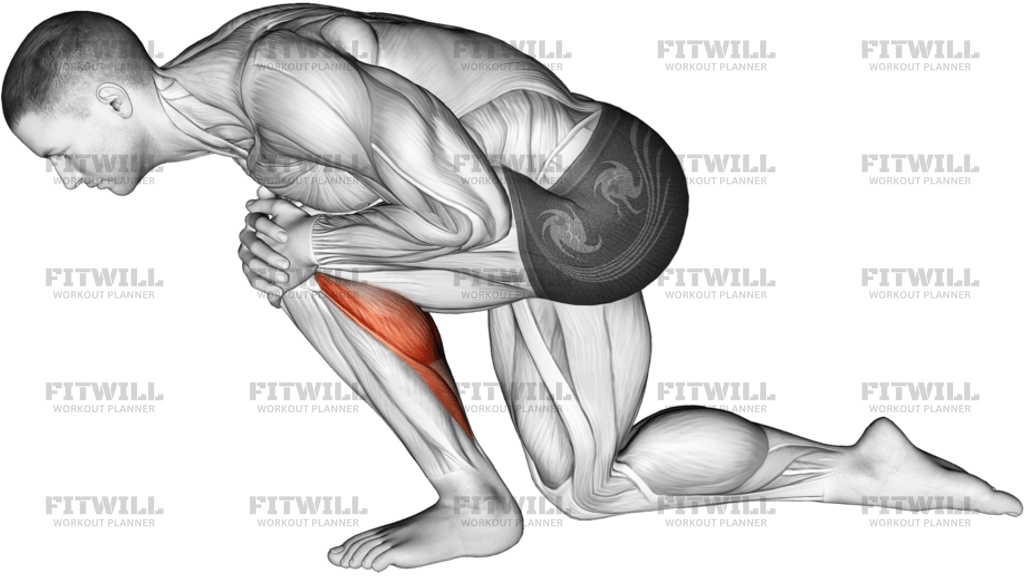
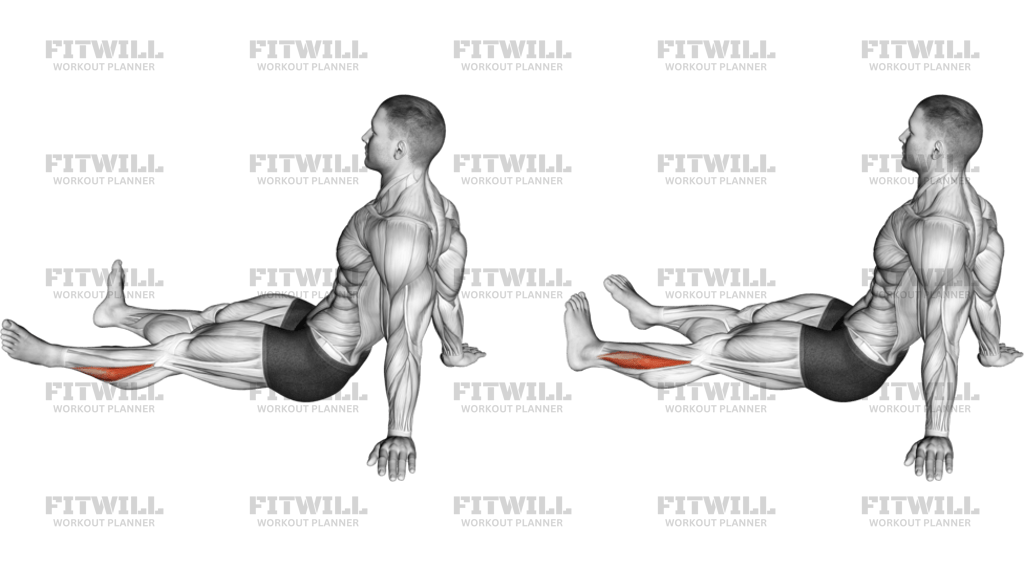
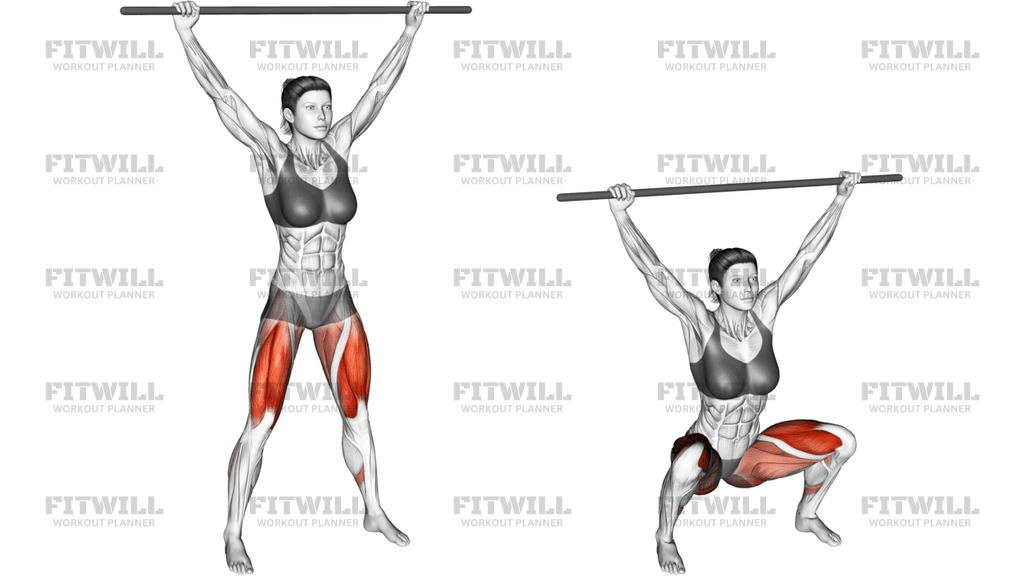
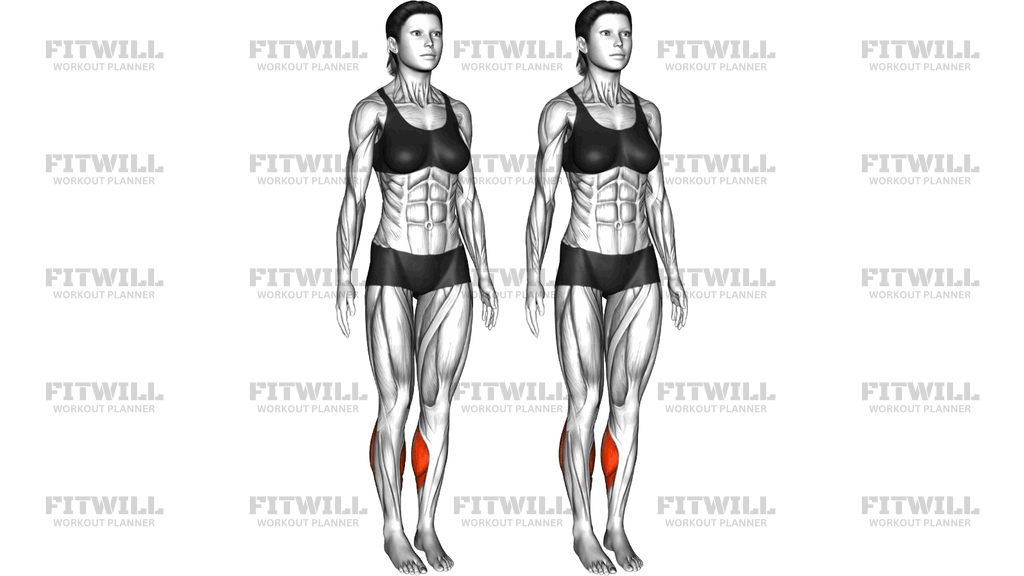
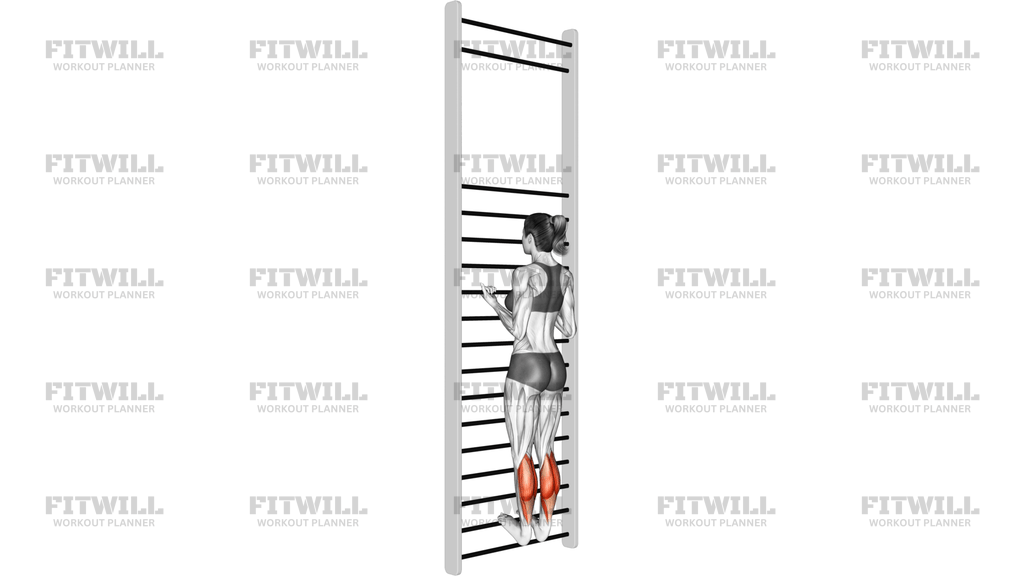
Plantar Flexor and Foot Inverter Stretch is a standing lower-leg mobility drill performed on a low step or aerobic bench. One forefoot stays on the edge of the platform while the heel drops below it, which lengthens the calf complex and the muscles that control ankle inversion. The image shows a tall standing posture from the back, with the working leg loaded on the step and the other leg left free for balance.
The stretch is aimed at the plantar flexors first, especially the gastrocnemius and soleus, but the foot angle also changes how much tension you feel across the ankle and the side of the lower leg. That makes setup important. If the forefoot is too far off the edge, the heel can feel jammed. If the torso folds forward or the pelvis twists, the stretch shifts away from the ankle and into balance compensation.
A good rep starts with a stable stance and a small, controlled drop of the heel. Keep the working knee long but not hard-locked, and let the ankle open only as far as you can keep pressure through the ball of the foot. The foot can be angled slightly to match the stretch shown in the image, but the movement should stay subtle. This is not a bounce or a forceful push into end range.
Use the stretch after calf-heavy training, running, jumping, or any session where the ankles feel tight and stiff. It also works well in a warmup when you want to restore ankle motion before squats, lunges, or other lower-body work. The purpose is to create useful range and tissue tolerance, not to chase the deepest possible stretch.
Keep the sensation in the lower leg and ankle, not as a sharp pinch in the front of the ankle or a cramp in the arch. If balance is limited, use a wall or rail and reduce the drop. If the Achilles tendon feels irritated, shorten the range and hold a gentler stretch. Controlled positioning matters more here than intensity.
Fitwill
Log Workouts, Track Progress & Build Strength.
Achieve more with Fitwill: explore over 9600 exercises with images and videos, access built-in and custom workouts, perfect for both gym and home sessions, and see real results.
Start your journey. Download today!




Instructions
- Stand facing away from a low step or aerobic bench and place the forefoot of the working leg on the edge so the heel can hang off freely.
- Keep the other foot on the floor behind you for balance, or hold a wall or rail if you need extra support.
- Square your hips and keep your ribs stacked over your pelvis before you start the stretch.
- Keep the working knee long but soft, with pressure centered through the ball of the foot and big toe.
- Slowly let the heel drop below the step until you feel a steady stretch through the calf and ankle.
- Add only a small foot angle if needed to match the image and feel the ankle-side stretch, but avoid a hard twist.
- Breathe out as you settle into the end range and keep the stretch smooth instead of bouncing.
- Hold for the planned count, then press the forefoot down and bring the heel back up under control.
- Switch sides and repeat with the same setup so both ankles move through the same range.
Tips & Tricks
- Use a step with a non-slip edge so the heel can hang below it without slipping.
- Keep the weight over the ball of the foot; if the arch collapses, the stretch usually turns into a foot-cramp instead of a calf stretch.
- A straight knee biases the upper calf more, while a slight knee bend softens the stretch if the back of the knee feels tight.
- Do not force the heel down fast; a slow sink gives you a better read on the ankle than a hard drop.
- Keep the torso tall and the pelvis square so the stretch stays in the lower leg instead of becoming a hip lean.
- If you feel a pinch in the front of the ankle, reduce the drop and re-center the foot on the step.
- Use a wall or rail if the balance demand is stealing tension from the working ankle.
- Stop short of pain in the Achilles tendon and keep the hold gentle if that area is sensitive.
Frequently Asked Questions
What does the Plantar Flexor and Foot Inverter Stretch train?
It mainly stretches the calf complex, especially the gastrocnemius and soleus, while also affecting the ankle muscles that control foot inversion.
Do I need a step for this stretch?
A low step or aerobic bench is ideal because the heel needs to hang below the forefoot to create the stretch shown in the image.
Should my working knee stay straight?
Mostly yes. A long knee emphasizes the calf more, while a small bend can reduce strain if the stretch feels too sharp.
Where should I feel the stretch most?
You should feel it in the back and side of the lower leg near the ankle and calf, not as a pinch in the front of the ankle.
Why is the foot angle important?
A small foot angle changes how the ankle is loaded and can bias the stretch toward the inverter muscles without turning it into a twist.
Can beginners do this stretch safely?
Yes, as long as they keep the heel drop small, use support if needed, and avoid forcing the ankle into pain.
How long should I hold it?
A short, controlled hold of about 15 to 30 seconds is usually enough before resetting or switching sides.
What is the biggest mistake with this stretch?
The most common mistake is bouncing or leaning the torso to fake more range instead of letting the ankle do the work.