Hip And Knee Flexion Squatting Stretch
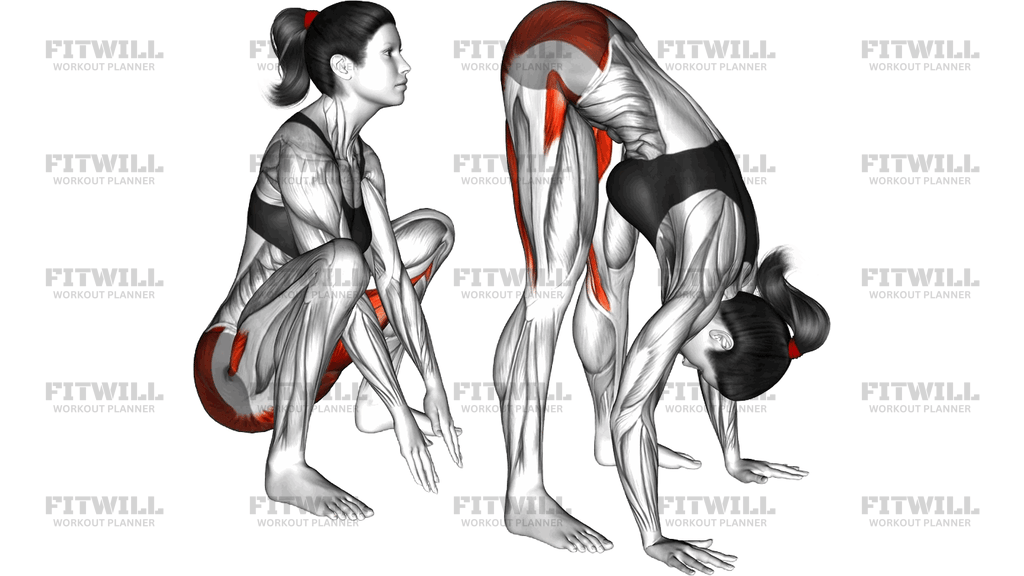
Hip And Knee Flexion Squatting Stretch is a bodyweight mobility drill performed in a deep squat with the hips tucked low between the heels. It is useful when you want to open the hips, knees, and ankles together while teaching the body to stay relaxed in a compressed bottom position. The mat gives you a softer surface, but the real goal is a steady, grounded squat that you can breathe through instead of fighting against.
This position primarily challenges the quads, while the glutes, adductors, calves, and deep core all contribute to keeping you balanced and upright. In practice, it is a combination of flexibility and position work: the knees flex deeply, the hips close, and the ankles have to allow the heels to stay rooted. If one of those links is too limited, the stretch will feel unstable long before it feels useful.
The setup matters more than people expect. A stance that is too narrow can pinch the hips, while a stance that is too wide can turn the stretch into a loose sit instead of a loaded squat. Aim for feet slightly wider than hip width, toes turned out a little, and hands available on the floor for balance. That support lets you stay in the bottom position without dumping all of your weight forward or rounding the spine to stay upright.
Once you are down, let the breath do the work. Each slow exhale should help the hips settle a little more while the knees stay aligned over the toes and the heels keep contact with the floor. If you have to bounce, twist, or collapse to make the position happen, you are too deep for the current level of mobility. Back off slightly and own a cleaner hold instead.
Hip And Knee Flexion Squatting Stretch is especially useful before squats, lunges, or other lower-body sessions, and it can also work as a cooldown after sitting or heavy leg training. The best version looks calm and controlled, not forced. Treat it as a position to improve over time, using small range gains and better breathing rather than trying to win the stretch in one rep.
[ Workout Log & Planner ]
Put your next workout in Fitwill
Keep your plan and training log ready when you are.


Instructions
- Place your bodyweight on a mat with your feet slightly wider than hip width and your toes turned out a little, then lower into a squat and bring your fingertips or palms to the floor in front of you for balance.
- Keep your heels down and let your knees track over the second and third toes as you sink your hips between your ankles.
- Lift your chest and keep your spine long instead of folding hard over your thighs.
- Settle your elbows gently inside your knees if that helps you open the hips, or keep both hands on the floor if you need more support.
- Sit into the deepest squat you can hold without heel lift, knee pain, or a sharp pinch in the hips.
- Breathe in through your nose and use each exhale to relax the hips, groin, and quad stretch a little more.
- Hold the position for the planned time, making small posture adjustments without bouncing or rocking out of control.
- Press through the whole foot, bring your hips up slowly, and stand tall before repeating or resetting.
Tips & Tricks
- Use a slightly wider stance if your torso is getting jammed against your thighs at the bottom.
- If your heels pop up, shorten the depth and work on ankle range instead of forcing the bottom position.
- Press through the big toe, little toe, and heel so the feet do not collapse inward.
- A small heel lift or folded mat can make the stretch more accessible when ankle mobility is the limiter.
- Keep the knees tracking over the toes instead of letting them cave inward toward each other.
- Relax the shoulders and keep the neck long so the stretch stays in the hips and quads, not the upper back.
- Use longer exhales to help the pelvis settle without forcing it downward.
- Stop just above the point where your low back tucks hard under you.
Frequently Asked Questions
What muscles does Hip And Knee Flexion Squatting Stretch target most?
It mainly stretches the quads, but the glutes, adductors, calves, and deep core all help you stay balanced in the bottom position.
Can beginners do Hip And Knee Flexion Squatting Stretch?
Yes. Beginners should start higher, keep the hands on the floor for support, and only sink as low as they can hold with flat feet and calm breathing.
Should my heels stay on the floor in the deep squat?
Ideally yes. If they lift, reduce the depth or use a small heel wedge so you can keep the squat position stable instead of forcing it.
Why do my knees drift inward in this stretch?
That usually means your stance is too narrow or your feet are collapsing. Widen the feet a little and keep the knees tracking over the second and third toes.
Is Hip And Knee Flexion Squatting Stretch better as a warm-up or cooldown?
Both. Use it before squats or lunges to open the bottom position, or after training when you want to relax the hips and ankles.
Do I need to keep my hands on the floor the whole time?
Not necessarily. Hands on the floor are useful for balance, but you can lighten the support as your hips and ankles let you stay upright more easily.
What if I feel a sharp pinch in my hips or knees?
Back out of the bottom position immediately and shorten the range. This stretch should feel like a controlled opening, not a joint pinch.
How long should I hold Hip And Knee Flexion Squatting Stretch?
A short hold of 20 to 60 seconds works well for most people, or you can use a few slow breaths before standing back up.