Ceiling Look Stretch
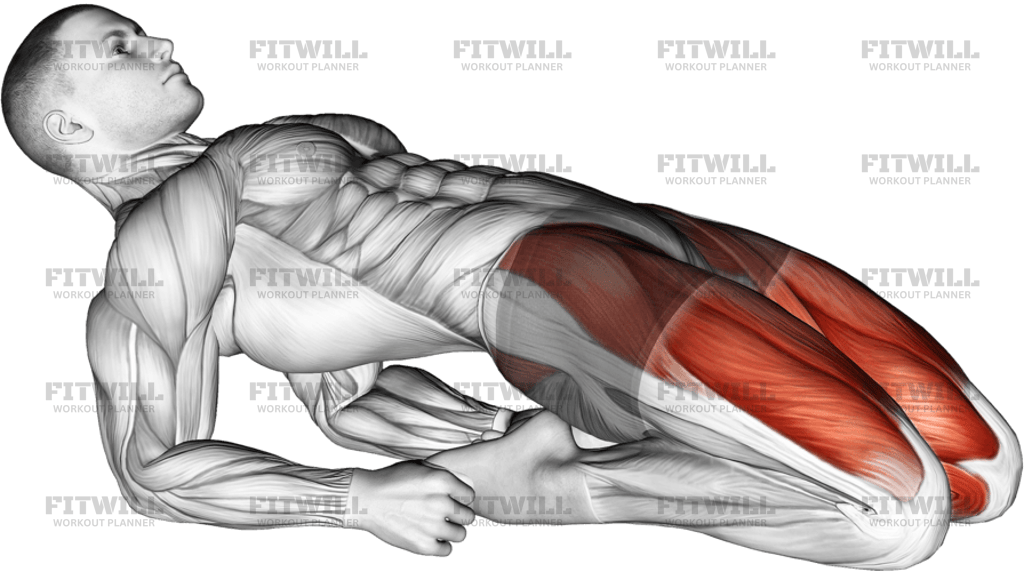
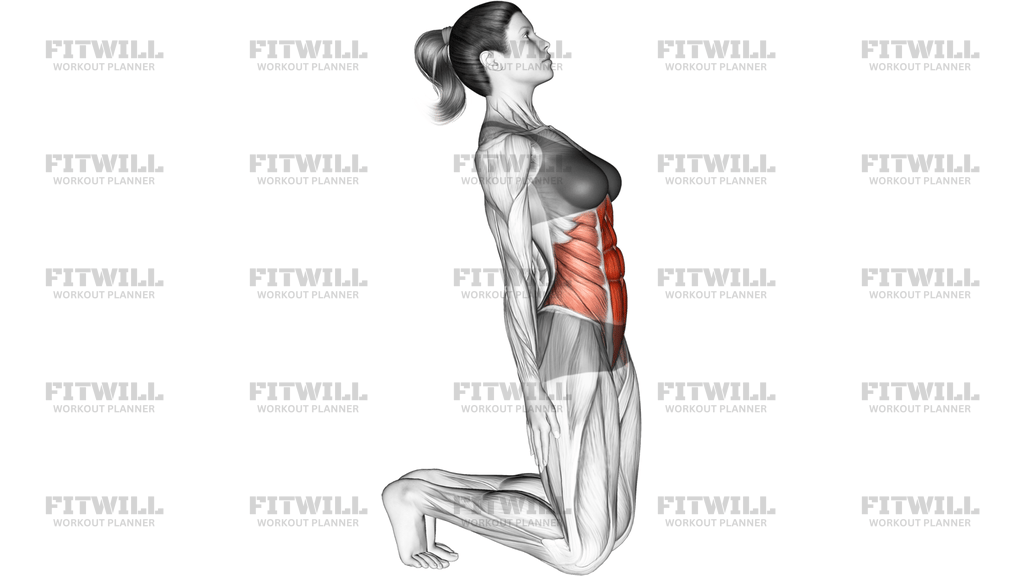
Ceiling Look Stretch is a kneeling bodyweight stretch for the front of the thighs, especially the quadriceps, with the hips, trunk, shoulders, and neck all helping you settle into a controlled backbend. The movement starts on hands and knees and finishes with the hips moving forward, the hands reaching back toward the feet, and the chest opening upward. It is a useful choice when you want a strong front-body stretch without loading the knees or spine aggressively.
The primary emphasis is the quads, with the hip flexors and front of the torso also feeling tension as the pelvis moves forward and the chest lifts. This is not a strength exercise or a loaded mobility drill. The goal is a slow, comfortable stretch that you can breathe through and hold without strain. The quality comes from how calm the position feels, not from how dramatic the backbend looks.
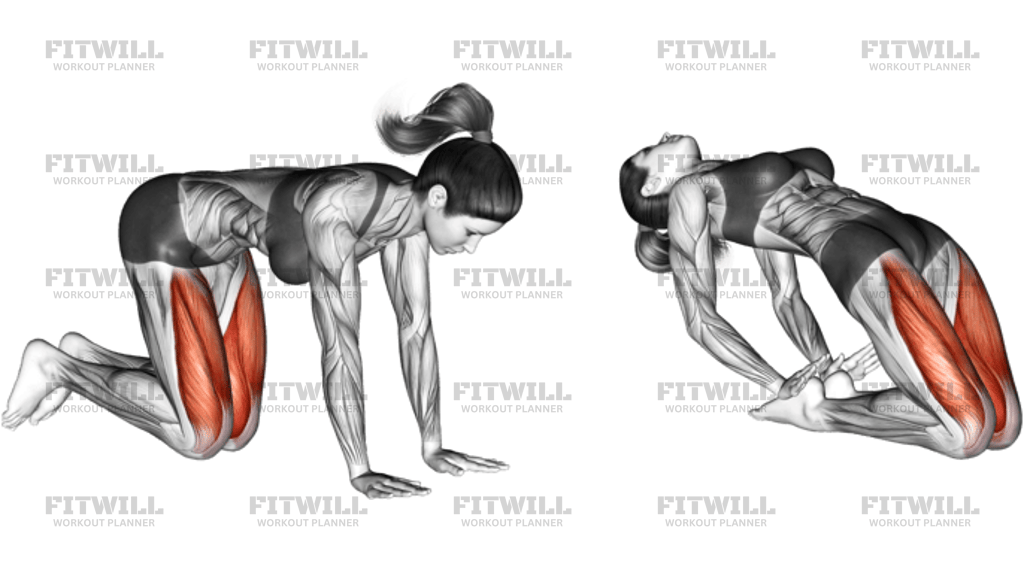
Start on an exercise mat in a hands-and-knees position with your knees about hip-width apart. Place the tops of your feet on the floor and keep your hands under your shoulders. Brace lightly through the midsection, then begin to walk your hands back or reach toward your heels as the hips press forward. Keep the movement gradual so the knees, lower back, and neck have time to adjust to the new position.
Move into the stretch by lifting the chest and looking toward the ceiling only as far as the neck feels comfortable. If you can reach the feet or ankles, hold them lightly without yanking yourself into a forced arch. Breathe steadily, hold the end position for the planned time, and return by bringing the hands back to the floor and letting the spine come back to neutral.
Good form means the stretch is felt through the front of the thighs without sharp pressure in the knees or pinching in the lower back. Keep the glutes lightly engaged so the lumbar spine does not collapse. Use a folded mat or towel under the knees if the floor feels uncomfortable, and reduce the range if your hands cannot comfortably reach the feet. The best version of this stretch is calm, smooth, and easy to control from entry to exit.
[ Workout Log & Planner ]
Put your next workout in Fitwill
Keep your plan and training log ready when you are.


Instructions
- Kneel on an exercise mat with your knees about hip-width apart and the tops of your feet resting on the floor.
- Place your hands on the floor under your shoulders and lengthen your spine before moving.
- Brace lightly through your core and begin to shift your hips forward as your chest starts to lift.
- Walk your hands back or reach one hand at a time toward your heels, keeping the movement slow.
- Lift your chest and look toward the ceiling only as far as your neck and lower back stay comfortable.
- Hold your feet or ankles lightly if you can reach them without forcing the arch.
- Breathe steadily while you hold the stretch through the front of your thighs.
- Return with control by bringing your hands back to the floor and easing your spine to neutral.
Tips & Tricks
- Keep the glutes lightly engaged so the stretch does not collapse into the lower back.
- Use a folded mat or towel under the knees if kneeling feels uncomfortable.
- Reach only as far back as you can while breathing normally.
- Let the gaze follow the chest instead of throwing the head back first.
- Avoid bouncing or pushing the hips forward aggressively at the end range.
- Stop or reduce the range if you feel sharp knee, neck, or low-back pain.
- Keep the knees roughly hip-width apart rather than letting them flare wide.
- Progress by adding hold time before trying to create a deeper backbend.
Frequently Asked Questions
What muscles does the Ceiling Look Stretch work?
It mainly stretches the quads on the front of the thighs. The hip flexors, abdomen, chest, and shoulders may also feel involved as you open into the backbend.
Is Ceiling Look Stretch the same as Camel Pose?
It is similar to a kneeling backbend or Camel Pose variation, but the exercise is focused on a controlled quad and front-body stretch rather than forcing a deep yoga posture.
What should I do if I cannot reach my feet?
Keep your hands on your hips, lower back, or the floor behind you and use a smaller range. You do not need to grab your feet for the stretch to be useful.
Should I feel Ceiling Look Stretch in my lower back?
A mild stretch through the front body is normal, but sharp low-back pressure is not. Squeeze your glutes lightly, brace your core, and reduce the arch if your lower back takes over.
How long should I hold Ceiling Look Stretch?
Hold for about 15 to 30 seconds per set, or shorter if the position feels intense. Quality breathing and control matter more than a long hold.
Who should be careful with Ceiling Look Stretch?
People with knee irritation, sensitive lower backs, or neck discomfort should use a smaller range or choose a simpler kneeling quad stretch.
When should I use Ceiling Look Stretch?
It fits well after leg training, after long sitting periods, or during a mobility session when you want to open the quads and front of the hips.