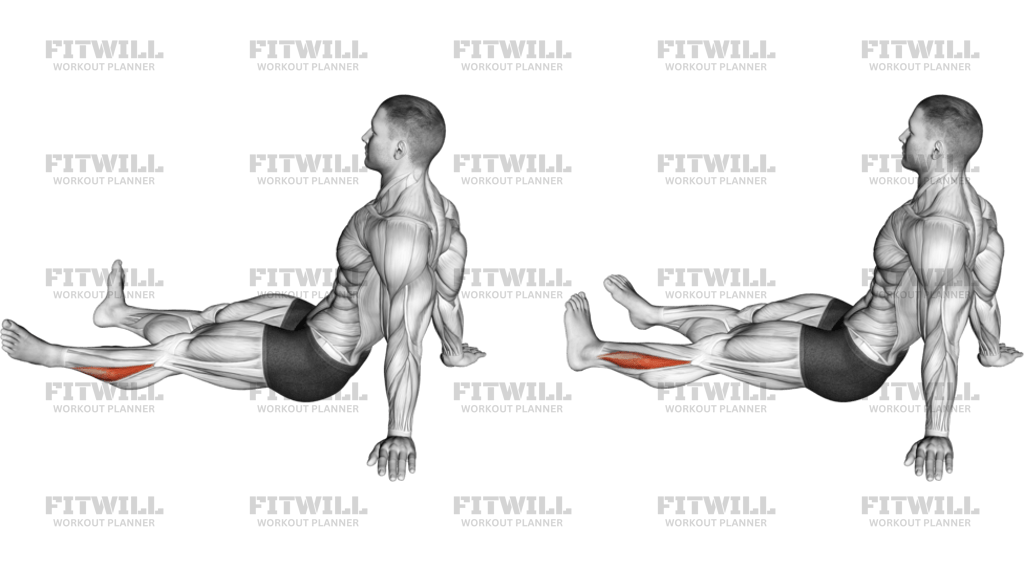
Seated Toe Extensor And Foot Everter Stretch
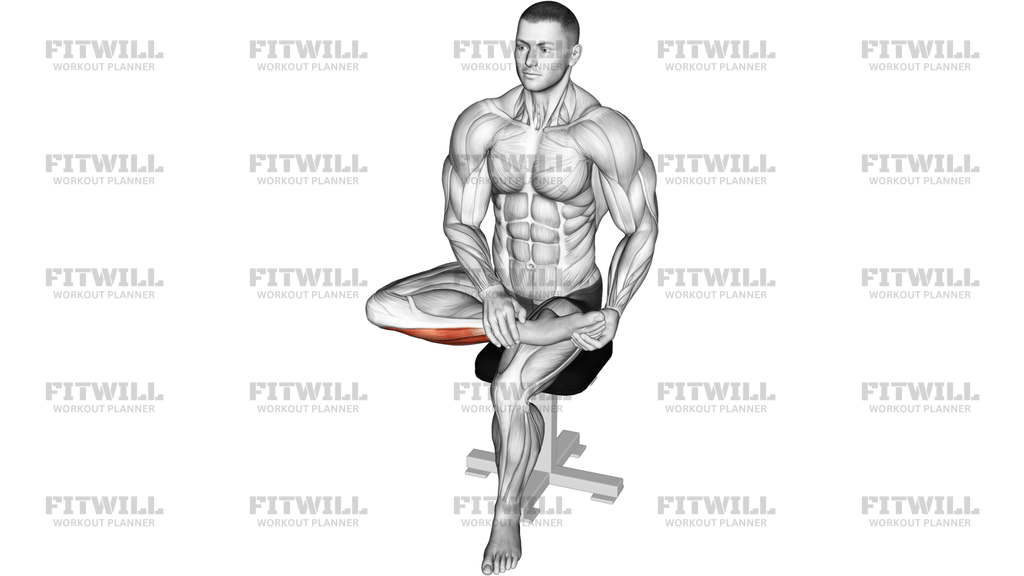
Seated Toe Extensor And Foot Everter Stretch is a seated ankle and foot mobility drill that uses your own leg and hands to open the front and outer edge of the lower leg. With one ankle crossed over the opposite thigh, you can control toe position, foot rotation, and pressure through the forefoot instead of forcing the stretch by leaning your body weight into it. That makes the movement useful for people who run, jump, squat, or spend long periods in stiff shoes, because the tissues on the top of the foot and around the ankle often get tight long before they are noticed.
The setup matters because the crossed thigh supports the lower leg and keeps the stretch honest. Sit tall on a bench or sturdy chair, keep both hips level, and let the lifted foot rest fully in your hands. If you collapse forward or let the knee drift, the stretch moves out of the ankle and into the hip. The goal is a controllable pull across the toe extensors and outer lower leg, not a twisted knee or a painful crank at the midfoot.
To perform it well, guide the toes back first, then add a small inward roll of the foot until you find firm but tolerable tension along the top of the foot, the toes, and the outside of the shin. Breathe slowly, relax your face and shoulders, and use your hands to make tiny changes rather than big jerks. A good rep feels like an exact position you can settle into, hold, and then back out of without losing the shape of the foot.
Use this stretch after lower-body training, running, jumping, or long periods of standing, and pair it with calf or ankle mobility work when the front of the ankle feels stiff. Beginners can use it safely if they keep the range mild and avoid forcing the knee. If you feel a sharp pull in the top of the foot, numbness, or pain in the knee, reduce the angle immediately. The best version is quiet, smooth, and repeatable rather than intense.
[ Workout Log & Planner ]
Put your next workout in Fitwill
Keep your plan and training log ready when you are.


Instructions
- Sit tall on a bench or sturdy chair and cross one ankle over the opposite thigh so the lower leg is fully supported.
- Keep both sit bones heavy and square your chest forward before you start pulling on the foot.
- Place one hand across the forefoot and the other at the heel so you can control the entire foot, not just the toes.
- Gently pull the toes back toward the shin, then add a slight inward roll of the foot until you feel a mild stretch along the top and outside of the foot.
- Keep the knee relaxed and let the ankle stay supported on the thigh instead of twisting off the leg.
- Hold the stretch while breathing slowly through the nose or a relaxed mouth.
- On each exhale, soften your grip just enough to settle into the position, but do not force past a tolerable line.
- Release slowly, uncross the leg, shake out the foot, and repeat on the other side.
Tips & Tricks
- Let the crossed thigh support the lower leg; if the foot hangs, the stretch becomes harder to control.
- Grip across the forefoot rather than only the toes so the pressure is spread through the front of the foot.
- Pull the toes back first, then add the small inward roll so the stretch stays organized.
- Keep the planted foot flat and the pelvis square so you do not twist into the movement.
- The right sensation is tension across the top of the foot and outer shin, not a pinch in the knee or arch.
- Use slow exhales to soften the small muscles around the ankle instead of yanking harder.
- If the toes cramp, back off slightly and hold the forefoot with less leverage.
- Match the hold time on both sides instead of chasing a much bigger range on the looser side.
Frequently Asked Questions
What does Seated Toe Extensor And Foot Everter Stretch target most?
It targets the top of the foot, the toe extensors, and the outer lower leg around the peroneal area.
Why is the ankle crossed over the opposite thigh?
That setup supports the lower leg so you can control toe position and foot rotation without bouncing or twisting the whole body.
Should I feel this in the calf?
Not mainly. The better stretch is usually along the top of the foot, the toes, and the outside of the shin.
Do I need to point or flex the toes?
Gently draw the toes back while keeping the motion smooth. Do not jam the foot into an aggressive position.
Can I do this on the floor instead of a bench?
Yes, as long as the crossed leg is supported well enough for you to hold the stretch without rounding hard through the spine.
What should I avoid during the stretch?
Avoid forcing the knee, cranking the ankle, or turning the stretch into a twist through the hip.
What if my toes cramp or the arch feels tight?
Reduce the angle, hold the forefoot instead of the toes, and let the foot settle before trying a little more range.
How long should I hold each side?
A controlled 20 to 30 second hold is a solid starting point, repeated if the foot still feels stiff.